

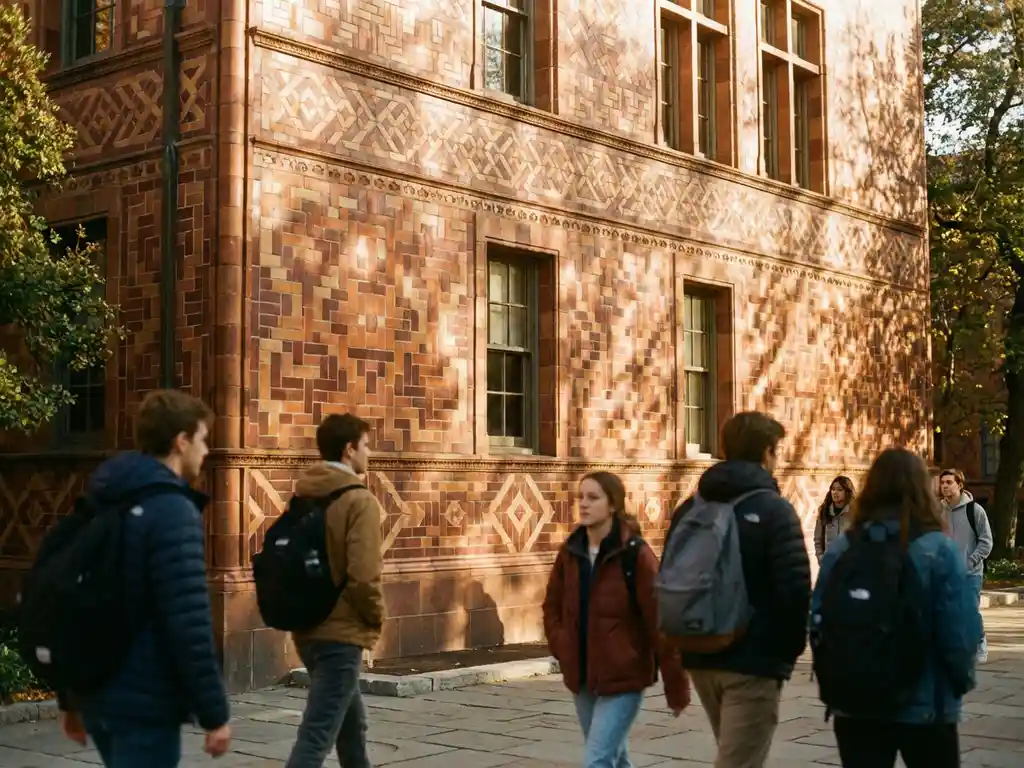
Why Universities Choose Terracotta for Iconic Architecture
Universities worldwide are increasingly specifying terracotta façades for their most prestigious buildings, recognizing the material’s unique combination of aesthetic versatility, durability, and sustainability credentials. These educational institutions require façade systems that can withstand decades of use while maintaining their visual appeal and supporting the institution’s commitment to environmental responsibility.
Terracotta façades offer universities the perfect balance of architectural expression and practical performance. The material’s natural fire resistance, low maintenance requirements, and ability to be precisely manufactured in custom colors and textures make it ideal for creating distinctive campus landmarks that embody each institution’s character and values.
Yale University’s Sustainable Science Building
Yale University’s Kroon Hall stands as a testament to how terracotta façades can support both architectural excellence and environmental goals. The building features custom-glazed ceramic façade elements that create a dynamic interplay of light and shadow while contributing to the structure’s LEED Platinum certification.
The terracotta system chosen for this project demonstrates exceptional thermal performance, helping regulate interior temperatures naturally. The façade’s integrated design allows for optimal daylighting while protecting against excessive solar heat gain, making it a prime example of how ceramic façades support sustainable building practices in educational environments.
University of Cambridge’s Modern Research Complex
Cambridge University’s Maxwell Centre showcases terracotta’s ability to bridge traditional and contemporary architectural languages. The building’s ceramic façade elements were manufactured in custom earth tones that complement the historic campus while providing thoroughly modern performance characteristics.
The project highlights terracotta’s precision manufacturing capabilities, with façade tiles produced to exact specifications that create seamless visual continuity across the building’s complex geometry. The material’s natural UV resistance ensures the façade will maintain its appearance for decades, supporting the university’s long-term investment in quality infrastructure.
MIT’s Revolutionary Engineering Facility
The Massachusetts Institute of Technology’s Koch Institute features an innovative terracotta façade system that demonstrates the material’s compatibility with cutting-edge building technologies. The ceramic elements integrate seamlessly with advanced building management systems while providing superior weather protection and thermal performance.
MIT’s choice of terracotta reflects the material’s alignment with the institution’s focus on innovation and sustainability. The façade’s modular design allows for future modifications and upgrades, while the ceramic material’s 100% recyclability supports the university’s circular economy initiatives and environmental commitments.
University of Melbourne’s Award-Winning Library
The University of Melbourne’s Giblin Eunson Library renovation demonstrates how terracotta façades can revitalize existing structures while respecting architectural heritage. The project features custom ceramic elements that create a contemporary interpretation of traditional masonry while delivering superior performance characteristics.
The terracotta system’s lightweight properties made it ideal for this renovation project, allowing for enhanced façade performance without requiring extensive structural modifications. The material’s natural graffiti resistance and easy maintenance requirements ensure the building will continue to serve as an inspiring learning environment for generations of students.
ETH Zurich’s High-Performance Research Tower
ETH Zurich’s new research facility showcases terracotta’s exceptional performance in demanding environments. The building’s ceramic façade system provides superior fire protection while supporting the institution’s rigorous safety requirements for laboratory and research spaces.
The project demonstrates how terracotta façades can contribute to building classification requirements, with the material’s A1 fire rating providing inherent safety benefits. The façade’s thermal performance also supports the building’s energy efficiency goals, contributing to reduced operational costs and environmental impact over the structure’s life cycle.
Lessons from University Terracotta Façade Projects
These university projects reveal several key advantages that make terracotta façades particularly suitable for educational buildings. The material’s durability and low maintenance requirements align perfectly with institutional budgets focused on long-term value rather than short-term savings. Universities consistently choose ceramic façades because they understand the total cost of ownership benefits over decades of use.
The flexibility of terracotta manufacturing allows universities to create distinctive architectural identities while meeting stringent performance requirements. From fire safety to thermal efficiency, ceramic façades deliver the technical performance that educational institutions require while providing the aesthetic versatility that helps create inspiring learning environments. These successful projects showcase proven applications of ceramic façade technology in demanding institutional environments.
How TONALITY® Supports University Architecture
TONALITY® ceramic façade systems provide universities with the perfect combination of architectural flexibility and technical performance for creating iconic educational buildings. Our German-engineered ceramic elements offer exceptional advantages for institutional projects:
- A1 fire classification, ensuring maximum safety for student and faculty environments
- Precision manufacturing in formats up to 400 x 1,600 mm for distinctive architectural expression
- Lightweight construction, reducing structural requirements and supporting renovation projects
- 100% recyclability, supporting institutional sustainability commitments
- Integrated graffiti protection and permanent UV resistance, minimizing maintenance needs
- Simple installation systems, reducing construction time and campus disruption
Contact our architectural team to discover how TONALITY® ceramic façade systems can help your university create inspiring, sustainable, and high-performance educational environments that will serve your institution for decades to come.
Related Articles
- What is the expected lifespan of ceramic facade panels?
- What building types benefit from terracotta cladding?
- What is embodied carbon and how does terracotta compare to metal facades?
- Are terracotta facade systems worth the investment?
- What quality certifications should architects look for in terracotta products?