

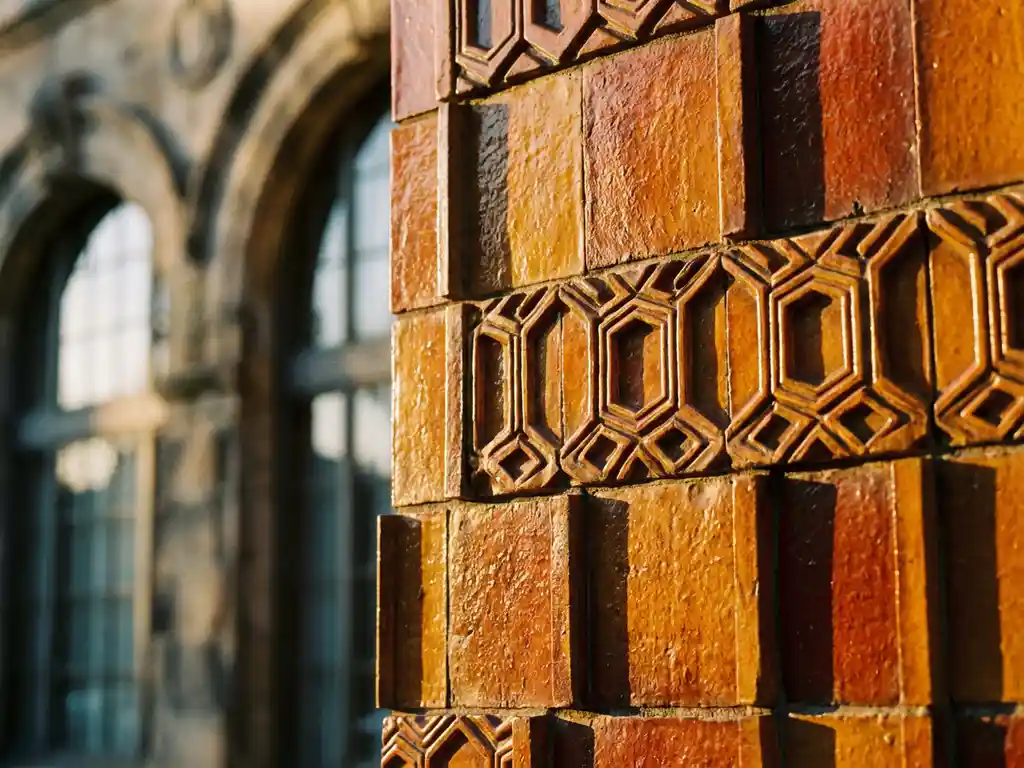
Why Terracotta Cladding Defines Modern Museum Design
Terracotta cladding has emerged as the material of choice for contemporary museum architecture, offering architects the perfect balance of aesthetic versatility and practical performance. This ceramic building material provides cultural institutions with the durability needed to protect priceless collections while creating striking façades that reflect each museum’s unique identity.
Museums worldwide have embraced terracotta panels and ceramic façades for their exceptional longevity, low maintenance requirements, and design flexibility. From bold geometric patterns to subtle textural variations, these architectural cladding systems enable creative expression while meeting the stringent environmental controls required for cultural buildings.
1: Victoria and Albert Museum’s Stunning Ceramic Extension
The Victoria and Albert Museum’s Exhibition Road Quarter showcases how terracotta tiles can seamlessly blend historic architecture with contemporary design. The extension features more than 11,000 handmade ceramic tiles that create a distinctive honeycomb pattern across the façade, demonstrating the material’s capacity for intricate geometric designs.
This London landmark illustrates terracotta cladding’s ability to weather gracefully in challenging urban environments while maintaining its visual impact. The ceramic façade system provides excellent thermal performance, which is crucial for maintaining stable conditions within the museum’s gallery spaces, while reducing long-term operating costs through superior insulation.
2: Tate Modern’s Iconic Brick and Terracotta Façade
Tate Modern’s Switch House extension exemplifies how terracotta panels can transform industrial architecture into world-class cultural spaces. The twisted brick and ceramic façade creates a dynamic interplay of light and shadow throughout the day, proving that museum architecture can be both functional and sculpturally striking.
The building’s terracotta cladding system incorporates specially designed ceramic elements that filter natural light into the galleries below. This innovative approach demonstrates how modern ceramic building materials can address the complex lighting requirements of contemporary art spaces while creating an instantly recognizable architectural landmark along London’s Thames riverbank.
3: Museum of Contemporary Art Denver’s Bold Design
The Museum of Contemporary Art Denver features a revolutionary façade system combining metallic and ceramic panels that shift color depending on the viewing angle and lighting conditions. This innovative use of terracotta cladding creates a building envelope that literally changes appearance throughout the day, reflecting the dynamic nature of contemporary art within.
The museum’s architectural cladding incorporates advanced ceramic façade technology that provides superior weather resistance against Denver’s extreme temperature variations. The terracotta panels maintain their structural integrity and visual appeal despite significant thermal cycling, demonstrating the material’s suitability for challenging climatic conditions while supporting the museum’s mission as a beacon of artistic innovation.
4: What Makes SFMOMA’s Terracotta So Unique?
The San Francisco Museum of Modern Art’s expansion features a distinctive rippling façade created from more than 700 uniquely shaped terracotta panels. Each ceramic element was precisely manufactured to create the building’s signature undulating surface, showcasing the exceptional precision possible with modern ceramic building materials and advanced manufacturing techniques.
SFMOMA’s terracotta cladding system incorporates integrated seismic-resistance features essential for San Francisco’s earthquake-prone environment. The façade system uses flexible mounting methods that allow the ceramic panels to move independently during seismic events while maintaining weathertight performance, proving that terracotta tiles can meet even the most demanding structural requirements in museum design.
5: National Museum of African American History
The Smithsonian’s National Museum of African American History and Culture features a bronze-colored lattice screen made from cast aluminum, but its base incorporates sophisticated terracotta cladding that provides the building’s foundational aesthetic strength. The ceramic façade elements create a solid visual anchor for the dramatic lattice structure above while ensuring optimal environmental performance for artifact preservation.
This Washington, D.C., landmark demonstrates how terracotta panels can support complex architectural narratives while meeting the stringent environmental controls required for national museum collections. The ceramic building materials provide exceptional thermal mass and moisture control, creating stable interior conditions essential for preserving irreplaceable cultural artifacts across changing seasonal conditions.
6: Zeitz Museum’s Revolutionary Ceramic Transformation
The Zeitz Museum of Contemporary African Art in Cape Town transformed a historic grain silo using innovative ceramic façade interventions that respect the building’s industrial heritage while creating world-class gallery spaces. Strategic terracotta cladding applications provide weather protection and thermal comfort in areas where the original concrete structure required enhancement.
The museum’s selective use of terracotta tiles demonstrates how ceramic façades can integrate sensitively with existing architecture while meeting modern performance standards. The architectural cladding system creates microclimates within the adaptive reuse project, enabling the precise environmental control necessary for contemporary art conservation while celebrating the building’s dramatic industrial character.
7: Aga Khan Museum’s Pristine White Terracotta
Toronto’s Aga Khan Museum showcases the refined elegance possible with white terracotta cladding, creating a serene façade that reflects Islamic architectural traditions while meeting contemporary museum standards. The ceramic panels feature subtle surface textures that create visual depth without overwhelming the building’s contemplative character.
The museum’s terracotta façade system incorporates advanced ceramic technology that maintains its pristine white appearance despite Toronto’s harsh winter conditions and urban pollution. This demonstrates the superior color retention and self-cleaning properties of high-quality ceramic building materials, ensuring the building maintains its intended aesthetic impact throughout its operational lifetime while minimizing maintenance requirements.
How Terracotta Cladding Shapes Cultural Architecture
These seven iconic museums demonstrate terracotta cladding’s transformative impact on cultural architecture, proving that ceramic façades offer unmatched versatility for expressing institutional identity while meeting demanding performance requirements. From intricate geometric patterns to bold monolithic surfaces, terracotta panels enable architects to create memorable cultural landmarks that endure for generations.
The success of these projects reflects terracotta tiles’ unique combination of aesthetic flexibility, structural performance, and long-term durability. As cultural institutions increasingly prioritize sustainable design and life-cycle value, ceramic building materials continue to define the future of museum architecture through their exceptional environmental performance and timeless visual appeal.
How TONALITY® Helps with Museum-Quality Ceramic Façades
TONALITY® provides architects and cultural institutions with premium ceramic façade systems specifically engineered for demanding architectural applications such as museums and cultural buildings. Our advanced sinter-firing process creates exceptionally dense ceramic panels with superior weather resistance and color stability, ensuring your cultural landmark maintains its intended appearance for decades.
Key advantages for museum and cultural projects include:
- A1 fire classification, providing essential safety compliance for public buildings
- Precise dimensional tolerances within one millimeter for complex geometric designs
- Integrated graffiti protection, ideal for urban cultural institutions
- Low surface weight, reducing structural requirements and installation complexity
- 100% recyclable materials, supporting sustainable design certifications
Transform your cultural architecture vision into reality with TONALITY®’s proven ceramic façade solutions. Contact our architectural specialists today to explore how our premium terracotta cladding systems can elevate your next museum or cultural building project.