

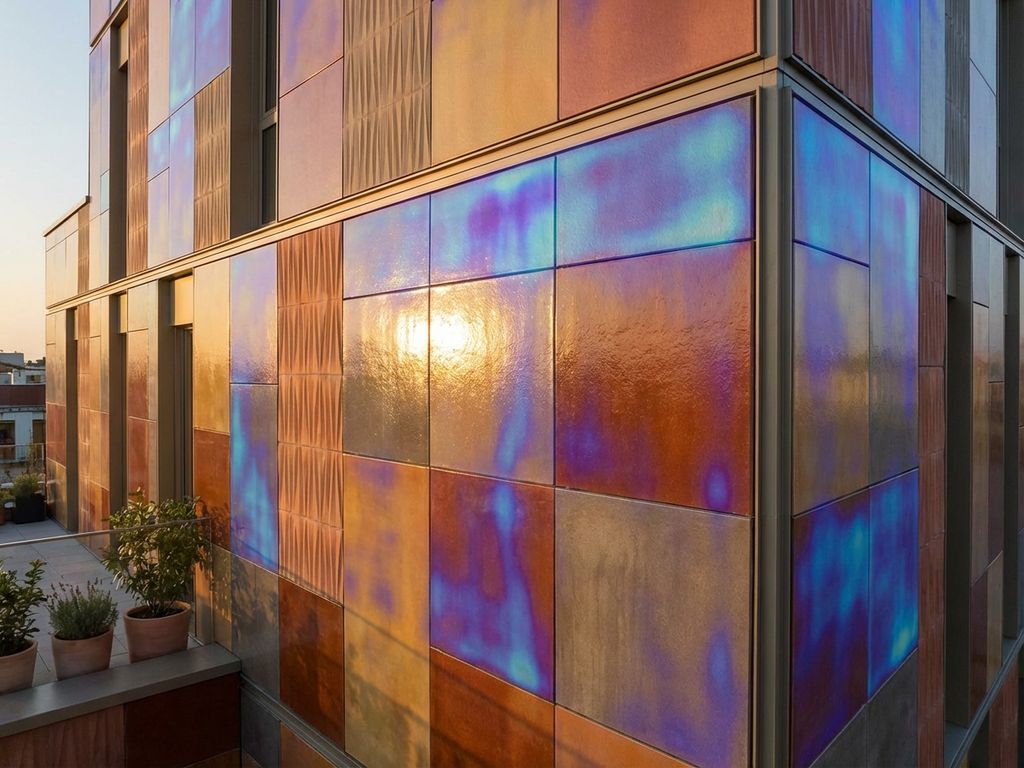
Ceramic facades can significantly improve building energy efficiency through their superior thermal properties, reduced heat transfer, and optimised insulation capabilities. These advanced building materials offer better thermal mass and lower conductivity than traditional facade options, helping maintain stable indoor temperatures while reducing heating and cooling demands throughout the year.
What makes ceramic facades more energy efficient than traditional materials?
Ceramic facades deliver superior energy efficiency through their unique material properties and thermal characteristics. The high-temperature firing process creates a dense, low-porosity surface that provides excellent thermal mass while maintaining low thermal conductivity compared to concrete, metal, or natural stone alternatives.
The thermal mass of ceramic materials helps regulate indoor temperatures by absorbing heat during warm periods and releasing it gradually when temperatures drop. This natural temperature moderation reduces the load on heating and cooling systems, which is particularly beneficial in climates with significant temperature fluctuations.
Unlike metal facades that conduct heat rapidly or concrete systems with higher thermal bridging potential, ceramic facades maintain more consistent surface temperatures. The fired ceramic structure creates microscopic air pockets that enhance insulation properties, while the smooth, dense surface reflects solar radiation more effectively than porous materials.
The lightweight nature of modern ceramic facade systems also allows for enhanced insulation layers behind the cladding, creating comprehensive thermal barriers that outperform heavier traditional materials that require structural compromises.
How do ceramic facades reduce heat loss and thermal bridging?
Ceramic facade systems minimise thermal bridging through advanced mounting mechanisms and continuous insulation strategies. The lightweight ceramic panels require smaller, less conductive fixing points, reducing the direct thermal pathways between interior and exterior environments that plague heavier facade systems.
Modern ceramic facade installation employs ventilated rainscreen principles, creating an air cavity between the ceramic cladding and the insulation layer. This ventilated space prevents moisture accumulation while providing an additional thermal barrier that interrupts heat transfer pathways.
The precise manufacturing tolerances of ceramic panels enable tight joints and consistent installation, eliminating gaps that typically cause heat loss in traditional masonry or concrete panel systems. Advanced fixing systems use thermally broken brackets and clips that further reduce conductive heat transfer through mounting points.
Continuous insulation layers can be installed more effectively with ceramic systems because the reduced structural requirements allow for uninterrupted insulation coverage. This eliminates the thermal bridges commonly created by structural elements in heavier facade systems.
What role does ceramic facade design play in passive solar heating?
Ceramic facade design optimises passive solar heating through strategic surface treatments, colour selection, and panel orientation that maximise beneficial solar gain while preventing overheating. The versatility of ceramic surfaces allows architects to create facades that respond intelligently to seasonal sun angles and building orientation.
Surface textures significantly influence solar heat absorption and reflection. Smooth ceramic surfaces reflect more solar radiation during summer months, while textured or profiled surfaces can be oriented to capture low-angle winter sun for beneficial heating. The variety of available surface treatments enables precise solar control strategies.
Colour selection plays a crucial role in passive solar design. Darker ceramic surfaces absorb more solar energy for winter heating, while lighter colours reflect summer heat. Advanced ceramic manufacturing allows for gradient colour schemes that optimise solar interaction across different facade orientations.
The thermal mass properties of ceramic facades store solar energy during sunny periods and release it gradually, extending the beneficial heating effect into evening hours. This thermal lag helps maintain comfortable indoor temperatures with reduced mechanical heating requirements.
How do ceramic facades contribute to overall building sustainability?
Ceramic facades enhance building sustainability through exceptional durability, complete recyclability, and minimal maintenance requirements over their extended lifecycle. These characteristics reduce environmental impact while providing long-term economic benefits compared to facades requiring frequent replacement or intensive maintenance.
The longevity of ceramic facades eliminates the environmental costs associated with regular facade renovations or replacements. Properly installed ceramic systems can perform effectively for decades without significant deterioration, reducing material consumption and construction waste over the building’s lifetime.
Manufacturing processes using local clay sources reduce transportation emissions, while the complete recyclability of ceramic materials enables circular economy principles. At end of life, ceramic facades can be completely dismantled and recycled into new products without quality degradation.
The maintenance-free nature of ceramic surfaces eliminates the need for regular cleaning chemicals, protective coatings, or treatments that characterise other facade materials. This reduces ongoing environmental impact while lowering lifecycle costs for building operators.
Energy efficiency improvements from ceramic facades reduce operational carbon emissions throughout the building’s life, often offsetting manufacturing emissions within the first few years of operation.
How TONALITY® ceramic facades maximise building energy performance
TONALITY® ceramic facades deliver exceptional energy performance through our high-temperature firing process exceeding 1,200 degrees Celsius, creating uniquely dense surfaces with superior thermal properties. Our lightweight design enables enhanced insulation strategies, while precise manufacturing tolerances ensure optimal installation performance.
Our ceramic facade systems provide comprehensive energy efficiency solutions:
- Advanced thermal properties from high-temperature firing create optimal thermal mass and low conductivity
- Lightweight construction enables continuous insulation installation without structural compromises
- Precise manufacturing tolerances ensure airtight installation, reducing heat loss through gaps
- Complete recyclability supports sustainable building practices and circular economy principles
- Maintenance-free surfaces eliminate ongoing environmental impact from cleaning and treatments
- Flexible design options optimise passive solar heating strategies for any building orientation
Ready to maximise your building’s energy performance with sustainable ceramic facade solutions? Contact our technical team to discuss how TONALITY® Keramikfassaden can enhance your project’s efficiency and sustainability goals.