

What Is the Urban Heat Island Effect, and How Do Building Materials Affect It?
The urban heat island effect occurs when cities become significantly warmer than surrounding rural areas due to human activities and infrastructure that absorb and retain heat. Building materials play a crucial role by either absorbing solar radiation and releasing it as heat or reflecting and dissipating thermal energy through their surface properties and thermal mass.
Traditional urban materials such as concrete, asphalt, and dark roofing absorb substantial amounts of solar energy during the day and then release this stored heat throughout the evening. This creates a cycle in which urban heat island effects intensify, leading to increased energy consumption for cooling and reduced comfort in metropolitan areas. The choice of facade materials directly influences whether buildings contribute to, or help mitigate, these temperature increases.
Modern sustainable building materials offer alternatives that can significantly reduce heat absorption and improve urban cooling. These materials work through various mechanisms, including higher solar reflectance, improved thermal performance, and enhanced ventilation properties that promote natural heat dissipation.
How Do Terracotta Facades Reduce Heat Absorption Compared to Other Materials?
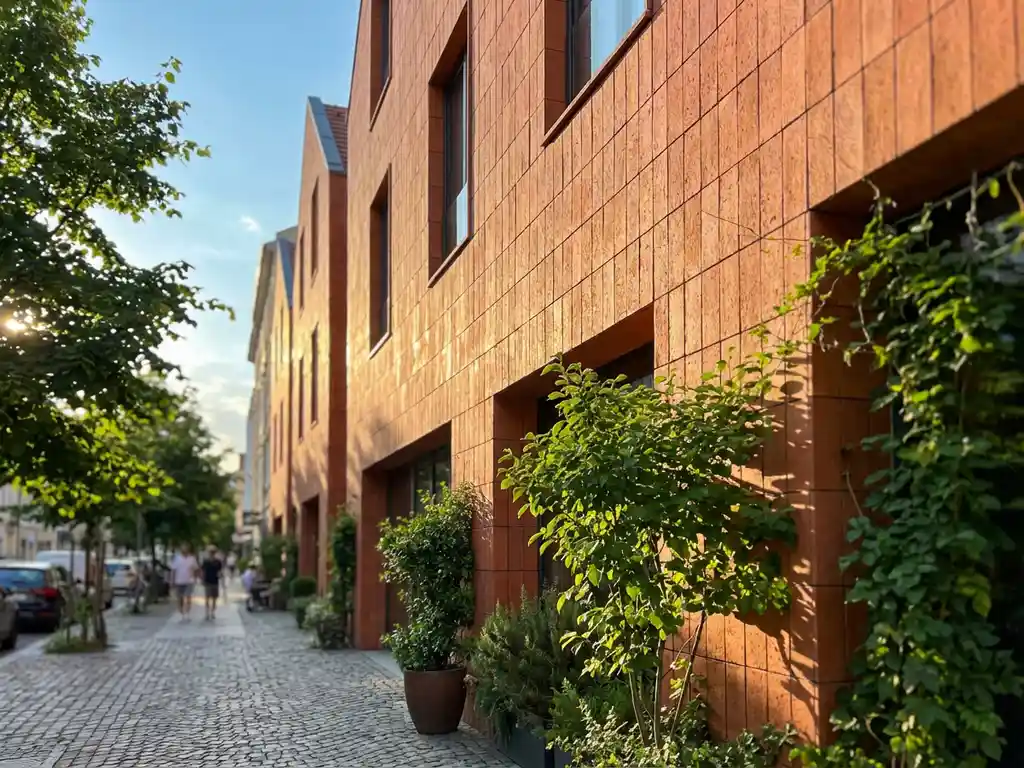
Terracotta facades reduce heat absorption through their naturally light colors, porous ceramic structure, and favorable thermal properties compared to concrete or metal cladding systems. Their ceramic composition supports heat dissipation, while their inherent characteristics reflect more solar radiation than darker, denser alternatives.
Unlike materials such as steel or concrete, which can create thermal bridges and store heat throughout the day, ceramic facades maintain more stable surface temperatures. The firing process used in terracotta production creates a dense yet breathable surface that does not accumulate heat in the same way as non-porous materials. This results in lower surface temperatures during peak sun exposure.
Research in urban climatology shows that ceramic materials can maintain surface temperatures several degrees cooler than conventional facade materials under identical conditions. This thermal performance advantage becomes particularly pronounced during heat waves, when traditional materials contribute significantly to elevated urban temperatures.
What Are the Key Thermal Properties That Make Ceramic Facades Effective?
The key thermal properties of ceramic facades include low thermal conductivity, high thermal mass, excellent solar reflectance, and moisture-regulation capabilities that work together to minimize heat transfer and maintain stable building-envelope temperatures.
Ceramic materials possess a unique combination of thermal characteristics that make them particularly effective for heat reduction. The sintering process creates a material structure with optimal density—dense enough to provide thermal mass for temperature regulation, yet sufficiently porous to prevent excessive heat storage. This balance allows ceramic facades to absorb heat during peak temperatures and release it gradually as ambient temperatures drop.
The thermal performance of ceramic facades is further enhanced by their moisture-management properties. Unlike materials that can become heat-saturated when wet, ceramic surfaces maintain their cooling performance even in humid conditions. The material’s ability to regulate moisture helps prevent the additional heat load that can occur when evaporation increases thermal stress on building envelopes.
How Do Ventilated Terracotta Facade Systems Create Natural Cooling?
Ventilated terracotta facade systems create natural cooling through the stack effect, in which air circulates in the cavity between the ceramic cladding and the building structure, drawing heat away from the building envelope and promoting continuous airflow that prevents heat buildup.
The design of ventilated facade systems takes advantage of natural convection. As air in the facade cavity heats up, it rises and exits at the top of the system while drawing cooler air in from the bottom. This continuous air movement prevents the ceramic panels from transferring absorbed heat to the building structure, effectively creating a thermal buffer zone.
Modern ceramic facade systems optimize this cooling effect through precise engineering of air-gap dimensions and ventilation openings. The lightweight nature of ceramic elements allows for larger air cavities without structural concerns, maximizing cooling potential. This natural ventilation system operates without energy input, contributing to both urban cooling and building energy efficiency.
What Role Do Color and Surface Texture Play in Heat Island Reduction?
Color and surface texture significantly affect heat island reduction by influencing solar reflectance and heat-dissipation rates. Lighter colors reflect more solar radiation, while textured surfaces increase surface area for heat dissipation and create micro-air movements that enhance cooling.
The solar reflectance index varies dramatically based on facade color, with light-colored ceramic surfaces reflecting up to 70–80% of incident solar radiation, compared to dark surfaces that may reflect only 20–30%. This difference translates directly into reduced heat absorption and a lower contribution to urban heat islands. Surface texture adds another dimension by creating shadow patterns and increasing the effective surface area available for heat exchange.
Ceramic facade manufacturers now offer extensive color palettes specifically designed to optimize solar reflectance while maintaining aesthetic appeal. Textured finishes can further enhance cooling performance by promoting air turbulence across the facade surface, increasing convective heat transfer and helping prevent the formation of thermal boundary layers that trap heat.
How TONALITY® Helps Reduce the Urban Heat Island Effect
TONALITY® ceramic facade systems address urban heat island challenges through advanced sinter-firing technology that creates optimized thermal properties and naturally light color options that maximize solar reflectance. Our ventilated facade systems promote natural cooling while maintaining the aesthetic versatility that modern urban architecture demands.
Key features that make TONALITY® effective for urban cooling include:
- Lightweight ceramic elements (40 kg/m²) that enable larger ventilation cavities for enhanced natural cooling
- A wide range of light-colored finishes engineered for maximum solar reflectance
- An interlocking aluminum profile system that optimizes airflow in ventilated configurations
- Dense, smooth surfaces produced by high-temperature firing that help prevent heat retention
- A1 fire classification, providing safety benefits alongside thermal performance
Discover how TONALITY® ceramic facade systems can contribute to cooler, more sustainable urban environments while delivering the design flexibility your projects require. Explore our project references to see successful implementations, or contact our technical team to explore thermal performance options for your next development.
Related Articles
- What is the expected lifespan of ceramic facade panels?
- How do architects create parametric designs with terracotta facades?
- How do you calculate wind load resistance for terracotta systems?
- 10 Reasons Terracotta Outperforms Aluminum Composite Panels
- What is the difference between ADS and BAS terracotta systems?