

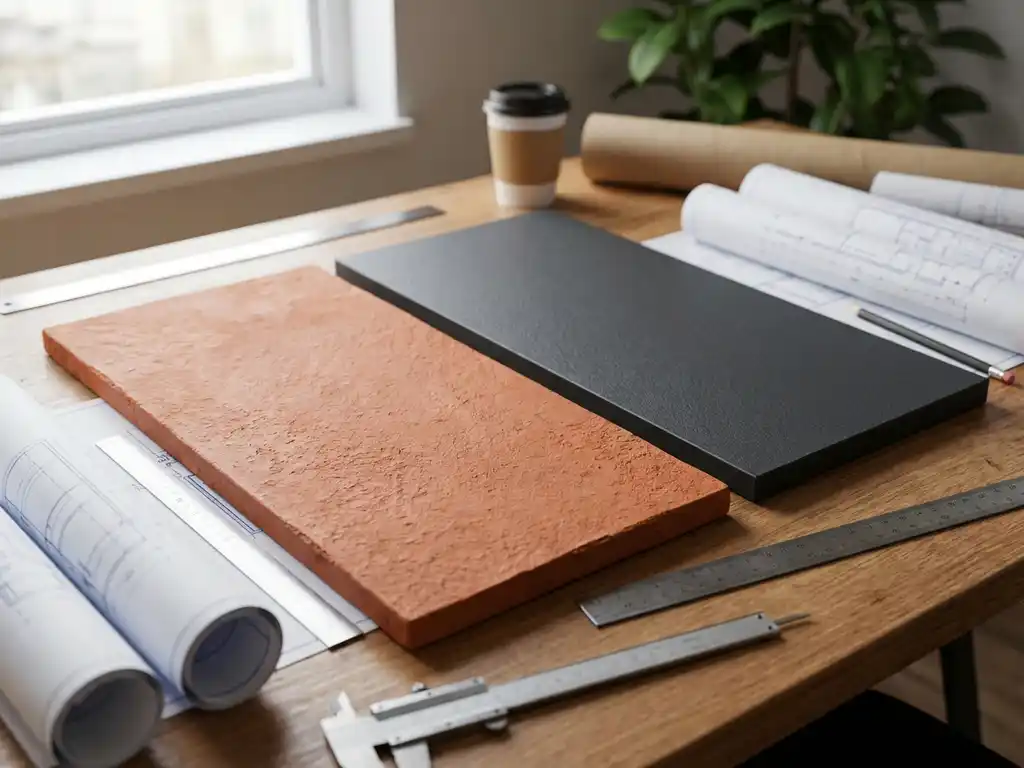
When comparing terracotta vs HPL panels, the fundamental difference lies in material composition and manufacturing processes. Terracotta panels are made from natural clay fired at high temperatures, creating a ceramic façade material with exceptional durability and fire resistance. HPL (High-Pressure Laminate) panels consist of compressed layers of kraft paper and resin, offering design flexibility but different performance characteristics. Understanding these distinctions helps architects and builders select the most suitable exterior cladding options for their building envelope systems.
What’s the fundamental difference between terracotta and HPL façade panels?
Terracotta panels are manufactured from natural clay through a high-temperature firing process exceeding 1,200°C, creating a dense ceramic material with inherent durability. HPL panels are produced by compressing multiple layers of kraft paper with thermosetting resins under high pressure and heat, typically around 150°C.
The ceramic façade comparison reveals significant material property differences. Terracotta achieves its strength and weather resistance through the sintering process, which fuses clay particles into a homogeneous, low-porosity structure. This manufacturing method results in a building façade material that maintains consistent properties throughout its thickness.
HPL panels rely on resin bonding for structural integrity, creating a composite material with different expansion and contraction characteristics. The laminated construction provides design versatility through various surface finishes and colours, though the core material properties differ substantially from ceramic alternatives.
Manufacturing precision also varies between these façade material selection options. Terracotta panels can be produced to extremely tight tolerances, while HPL panels may experience slight dimensional variations due to the compression process and organic material content.
How do terracotta and HPL panels compare in terms of durability and weather resistance?
HPL panel durability typically ranges from 15–25 years depending on environmental conditions and maintenance. Terracotta panels often exceed 50 years of service life due to their ceramic composition and inherent resistance to weathering processes.
UV resistance represents a critical performance factor in this ceramic vs composite panels comparison. Terracotta’s fired ceramic structure provides permanent colour stability and UV resistance, as the pigments are integrated during the high-temperature manufacturing process. HPL panels may experience gradual colour fading, particularly in intense sunlight, as the surface resin layer degrades over time.
Thermal cycling performance differs significantly between these materials. Terracotta handles repeated freeze–thaw cycles effectively due to its low moisture absorption and thermal stability. HPL panels can experience delamination or surface cracking when subjected to extreme temperature variations, particularly in climates with significant seasonal temperature ranges.
Moisture-handling capabilities favour terracotta systems. The fired ceramic structure resists water penetration while allowing vapour transmission, preventing moisture-related deterioration. HPL panels require careful edge sealing to prevent moisture infiltration that could compromise the laminated structure.
Which façade system offers better fire safety and building code compliance?
Terracotta panels achieve A1 fire classification, representing non-combustible materials that contribute no fuel to fires. HPL panels typically achieve B or C classifications, indicating limited combustibility but potential contribution to fire spread under extreme conditions.
Fire safety performance extends beyond initial ignition resistance. Terracotta façade performance includes zero smoke generation and no toxic gas emission during fire exposure, as the material contains no organic compounds. HPL panels may release smoke and potentially harmful gases when exposed to high temperatures due to their resin content.
Building code compliance varies by jurisdiction, but terracotta’s A1 rating generally satisfies the most stringent fire safety requirements without additional protective measures. HPL installations may require fire barriers, increased spacing from openings, or sprinkler system integration to meet building envelope systems regulations.
Structural fire resistance also differs between these materials. Terracotta maintains its integrity and protective function during fire exposure, while HPL panels may lose structural capacity and protective properties at elevated temperatures, potentially exposing the underlying structure.
What are the key differences in installation complexity and structural requirements?
Installation complexity varies significantly in this façade installation comparison. Terracotta systems often feature interlocking profiles that simplify mounting procedures, while HPL panels typically require more complex fixing systems with multiple attachment points per panel.
Structural loading requirements favour terracotta installations. Modern ceramic panels weigh approximately 40 kg per square metre, allowing lighter substructure designs and reduced foundation requirements. HPL panels, while lighter individually, often require more substantial fixing frameworks that can increase overall structural demands.
Installation speed differs between these exterior cladding options. Terracotta’s interlocking systems enable rapid installation with fewer fixing points, reducing labour time and weather exposure during construction. HPL installations require precise alignment and multiple mechanical fixings, extending installation periods.
Specialist expertise requirements also vary. Terracotta systems can be installed by standard curtain wall contractors with minimal additional training. HPL installations may require specialised knowledge of thermal movement accommodation and edge sealing techniques to ensure long-term performance.
How do maintenance requirements and lifecycle costs compare between these materials?
Maintenance requirements strongly favour terracotta systems in long-term building operation. The fired ceramic surface resists soiling and includes integrated graffiti protection, requiring only periodic cleaning with standard building maintenance procedures.
HPL panels demand more intensive maintenance protocols. Surface cleaning must avoid harsh chemicals that could damage the resin coating, and regular inspection of edge seals is required to prevent moisture infiltration. Replacement of individual panels may prove challenging due to colour-matching difficulties as adjacent panels age.
Lifecycle cost analysis reveals significant advantages for ceramic façade systems. Despite potentially higher initial investment, terracotta’s extended service life, minimal maintenance requirements, and complete recyclability provide superior total cost of ownership over the building’s operational period.
Repair procedures differ substantially between these materials. Damaged terracotta panels can be individually replaced without affecting adjacent elements. HPL panel replacement may require removal of multiple panels due to fixing system constraints, increasing repair complexity and associated costs.
How TONALITY® ceramic façades outperform traditional façade solutions
TONALITY® ceramic façades deliver superior performance through advanced sinter-firing technology that creates exceptional density and durability. The integrated mounting system with profiled backs and aluminium retaining profiles provides rapid installation while ensuring long-term structural reliability.
Key performance advantages include:
- A1 fire classification with zero combustible components for maximum safety compliance
- Integrated graffiti protection and permanent UV resistance, eliminating maintenance concerns
- 100% recyclability, supporting sustainable construction practices and circular economy principles
- Precision manufacturing to 1 mm tolerance, ensuring perfect architectural expression
- Low 40 kg/m² weight, enabling lightweight substructures and timber construction compatibility
TONALITY® systems address modern construction challenges through innovative ceramic technology that combines aesthetic flexibility with uncompromising technical performance. The single-layer production process and interlocking installation method deliver both immediate construction benefits and decades of maintenance-free operation.
Discover how TONALITY® ceramic façades can enhance your next project’s performance, sustainability, and long-term value. Contact our technical team to explore customised solutions that meet your specific architectural and performance requirements.