

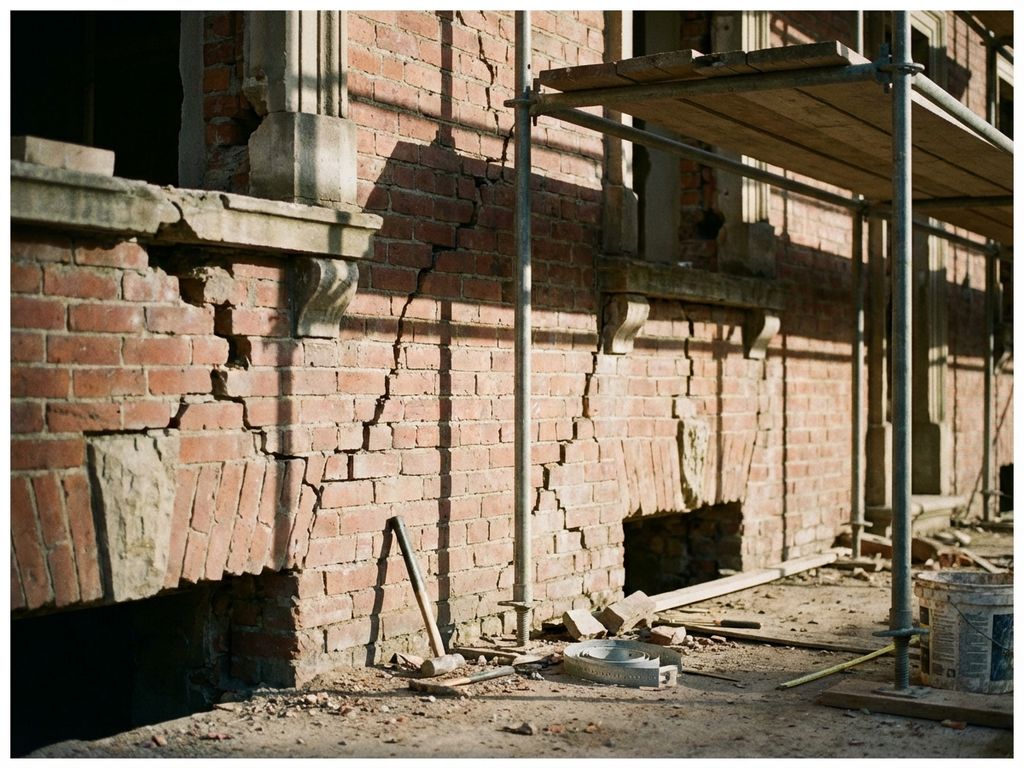
Facade renovation mistakes can cause severe structural damage through improper moisture barriers, inadequate structural assessments, poor material selection, and faulty installation techniques. These errors compromise building integrity, leading to water infiltration, load-bearing failures, and costly repairs. Understanding these common pitfalls helps prevent catastrophic structural problems during Fassadensanierung projects.
What are the most common facade renovation mistakes that cause structural damage?
The most critical facade renovation mistakes include inadequate structural support calculations, improper moisture barrier installation, poor material selection, and incorrect fastening techniques. These errors can compromise the entire building envelope, leading to water damage, structural instability, and safety hazards that require extensive remediation.
Improper moisture barriers represent one of the most damaging mistakes in facade renovation. When vapor barriers are incorrectly positioned or sealed, they allow moisture infiltration that can cause timber rot, steel corrosion, and concrete deterioration. This problem often goes unnoticed until significant structural damage has occurred.
Inadequate structural support calculations frequently occur when renovation teams underestimate the weight of new facade materials or fail to account for wind loads. This oversight can overload existing structural elements, causing deflection, cracking, or even partial building failure. Professional engineering assessment is essential before any major facade modification.
Poor material selection compounds these problems when incompatible materials are combined or when products unsuitable for specific environmental conditions are chosen. For example, using materials with different thermal expansion rates can create stress points that lead to cracking and structural movement over time. Modern terracotta facade systems offer superior compatibility and thermal stability compared to traditional materials.
How can inadequate structural assessment lead to facade failure?
Inadequate structural assessment leads to facade failure by overlooking load-bearing capacity limitations, existing damage, and structural compatibility issues. Without proper engineering evaluation, renovation teams may install systems that exceed the building’s capacity or fail to address underlying structural weaknesses, resulting in catastrophic failure.
Load-bearing capacity analysis is fundamental to any facade renovation project. Buildings have specific weight limits that must not be exceeded when adding new facade elements. Failing to calculate these loads properly can cause structural overload, leading to sagging, cracking, or complete system failure.
Existing damage assessment is equally crucial, as hidden structural problems can worsen during renovation if not identified and addressed beforehand. Compromised foundations, deteriorated support beams, or weakened connections may not be visible but can fail under the stress of renovation activities or new facade loads.
The consequences of proceeding without proper engineering evaluation include progressive structural failure, where initial problems cascade into more severe damage. This can result in emergency repairs, building evacuations, and legal liability issues that far exceed the cost of proper initial assessment.
Why do moisture and weatherproofing errors cause long-term structural problems?
Moisture and weatherproofing errors cause long-term structural problems by allowing water infiltration that leads to material degradation, freeze-thaw damage, and structural element failure. Poor sealing and inadequate drainage systems create conditions for rot, corrosion, and deterioration that progressively weaken the building’s structural integrity over time.
Improper sealing around facade penetrations, joints, and connections creates pathways for water entry. Once moisture enters the building envelope, it can travel through wall cavities, causing damage far from the original entry point. This hidden damage often goes undetected until structural elements have been significantly compromised.
Inadequate drainage systems compound moisture problems by allowing water to accumulate rather than directing it safely away from the structure. Standing water creates hydrostatic pressure against building elements and provides sustained moisture exposure that accelerates material degradation.
Poor vapor barrier installation disrupts the building’s moisture management system, leading to condensation within wall assemblies. This trapped moisture creates ideal conditions for mold growth, timber rot, and metal corrosion that can undermine structural elements over months or years. Modern ceramic facade systems help address these issues through superior moisture resistance and proper drainage design.
What installation mistakes can compromise the entire facade system?
Installation mistakes that compromise entire facade systems include improper fastening techniques, incorrect spacing of support elements, poor alignment procedures, and inadequate quality control. These errors can result in progressive system failure, safety hazards, and the need for complete facade replacement rather than simple repairs.
Improper fastening techniques represent a critical failure point in facade systems. Using incorrect fastener types, inadequate penetration depths, or improper spacing can create weak points that fail under wind loads or thermal stress. This is particularly dangerous with heavy facade materials, where fastener failure can result in falling debris.
Incorrect spacing of support elements disrupts load distribution across the facade system. When supports are placed too far apart or in the wrong locations, they create stress concentrations that can cause localized failure and progressive system collapse. Each facade system has specific support requirements that must be followed precisely.
Poor alignment procedures create uneven loads and stress concentrations throughout the facade system. Misaligned elements can bind against each other during thermal movement, creating forces that the system was not designed to handle. This can lead to cracking, buckling, or complete system failure.
Inadequate quality control during installation allows multiple small errors to compound into major problems. Without proper inspection and verification at each stage, installation mistakes can go unnoticed until they result in system failure or safety hazards.
How do you identify warning signs of structural damage during facade renovation?
Warning signs of structural damage during facade renovation include unusual settling, new or expanding crack patterns, visible deflection in structural elements, and changes in load distribution. These indicators require immediate professional evaluation to prevent catastrophic failure and ensure worker and occupant safety.
Unusual settling manifests as doors and windows becoming difficult to operate, new gaps appearing around openings, or visible separation between building elements. This indicates that structural elements may be overloaded or failing, requiring immediate assessment and potential work stoppage.
Crack patterns provide valuable information about structural stress and movement. Diagonal cracks often indicate differential settling, while horizontal cracks may suggest overloading. New cracks appearing during renovation work signal that the building is responding to changed conditions and may be approaching failure.
Load distribution issues become apparent when renovation activities cause unexpected movement or noise in the building structure. Creaking, popping sounds, or visible deflection in beams and supports indicate that loads are not being carried as designed.
Other red flags include water stains appearing in new locations, which may indicate that renovation work has disrupted moisture barriers, and any visible deterioration of structural elements that was not apparent before work began. These signs require immediate professional attention to prevent catastrophic failure and protect both workers and building occupants. Professional facade renovation specialists include comprehensive monitoring for these warning signs throughout the project duration.
Recognizing these warning signs early and responding with appropriate professional intervention can prevent minor structural issues from escalating into major failures. The key is maintaining vigilant observation throughout the renovation process and never ignoring signs that suggest structural compromise, regardless of project timelines or budget pressures.
Related Articles
- How do you install ceramic facade panels?
- How do architects create parametric and computational terracotta facade designs?
- How do mechanical fixing systems compare to adhesive systems for terracotta?
- What is the difference between glazed and unglazed terracotta for facades?
- How long do terracotta facade systems last?