

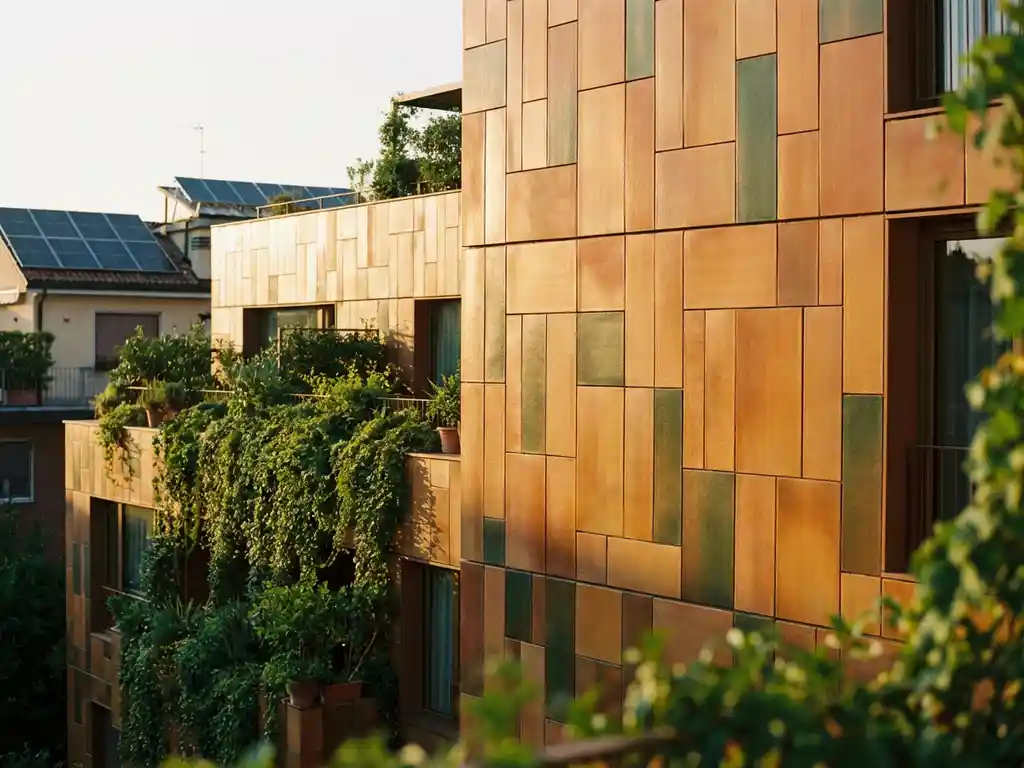
Terracotta facades can contribute to multiple LEED credits, primarily in the Materials and Resources (MR), Energy and Atmosphere (EA), and Innovation categories. Ceramic facade systems support sustainable building material requirements through their recyclability, durability, and energy performance benefits. These green building facades help projects achieve LEED points through regional sourcing, reduced maintenance needs, and superior thermal properties that enhance overall building performance.
What LEED credits can terracotta facades contribute to?
Terracotta facades primarily contribute to Materials and Resources (MR) credits, Energy and Atmosphere (EA) credits, and Innovation in Design credits within LEED certification systems. These sustainable facade systems align with green building requirements through their material composition, manufacturing processes, and performance characteristics.
The Materials and Resources category offers the most opportunities for LEED points for ceramic tiles. Ceramic facades qualify for recycled content credits when manufactured with recycled materials, regional materials credits when sourced locally, and construction waste management credits through efficient installation processes. Their 100% recyclability at end of life supports circular economy principles valued in LEED assessments.
Energy and Atmosphere credits become achievable through the energy efficiency contributions of terracotta facades. The thermal mass properties of ceramic materials help regulate building temperatures, reducing heating and cooling demands. When properly integrated with insulation systems, these facades contribute to overall building envelope performance optimization.
Innovation credits may be earned through novel applications of ceramic facade sustainability features. Projects demonstrating exceptional performance in durability, maintenance reduction, or integrated technologies can qualify for additional LEED points through the Innovation in Design category.
How do ceramic facades help with LEED materials and resources credits?
Ceramic facades support LEED material credits through recycled content, regional sourcing, and construction waste reduction. These sustainable building materials qualify for multiple MR credits when properly documented and specified within LEED requirements.
Recycled content credits become available when ceramic tiles incorporate post-consumer or post-industrial recycled materials in their composition. Many manufacturers include recycled ceramic materials, glass, or other components that contribute to the required recycled content percentages for LEED qualification.
Regional materials credits apply when ceramic facades are manufactured within 500 miles of the project site. This proximity requirement reduces transportation-related environmental impacts while supporting local economies. Projects should verify manufacturer locations and raw material sources to maximize regional content percentages.
Construction waste management benefits arise from precise manufacturing tolerances and efficient installation methods. Ceramic facade tiles can be produced to exact specifications, minimizing on-site cutting waste. The interlocking installation systems reduce material waste during construction, supporting waste diversion goals required for LEED credits.
The complete recyclability of ceramic materials at building end of life supports long-term sustainability goals. These green construction materials can be reclaimed, processed, and reused in new applications, contributing to circular economy principles increasingly valued in LEED assessments.
Why are terracotta facades beneficial for LEED energy and atmosphere credits?
Terracotta facade energy efficiency contributions support LEED EA credits through thermal performance improvements and building envelope optimization. Ceramic materials provide thermal mass benefits that help regulate interior temperatures and reduce mechanical system demands.
The thermal mass properties of ceramic facades absorb heat during warm periods and release it gradually, helping stabilize interior temperatures. This thermal regulation reduces heating and cooling energy consumption, directly supporting energy performance requirements for LEED EA credits.
When integrated with proper insulation systems, ceramic facades contribute to continuous thermal barriers that minimize heat transfer. The dense, non-porous surface of fired ceramic materials provides weather resistance while maintaining thermal performance over time.
Building envelope performance improvements result from the durability and dimensional stability of ceramic materials. Unlike materials that degrade or lose performance over time, ceramic facades maintain their thermal properties throughout the building lifecycle, supporting long-term energy efficiency goals.
The low weight of modern ceramic facade systems allows for enhanced insulation thickness without structural penalties. This flexibility enables designers to optimize thermal performance while meeting aesthetic requirements, supporting overall building energy performance targets required for LEED certification.
What makes ceramic facades qualify for LEED durability and maintenance credits?
Ceramic facades qualify for LEED durability credits through exceptional weather resistance, minimal maintenance requirements, and extended service life. These characteristics reduce building operational impacts and support sustainable building operations over time.
Weather resistance stems from the high-temperature firing process that creates dense, non-porous ceramic surfaces. These surfaces resist moisture penetration, freeze-thaw cycles, and chemical exposure that typically degrade other facade materials. The permanent color integration prevents fading from UV exposure, maintaining appearance without replacement.
Maintenance requirements remain minimal throughout the facade lifecycle. Ceramic surfaces resist staining, biological growth, and atmospheric soiling that require regular cleaning or treatment on other materials. When cleaning becomes necessary, simple water washing restores the original appearance without chemical treatments.
The extended service life of ceramic facades reduces replacement frequency and associated environmental impacts. Properly installed ceramic facade systems can perform effectively for decades without significant degradation, supporting lifecycle cost benefits valued in LEED assessments.
Fire resistance properties contribute to building safety and durability goals. Ceramic materials achieve non-combustible classification, supporting fire safety requirements while eliminating concerns about flame spread or toxic smoke generation that affect other facade materials.
How do you document terracotta facade contributions for LEED certification?
Documenting terracotta facade contributions requires manufacturer declarations, material specifications, and performance data that demonstrate LEED credit compliance. Proper documentation planning during design phases maximizes credit achievement opportunities.
Manufacturer environmental product declarations (EPDs) provide essential data for LEED submissions. These documents detail recycled content percentages, regional material sources, manufacturing processes, and end-of-life considerations. Request current EPDs early in the specification process to confirm credit eligibility.
Material cut sheets and technical specifications document performance characteristics relevant to energy and durability credits. Include thermal properties, fire ratings, maintenance requirements, and warranty information that support LEED credit narratives.
Installation documentation should capture waste management practices, packaging recycling, and construction efficiency measures. Photograph installation processes and maintain waste diversion records that demonstrate sustainable construction practices.
Coordinate with LEED consultants to align facade documentation with the overall certification strategy. Different LEED rating systems may emphasize different credits, requiring tailored documentation approaches. Submit preliminary credit calculations early to identify any additional documentation needs before construction completion.
How TONALITY® ceramic facades support LEED certification goals
TONALITY® ceramic facade systems contribute to multiple LEED credits through their manufacturing excellence, material properties, and sustainable design features. These high-performance facades support green building certification through measurable environmental benefits.
Key LEED contributions include:
- 100% recyclable ceramic materials supporting circular economy principles
- Regional sourcing from European clay deposits reducing transportation impacts
- A1 fire safety classification providing non-combustible building envelope performance
- Low surface weight (40 kg/m²) enabling efficient structural systems
- Maintenance-free performance reducing operational environmental impacts
- Precise manufacturing tolerances minimizing construction waste
- Integrated graffiti protection eliminating chemical cleaning requirements
The single-layer production process and high-temperature sintering create dense, durable surfaces that maintain performance throughout extended building lifecycles. This longevity supports LEED durability requirements while providing lifecycle cost advantages valued in sustainable building assessments.
Ready to explore how TONALITY® ceramic facades can support your LEED certification goals? Contact our specification team for detailed environmental documentation, credit calculations, and technical support tailored to your green building project requirements.
Related Articles
- What are the main principles of good architectural design?
- What are the challenges in sustainable design?
- When should you consider sustainable building material alternatives?
- How do ADS terracotta systems function?
- 10 International Green Building Certifications That Favor Terracotta
Articles connexes
- What are the benefits of sustainable building materials?
- What role do sustainable materials play in LEED certification?
- Can ceramic facades help meet fire safety building codes?
- Facade Material Selection Matrix: Comparing 8 Cladding Options for Architects
- How do architects create parametric and computational terracotta facade designs?