

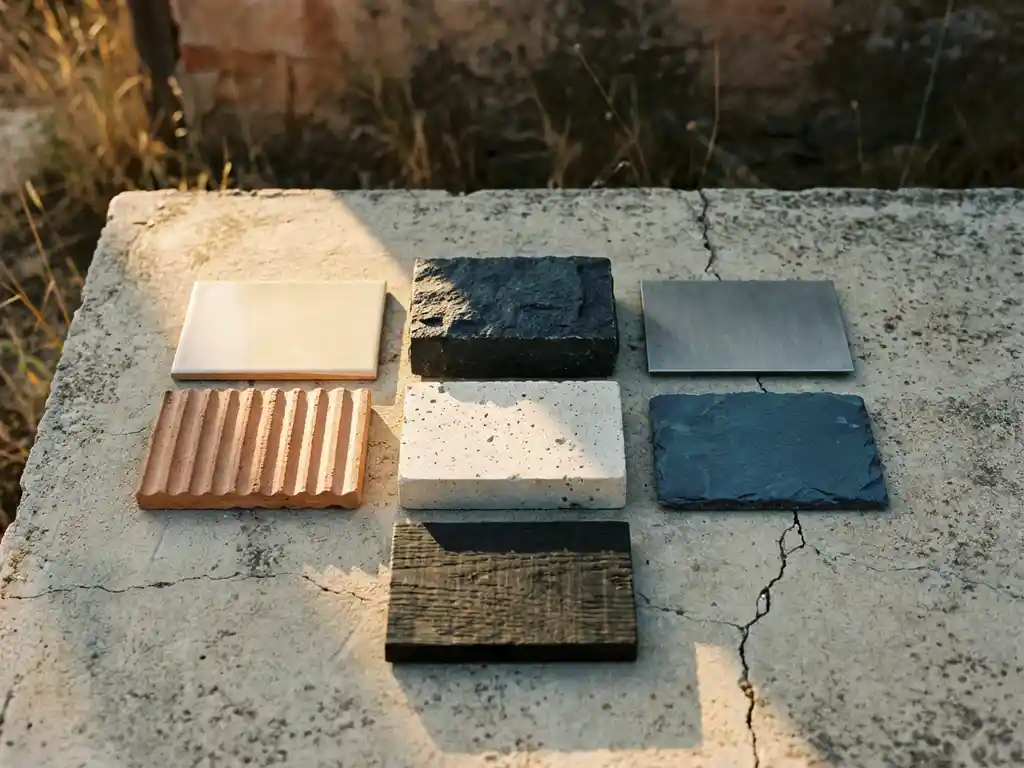
Why True Lifecycle Costs Matter More Than the Initial Price
When selecting facade cladding materials, the initial investment represents only a fraction of the total cost over a building’s lifespan. True lifecycle costs include maintenance, repairs, energy performance, and eventual replacement—expenses that can multiply the original investment several times over a 50-year period.
Smart building owners and architects evaluate facade systems based on the total cost of ownership rather than upfront expenses alone. This comprehensive approach reveals which building materials deliver genuine long-term value and which seemingly economical options become financial burdens over time.
1: Natural Stone Cladding Lifecycle Analysis
Natural stone facades offer exceptional durability and timeless aesthetic appeal, often lasting well beyond 50 years with proper installation. The material’s inherent weather resistance and low thermal expansion make it particularly suitable for harsh climates, where other facade systems may deteriorate rapidly.
However, stone cladding requires significant structural support due to its weight, increasing substructure costs and limiting retrofit applications. Maintenance needs vary considerably by stone type—while granite and slate require minimal upkeep, limestone and sandstone may need regular cleaning and periodic sealing to prevent weathering and staining.
2: Brick Facade Systems: Long-Term Performance
Traditional brick facades demonstrate remarkable longevity, with many installations performing well for 75–100 years. The material’s proven track record and widespread familiarity among contractors help control installation costs, while its thermal mass can contribute to energy efficiency in appropriate climates.
Lifecycle considerations include mortar joint maintenance, which typically requires repointing every 25–30 years, depending on exposure conditions. Efflorescence and water-penetration issues may develop over time, particularly in installations where proper moisture management was not addressed initially. The substantial weight also necessitates robust structural support systems.
3: Metal Cladding Total Cost of Ownership
Metal facade systems, including aluminum, steel, and zinc, provide excellent design flexibility and relatively straightforward installation. Aluminum systems offer superior corrosion resistance and maintain their appearance with minimal maintenance, while weathering steel develops a protective patina that eliminates the need for protective coatings.
Long-term costs vary significantly by metal type and finish. Painted metal surfaces typically require refinishing every 15–20 years to maintain appearance and protection, while anodized aluminum and naturally weathering metals can perform maintenance-free for decades. Thermal movement considerations may require periodic seal replacement and expansion-joint maintenance.
4: Fiber Cement Panels Economic Analysis
Fiber cement cladding combines moderate initial costs with respectable durability, typically warranted for 30–50 years. The material resists fire, insects, and rot while offering good dimensional stability across temperature variations. Installation complexity remains manageable for most construction teams.
Maintenance requirements include periodic inspection of fasteners and sealants, with potential panel replacement needed if impact damage occurs. Some fiber cement products may require repainting every 10–15 years to maintain optimal appearance, though through-colored options extend this interval significantly. Proper installation detailing is critical for long-term performance.
5: EIFS Systems Hidden Maintenance Costs
Exterior Insulation and Finish Systems (EIFS) deliver excellent thermal performance and design versatility at competitive initial costs. The continuous insulation layer can significantly reduce energy consumption, providing ongoing operational savings that offset maintenance expenses over time.
However, EIFS requires more frequent maintenance than many alternatives, with finish coats typically needing renewal every 10–15 years. Sealant replacement around penetrations is critical to prevent moisture intrusion, which can cause extensive damage requiring complete system replacement. Regular inspection and prompt repair of minor damage are essential for achieving the full service life.
6: Wood Cladding Maintenance and Replacement
Wood facade systems provide natural beauty and excellent thermal properties, with some species, such as cedar and redwood, offering natural decay resistance. Properly maintained wood cladding can achieve a 30–50-year service life while supporting sustainable building practices through renewable material sourcing.
Maintenance intensity varies dramatically by wood species, finish type, and exposure conditions. Most wood facades require refinishing every 3–7 years to maintain protection and appearance, with individual boards needing replacement as weathering progresses. Even naturally durable species benefit from protective treatments to maximize service life and minimize ongoing maintenance costs.
7: Ceramic Facades: Maintenance-Free Performance
Ceramic facade systems deliver exceptional long-term value through virtually maintenance-free performance over 50+ year lifespans. The high-temperature firing process creates dense, non-porous surfaces that resist staining, fading, and weather damage while maintaining their original appearance indefinitely.
The lightweight nature of modern ceramic systems reduces structural requirements compared to stone or brick, lowering both initial construction costs and improving retrofit feasibility. A1 classification as a non-combustible building material provides additional safety benefits, while the material’s complete recyclability supports sustainable construction practices. Installation efficiency through interlocking profile systems further controls labor costs.
Choose Your Facade Material With Confidence
Selecting the optimal facade cladding material requires balancing initial investment against long-term performance expectations and maintenance capabilities. Consider your building’s expected service life, local climate conditions, and available maintenance resources when evaluating the total cost of ownership across different facade systems.
The most economical choice over a 50-year lifecycle often differs significantly from the lowest initial-cost option. Focus on materials that align with your maintenance philosophy and budget while delivering the aesthetic and performance characteristics your project requires. Review proven facade project examples to understand how different materials perform in real-world applications.
How TONALITY® Delivers Maintenance-Free Facade Performance
TONALITY® ceramic facades eliminate the hidden lifecycle costs that burden other cladding materials through maintenance-free performance spanning decades. Our ceramic elements undergo special sinter firing at temperatures exceeding 1,200°C, creating unrivaled smooth, dense surfaces that resist weathering, staining, and UV degradation without requiring protective treatments or refinishing.
- Zero maintenance requirements: Integrated graffiti protection and permanent color stability eliminate ongoing upkeep costs
- Lightweight installation: Only 40 kg per square meter reduces structural requirements and installation complexity
- Fire safety assurance: A1 non-combustible classification provides superior building safety
- Complete recyclability: 100% reusable materials support sustainable construction goals
- Precision manufacturing: Millimeter-accurate production ensures consistent installation and appearance
Ready to eliminate facade maintenance costs from your building’s lifecycle budget? Contact our facade specialists to discover how TONALITY® ceramic systems deliver unmatched long-term value for your next project.
Articles connexes
- Wann sollte eine Schule in eine Graffiti-resistente Facade investieren?
- Wie lange hält eine Graffitischutz-Beschichtung an einer Außenfassade?
- What are the biggest terracotta facade design trends architects are specifying in 2026?
- How does terracotta contribute to BREEAM certification?
- Why are earth tones dominating modern facade design?