

When architects and building professionals invest in terracotta facades, they’re making a commitment that extends decades into the future. Yet the difference between a facade that maintains its beauty and performance for generations and one that deteriorates within years often comes down to one crucial factor: comprehensive technical testing.
The ceramic facades industry has developed rigorous testing protocols that evaluate every aspect of terracotta performance, from structural integrity to aesthetic longevity. These tests aren’t just bureaucratic requirements—they’re your assurance that the facade will withstand everything from Arctic freeze-thaw cycles to scorching desert heat, from seismic activity to chemical exposure.
Understanding these essential tests empowers you to make informed decisions about facade performance testing and ensures your project meets the highest standards of durability and safety.
1. Freeze-thaw resistance testing
Terracotta facades face one of their greatest challenges in climates where temperatures regularly cross the freezing point. Water that penetrates even microscopic pores expands by approximately 9% when it freezes, creating internal pressures that can crack or spall ceramic materials over repeated cycles.
This testing involves subjecting terracotta samples to hundreds of freeze-thaw cycles, typically ranging from -20°C to +20°C. The process reveals how well the material’s internal structure can accommodate this expansion without compromising integrity. Quality terracotta facade testing requires samples to maintain their structural properties and show minimal surface deterioration after extensive cycling.
Different climate zones demand varying levels of resistance. Facades destined for northern European climates must demonstrate exceptional freeze-thaw durability, while those in Mediterranean regions face less stringent requirements but still need adequate protection against occasional frost events.
2. Water absorption and permeability tests
Water absorption directly correlates with a terracotta facade’s long-term performance and durability. Lower absorption rates typically indicate denser ceramic bodies with fewer pathways for moisture infiltration, which translates to better resistance against freeze-thaw damage, chemical attack, and biological growth.
Testing protocols measure both the rate of water absorption and total absorption capacity over specified time periods. Industry standards typically require absorption rates below certain thresholds, though exact specifications vary based on the intended application and exposure conditions. The relationship between porosity and performance becomes particularly critical in harsh weather environments.
These tests also evaluate how quickly facades shed water after rain events, ensuring that moisture doesn’t accumulate in ways that could compromise the building envelope or create conditions for mould growth behind the facade system.
3. Thermal shock resistance evaluation
Modern buildings subject facades to dramatic temperature fluctuations that would have been unimaginable in traditional construction. Dark-coloured terracotta surfaces can reach temperatures exceeding 80°C in direct sunlight, then drop rapidly during sudden weather changes or when shaded by clouds.
Thermal shock testing exposes samples to rapid temperature changes while monitoring for cracks, dimensional changes, or surface deterioration. The testing protocol typically involves heating samples to elevated temperatures, then rapidly cooling them, simulating the most extreme conditions the facade might encounter during its service life.
Ceramic facade standards require materials to withstand these temperature differentials without developing stress cracks or losing their structural integrity. This testing becomes particularly important for facades in climates with high diurnal temperature variations or those exposed to reflective surfaces that can create intense localised heating.
4. Mechanical strength and impact testing
Terracotta facade elements must withstand various mechanical stresses throughout their service life, from wind loads and thermal expansion forces to accidental impacts during maintenance activities. Comprehensive testing evaluates both static strength properties and dynamic impact resistance.
Flexural strength testing determines how much bending stress terracotta elements can handle before failure, which directly relates to their ability to span between support points and accommodate building movement. Impact testing simulates scenarios like hail strikes, maintenance equipment contact, or debris impact during storms.
The testing also evaluates how mechanical properties change over time when exposed to environmental conditions. Quality facade technical tests ensure that strength characteristics remain stable throughout the facade’s intended service life, providing consistent performance and safety margins.
5. Fire resistance and non-combustibility tests
Building safety regulations increasingly demand comprehensive fire performance data for facade materials, making fire testing absolutely critical for terracotta systems. These tests evaluate multiple aspects of fire behaviour, including combustibility, flame spread, smoke production, and structural integrity under fire conditions.
Non-combustibility testing verifies that terracotta materials won’t contribute fuel to a fire, while fire resistance testing evaluates how long facade assemblies can maintain their structural integrity and prevent fire spread. Different building types and heights require varying levels of fire performance, with high-rise structures demanding the most stringent standards.
The testing also considers how facade systems behave as complete assemblies, not just individual components. This holistic approach ensures that joints, fixings, and interfaces don’t create weak points that could compromise the overall fire performance of the building envelope.
6. What dimensional accuracy tests reveal about quality
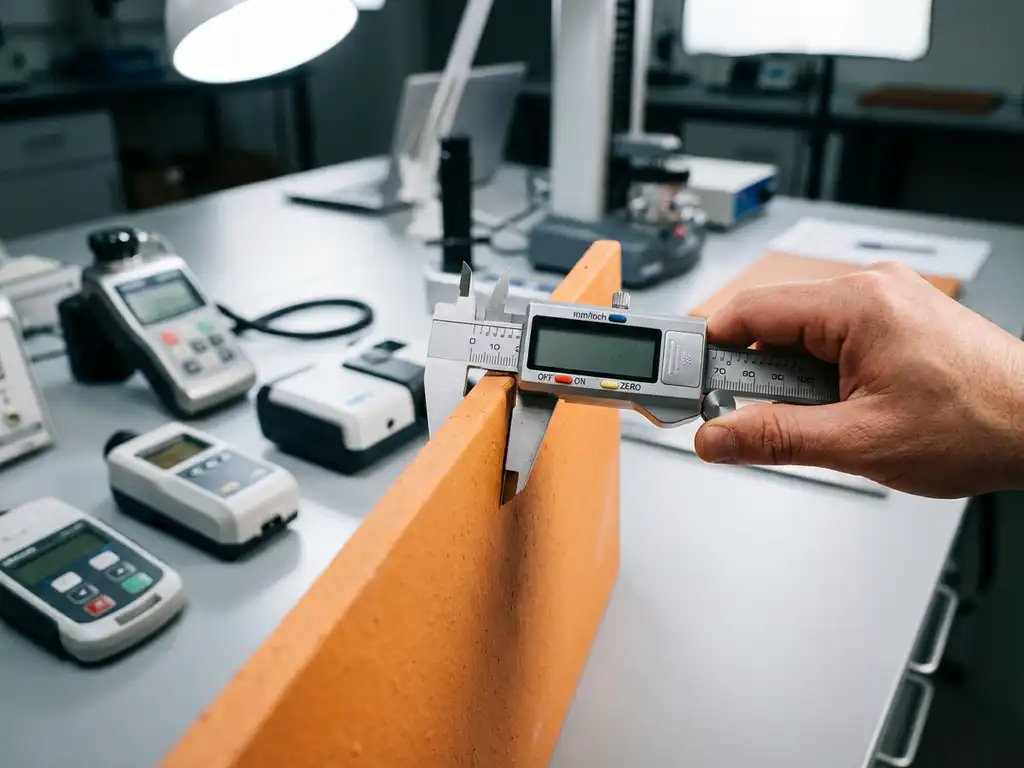
Precision manufacturing directly impacts both installation efficiency and long-term facade performance. Dimensional accuracy testing evaluates how closely finished terracotta elements conform to their specified dimensions, revealing crucial insights about manufacturing quality and consistency.
These tests measure tolerances for length, width, thickness, flatness, and geometric accuracy. Tighter tolerances indicate superior manufacturing control and typically correlate with better overall quality. When elements fit together precisely, installation proceeds more smoothly, joint widths remain consistent, and the finished facade achieves its intended aesthetic.
Terracotta durability tests often reveal that dimensional consistency also affects long-term performance. Elements with poor dimensional accuracy may create stress concentrations at joints or mounting points, potentially leading to premature failure or maintenance issues.
7. Chemical resistance and durability testing
Urban environments expose facades to a complex cocktail of chemical pollutants, from acid rain and automotive emissions to industrial contaminants and cleaning products. Chemical resistance testing evaluates how terracotta surfaces respond to these exposures over extended periods.
Testing protocols expose samples to various acidic and alkaline solutions, simulating decades of environmental exposure in accelerated timeframes. The evaluation considers both aesthetic changes, such as colour shifts or surface etching, and structural effects that might compromise material integrity.
These tests become particularly important for facades in industrial areas or coastal environments where salt exposure adds another layer of chemical challenge. Quality testing ensures that ceramic facade quality remains stable even under aggressive environmental conditions.
8. Adhesion and bonding strength tests
The connection between terracotta elements and the building structure represents a critical interface that must maintain integrity throughout the facade’s service life. Adhesion testing evaluates both mechanical attachment systems and any adhesive bonds used in the installation.
Pull-off tests measure the force required to separate bonded assemblies, while shear testing evaluates resistance to sliding forces. These tests must account for the various load conditions facades experience, including wind suction, thermal expansion forces, and seismic movement.
Long-term adhesion reliability testing subjects bonded samples to environmental aging, ensuring that connection strength doesn’t degrade over time due to moisture exposure, temperature cycling, or chemical attack. This comprehensive approach to building facade testing ensures reliable performance throughout the facade’s intended service life.
9. Weathering and UV resistance evaluation
Prolonged exposure to ultraviolet radiation can degrade many building materials, causing colour fading, surface chalking, or more serious structural deterioration. UV resistance testing exposes terracotta samples to intense artificial UV radiation equivalent to years of natural sunlight exposure.
Accelerated weathering tests combine UV exposure with temperature cycling and moisture exposure, creating a comprehensive simulation of natural aging processes. These tests evaluate both aesthetic stability and structural integrity, ensuring that facades maintain their appearance and performance over decades of service.
The testing becomes particularly important for facades with glazed surfaces or coloured bodies, where UV-induced changes could significantly impact the building’s appearance. Quality terracotta facade requirements ensure that colour stability meets architectural expectations throughout the facade’s service life.
10. Seismic performance and flexibility testing
Buildings in seismically active regions subject facades to complex movement patterns during earthquake events. Seismic testing evaluates how terracotta facade systems accommodate these movements without failure, ensuring occupant safety and building integrity.
Testing protocols simulate the dynamic loads and displacements that facades experience during seismic events, evaluating both individual component performance and system-level behaviour. The focus extends beyond preventing catastrophic failure to ensuring that facades can continue providing weather protection after seismic events.
Connection system testing becomes particularly critical, as joints and mounting details must accommodate building movement while maintaining their structural integrity. This comprehensive approach to facade safety tests ensures that terracotta systems contribute to overall building resilience in earthquake-prone regions.
How TONALITY® ensures comprehensive testing standards
TONALITY® ceramic facade systems undergo rigorous testing protocols that exceed industry standards, ensuring exceptional performance across all critical parameters. Our comprehensive quality assurance programme combines advanced manufacturing processes with extensive testing validation to deliver facades that perform reliably for decades.
Our testing programme includes:
- Advanced freeze-thaw testing with extended cycle counts beyond standard requirements
- Comprehensive fire performance validation for high-rise applications
- Accelerated weathering tests that simulate 30+ years of environmental exposure
- Seismic performance testing validated through independent certification bodies
- Chemical resistance evaluation against the most aggressive urban pollutants
Ready to specify a facade system with proven performance credentials? Contact our technical team to discuss how TONALITY® testing standards can support your next project’s success and ensure long-term building performance. Explore our comprehensive range of terracotta facade surfaces and formats or review our extensive project references to see these rigorous testing standards in action across diverse architectural applications.