

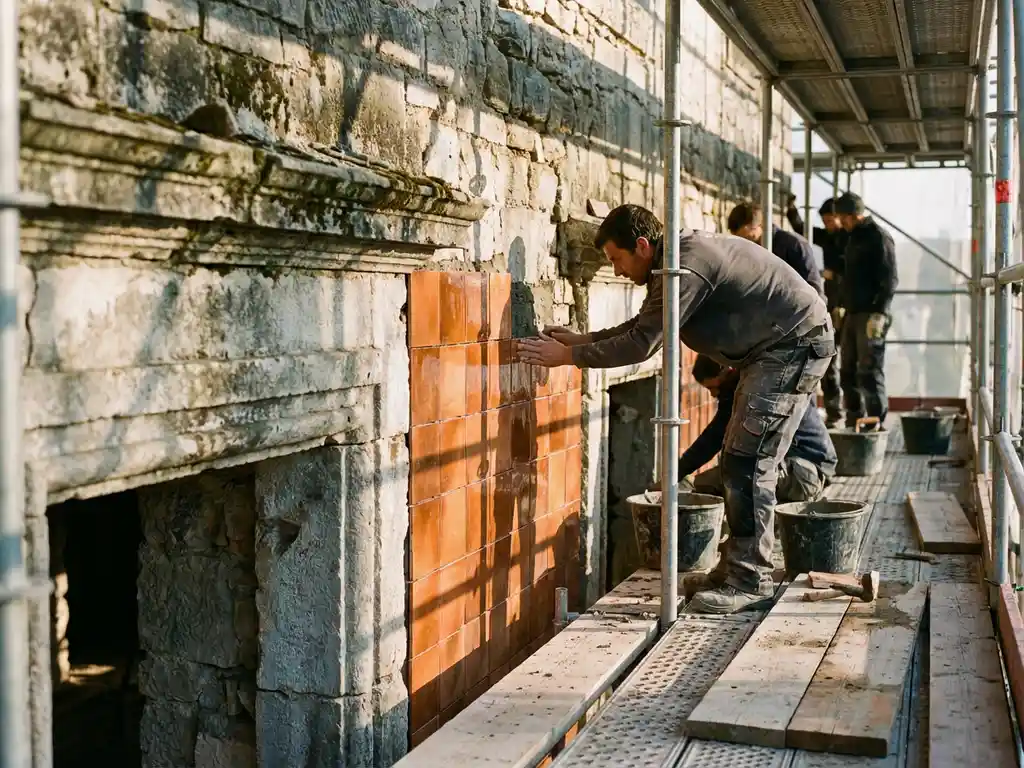
Historic buildings tell the stories of our past, but time and weather can leave these architectural treasures worn and damaged. When restoration becomes necessary, architects and heritage specialists face a delicate challenge: how to preserve authentic character while meeting modern performance standards. Terracotta restoration has emerged as a leading solution, offering the perfect blend of historical accuracy and contemporary durability.
Modern ceramic facade restoration techniques allow craftsmen to recreate intricate architectural details with remarkable precision, ensuring that heritage buildings maintain their original charm for future generations. These restoration projects demonstrate how innovative manufacturing methods can breathe new life into historic structures while respecting their architectural integrity.
1. The Royal Opera House facade revival project
One of the most impressive examples of historic building restoration involved a grand opera house dating back to the 1880s. The building’s ornate terracotta facade had suffered decades of weathering, with many decorative elements showing significant deterioration and some sections requiring complete replacement.
The restoration team employed advanced 3D scanning technology to capture every detail of the original terracotta work. This digital mapping allowed manufacturers to create precise moulds for replacement panels, ensuring perfect matches for the intricate floral motifs and classical figures that adorned the building’s exterior. The new terracotta elements were fired using modern techniques that enhanced their resistance to freeze-thaw cycles while maintaining the authentic colour palette.
The project successfully integrated modern building standards, including improved fire safety measures and enhanced structural support, without compromising the building’s 19th-century aesthetic. The restored facade now meets contemporary performance requirements while preserving the architectural heritage that makes this opera house a cultural landmark.
2. Victorian railway station gets contemporary upgrade
A magnificent Victorian railway terminal presented unique challenges for heritage building renovation. The station’s distinctive terracotta arches and decorative panels had been damaged by decades of industrial pollution and weather exposure, requiring extensive restoration work to preserve this important transport heritage site.
Custom terracotta panels were manufactured to replicate the original Gothic Revival details, including pointed arches, ribbed columns and intricate tracery patterns. The restoration incorporated modern insulation systems behind the terracotta facade, improving the building’s energy efficiency while maintaining its historic appearance. Advanced weatherproofing technologies were seamlessly integrated into the design.
The project demonstrated how building restoration techniques can enhance functionality without sacrificing authenticity. The restored station now serves modern transportation needs while celebrating its Victorian engineering heritage through beautifully preserved architectural details.
3. Art Deco office building restoration success story
A stunning 1920s commercial building showcased the potential of modern ceramic facade restoration methods. The building’s distinctive geometric terracotta facade featured bold angular patterns and stylised decorative elements typical of the Art Deco movement, but years of urban exposure had left many panels cracked or missing entirely.
Restoration specialists used historical photographs and remaining original elements to recreate the building’s striking facade. Modern manufacturing techniques allowed for precise reproduction of the complex geometric patterns, including the subtle colour variations that gave the original terracotta its visual depth and character.
The restored building now stands as a testament to successful historic architecture preservation, combining authentic 1920s styling with improved thermal performance and structural integrity. The project proved that even the most intricate decorative schemes can be faithfully reproduced using contemporary ceramic manufacturing methods.
4. Gothic Revival church restoration with modern methods
A 19th-century Gothic Revival church required extensive facade restoration to preserve its elaborate terracotta detailing. The building featured complex architectural elements, including flying buttresses, pinnacles and intricate window tracery, that demanded exceptional precision in the restoration work.
Advanced ceramic manufacturing enabled the recreation of highly detailed Gothic elements, from delicate leaf carvings to complex rose window surrounds. The restoration team used modern firing techniques that enhanced the terracotta’s durability while maintaining the authentic texture and colour that characterised the original construction.
This project exemplified how architectural restoration methods can preserve religious heritage buildings for continued community use. The restored church now serves its congregation with improved structural stability and weather resistance, while maintaining the spiritual atmosphere created by its original Gothic architecture.
5. What makes terracotta ideal for heritage projects?
Terracotta facade systems offer unique advantages for historic building restoration that make them the preferred choice for heritage projects. The material’s natural clay composition allows for exceptional colour matching, enabling restorers to recreate the exact hues and tones of original architectural elements.
The mouldability of terracotta enables the reproduction of even the most intricate decorative details, from delicate floral motifs to complex geometric patterns. Modern manufacturing techniques enhance these traditional benefits, producing elements that surpass original durability while maintaining authentic appearance and texture. These surfaces and formats provide architects with extensive customisation options for their restoration projects.
Terracotta’s compatibility with traditional building methods ensures that restoration work integrates seamlessly with existing structures. The material’s thermal properties and weather resistance provide long-term protection, making it an ideal choice for heritage construction materials that must withstand decades of exposure while preserving their architectural significance.
How TONALITY® supports historic building restoration
TONALITY® ceramic facade systems provide comprehensive solutions for heritage restoration projects, combining traditional craftsmanship with cutting-edge manufacturing technology. Our approach to historic building renovation ensures authentic restoration results that meet contemporary performance standards, as demonstrated in our extensive portfolio of reference projects.
Key restoration capabilities include:
- Precision colour matching services that recreate original terracotta hues
- Custom profiling options for complex architectural details
- Advanced manufacturing techniques that enhance durability while maintaining authenticity
- Heritage compatibility with traditional construction methods
- Long-term performance that reduces future maintenance requirements
Whether you’re working on Gothic Revival churches, Victorian commercial buildings or Art Deco landmarks, TONALITY® provides the expertise and technology needed for successful heritage restoration. Contact our restoration specialists today to discover how our ceramic facade solutions can preserve your historic building’s architectural legacy while ensuring decades of reliable performance.
Related Articles
- What technical questions should architects ask terracotta manufacturers?
- How do terracotta baguettes and louvers provide sun shading?
- What is embodied carbon and how does terracotta compare to aluminum cladding?
- Does vertical or horizontal terracotta orientation affect building perception?
- 8 Questions to Ask Before Specifying Terracotta Facades