

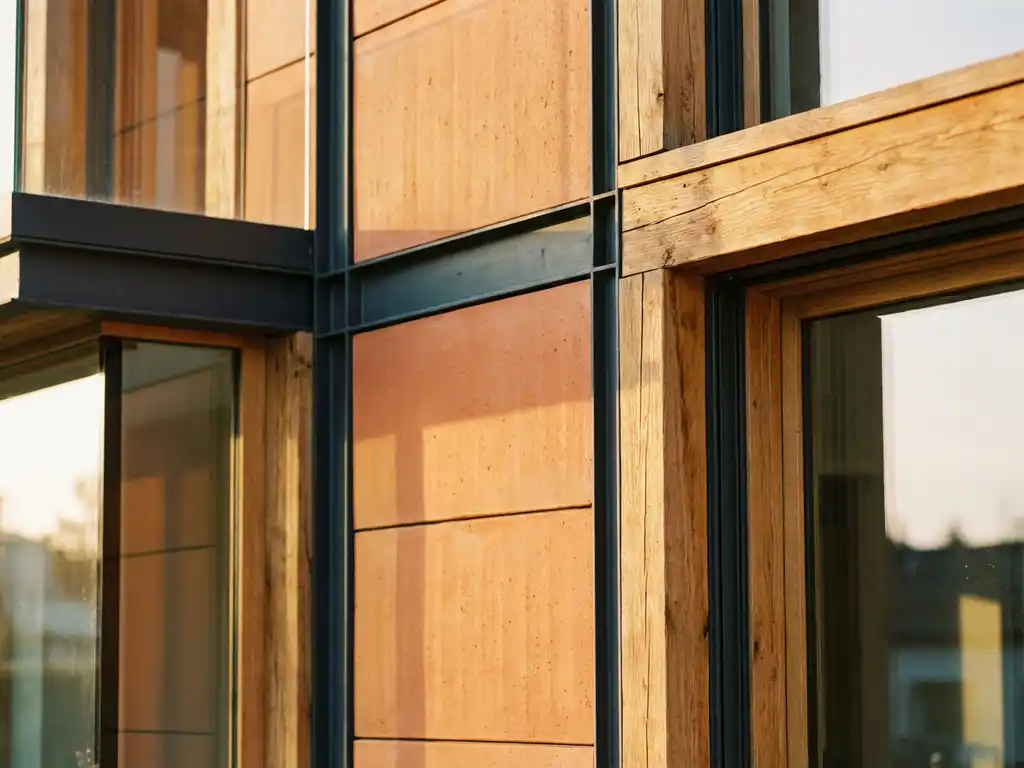
Modern architecture increasingly embraces the beauty of material contrast, and terracotta stands at the forefront of this movement. This ancient ceramic material has found new life in contemporary facade design, where its warm, earthy character creates stunning visual dialogues with glass, steel, and wood. The natural properties of terracotta—its durability, thermal performance, and rich textural qualities—make it an ideal partner for mixed-material architecture projects.
Architects worldwide are discovering that terracotta facade systems offer unparalleled design flexibility while maintaining structural integrity across different material combinations. Whether paired with the transparency of glass, the industrial precision of steel, or the organic warmth of timber, ceramic facade materials create compelling architectural narratives that speak to both tradition and innovation.
1: Terracotta and glass create stunning transparency contrasts
The interplay between terracotta’s solid, earthen presence and glass’s ethereal transparency creates some of architecture’s most dramatic visual moments. This combination works particularly well in contemporary facade systems where architects seek to balance privacy with natural light penetration.
Terracotta panels positioned strategically alongside expansive glazed sections create a rhythmic facade composition that changes throughout the day. As sunlight moves across the building, the ceramic elements cast shadows that dance across the glass surfaces, while the transparent sections allow glimpses of the terracotta’s rich textures from interior spaces. This dynamic relationship enhances both materials’ inherent qualities.
From a performance perspective, combining terracotta, glass, and steel elements offers excellent thermal benefits. The ceramic facade provides superior insulation properties, while glass maximizes daylight harvesting. This partnership reduces energy consumption while creating visually striking architectural compositions that respond beautifully to changing light conditions.
2: Steel frameworks showcase terracotta’s natural warmth
Steel’s industrial precision provides the perfect structural canvas for terracotta’s organic textures and warm colour palette. This combination exemplifies how modern facade materials can work together to create buildings that feel both contemporary and timeless.
The technical advantages of pairing ceramic building materials with steel frameworks are considerable. Steel provides the structural support necessary for large-format terracotta panels, while the ceramic elements offer weather protection and thermal performance. This partnership allows architects to achieve bold cantilevers and dramatic overhangs while maintaining building envelope integrity.
Design-wise, the contrast between steel’s cool, metallic finish and terracotta’s warm, natural tones creates visual tension that energises building facades. The precision of steel connections and supports emphasises the handcrafted quality of ceramic elements, creating a dialogue between industrial manufacturing and artisanal craft that resonates with contemporary architectural values.
3: Wood and terracotta blend tradition with innovation
Timber construction paired with ceramic facades represents one of architecture’s most harmonious material relationships. Both materials share natural origins, yet offer complementary performance characteristics that make them ideal partners in sustainable building design.
Terracotta-and-wood facades excel in fire-resistant applications where timber structures require protective cladding systems. The ceramic elements provide superior fire performance while allowing the underlying timber structure to remain visible through strategic design approaches. This combination satisfies both safety requirements and aesthetic aspirations for natural material expression.
Environmental benefits abound when combining these materials. Timber offers excellent carbon sequestration properties, while terracotta provides longevity and low maintenance requirements. Together, they create building envelopes that age gracefully, developing rich patinas that enhance rather than diminish their architectural impact over time.
4: What makes terracotta ideal for mixed-material projects?
Terracotta’s technical versatility stems from properties that make it naturally compatible with diverse architectural materials. Understanding these characteristics helps architects make informed decisions about mixed-material architecture applications.
Thermal expansion compatibility ranks among terracotta’s most valuable properties. The material’s expansion coefficient aligns well with steel and concrete structures, reducing stress at connection points. This compatibility, combined with terracotta’s relatively light weight compared to stone alternatives, makes it suitable for both new construction and retrofit applications.
Installation flexibility further enhances terracotta’s appeal in contemporary facade systems. Modern fixing methods accommodate various substrate materials while maintaining weather-sealing integrity. Whether connecting to steel frames, timber structures, or concrete walls, ceramic facade design principles remain consistent, simplifying construction processes and reducing installation complexity.
5: Design principles for successful material combinations
Creating cohesive architectural facade combinations requires careful attention to proportion, rhythm, and visual hierarchy. Successful mixed-material projects follow established design principles that ensure material harmony rather than visual chaos.
Colour coordination plays a crucial role in unifying diverse materials. Terracotta’s natural earth tones provide an excellent foundation palette that complements the neutral tones of steel, the warm hues of timber, and the reflective qualities of glass. Architects often select terracotta colours that bridge between other materials, creating visual continuity across the facade composition.
Texture balance ensures that no single material dominates the architectural expression. Smooth glass surfaces might be balanced with heavily textured terracotta panels, while rough timber elements could be paired with more refined ceramic finishes. This interplay creates visual interest while maintaining overall compositional unity.
How TONALITY® elevates mixed-material facade design
TONALITY® ceramic facade systems provide comprehensive solutions for architects pursuing mixed-material excellence in their projects. The system’s technical advantages make it particularly well suited for integration with glass, steel, and wood elements.
Key benefits include:
- Advanced fixing systems compatible with multiple substrate materials
- Superior fire safety properties that complement timber construction
- Thermal performance characteristics that enhance glass wall efficiency
- Structural compatibility with steel framework systems
- Design flexibility supporting complex geometric compositions
Ready to explore how TONALITY® can transform your next mixed-material project? Contact our technical team to discuss your specific design requirements and discover the possibilities that await when tradition meets innovation. You can also explore our project references to see how mixed-material facades have been successfully implemented across diverse architectural contexts.