

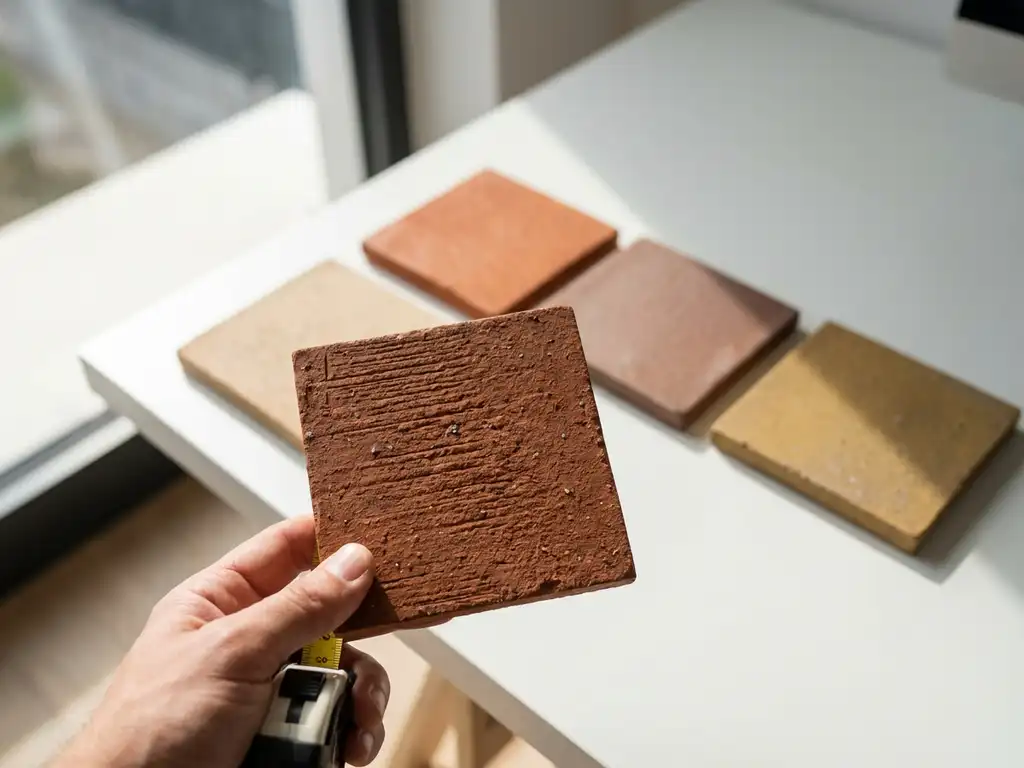
Selecting the right terracotta cladding for your façade project hinges on one critical step: proper sample evaluation. Yet many architects and specifiers rush through this process, focusing solely on aesthetics while overlooking crucial performance indicators that determine long-term success.
The consequences of inadequate ceramic façade evaluation extend far beyond visual disappointment. Poor sample assessment can lead to installation delays, performance failures, and maintenance headaches that plague buildings for decades. Understanding what to examine in terracotta samples transforms your façade material selection from guesswork into informed decision-making.
Whether you’re specifying ceramic façade samples for a commercial tower or a residential development, these five evaluation criteria will help you identify quality materials that deliver both immediate impact and lasting performance.
Why proper sample evaluation prevents costly façade failures
Thorough terracotta sample assessment serves as your first line of defense against project complications. When evaluation processes are rushed or incomplete, the ripple effects impact every phase of construction and building operation.
Common evaluation mistakes include focusing exclusively on colour matching while ignoring dimensional consistency, or approving samples based on indoor lighting conditions without considering how natural UV exposure affects appearance over time. These oversights frequently result in façade systems that fail to meet performance expectations, requiring costly remediation work.
Professional sample evaluation also reveals manufacturing consistency across production batches. Terracotta cladding projects typically require materials from multiple production runs, making it essential to verify that quality standards remain constant throughout the supply chain. This consistency check prevents the frustration of discovering variations only after installation begins.
1: Examine surface quality and finish consistency
Surface quality evaluation forms the foundation of ceramic façade assessment. Begin by examining texture uniformity across the sample surface, looking for inconsistencies that indicate manufacturing irregularities. Quality terracotta samples display consistent grain patterns and surface smoothness without unexpected variations or defects.
Colour uniformity requires careful scrutiny under multiple lighting conditions. Examine samples under both artificial and natural light, noting any colour shifts or inconsistencies that could become problematic across large façade areas. Pay particular attention to glaze quality, checking for bubbles, cracks, or thin spots that compromise both appearance and weather protection.
Manufacturing defects often manifest as surface imperfections that may seem minor in small samples but become magnified across entire building elevations. Document any chips, scratches, or finish irregularities, as these indicators suggest quality control issues that could affect your entire material supply.
2: Test dimensional accuracy and tolerances
Precise measurements separate professional-grade terracotta samples from substandard alternatives. Use calibrated measuring tools to verify that sample dimensions match specifications exactly, paying special attention to thickness consistency and edge straightness.
Dimensional accuracy directly impacts installation success and joint alignment. Even minor size variations can create installation challenges that multiply across large façade areas, resulting in uneven joint lines or requiring costly field modifications. Check corner squareness and edge quality, as these factors determine how cleanly panels align during installation.
Tolerance verification extends beyond basic measurements to include warpage and flatness checks. Place samples on flat surfaces to identify any bowing or twisting that could compromise installation quality. Document these measurements as part of your evaluation record, creating benchmarks for incoming material inspection.
3: Assess thermal performance and expansion properties
Thermal performance evaluation reveals how ceramic façade materials respond to temperature fluctuations throughout their service life. Understanding thermal conductivity helps predict energy performance impacts, while expansion coefficient data informs joint design and installation planning.
Temperature resistance testing indicates how well terracotta samples maintain structural integrity under thermal stress. Quality samples demonstrate stable performance across temperature ranges typical of your building location, without cracking or dimensional changes that compromise façade integrity.
Expansion properties are particularly important in climates with significant temperature variations. Materials with excessive expansion rates require wider joints and more complex installation details, potentially affecting both aesthetics and building performance. Request thermal performance data from manufacturers to support your evaluation process.
4: What does water absorption reveal about durability?
Water absorption testing provides crucial insights into long-term durability and maintenance requirements. Low absorption rates indicate dense, well-fired ceramic materials that resist moisture penetration and the associated problems of freeze-thaw damage.
Testing methods for water absorption involve weighing samples before and after controlled water exposure, calculating absorption percentages that reveal porosity levels. Quality terracotta cladding typically demonstrates absorption rates below industry thresholds, indicating superior weather resistance and longevity.
Absorption characteristics also predict maintenance requirements over the building’s lifecycle. Higher-absorption materials may require more frequent cleaning and protective treatments, while low-absorption ceramics maintain appearance and performance with minimal intervention. This durability assessment directly impacts total cost of ownership calculations.
5: Verify fire resistance and safety classifications
Fire performance verification ensures ceramic façade samples meet building code requirements and safety standards. Check for proper fire resistance ratings and combustibility classifications, confirming that documentation matches your project’s regulatory requirements.
Building code compliance varies by location and building type, making it essential to verify that terracotta samples carry appropriate certifications for your specific application. A1 fire classification represents the highest safety standard for façade materials, providing non-combustible performance that enhances building safety.
Safety compliance documentation should include test reports from recognised laboratories, demonstrating performance under standardised fire exposure conditions. Verify that certifications remain current and applicable to your building location, as requirements may vary between jurisdictions.
How TONALITY® simplifies terracotta sample evaluation
TONALITY® streamlines the ceramic façade evaluation process through comprehensive quality assurance and detailed technical documentation. Our systematic approach eliminates guesswork from sample assessment, providing architects and specifiers with the confidence needed for informed material selection.
Key advantages of TONALITY’s evaluation support include:
- Precision manufacturing ensuring dimensional consistency across all production batches
- A1 fire classification providing the highest safety standards for façade applications
- Comprehensive thermal performance data supporting energy efficiency calculations
- Low water absorption rates ensuring superior durability and minimal maintenance requirements
- Complete technical documentation streamlining specification and approval processes
Ready to experience the TONALITY difference? Request your terracotta samples today and discover how proper evaluation support transforms your façade material selection process from uncertainty into confidence.
Related Articles
- 7 Cultural Institutions with Iconic Terracotta Facades
- 10 Technical Tests Every Terracotta Facade Should Pass
- How do you calculate wind load resistance for terracotta systems?
- 5 Historic Buildings Successfully Restored with New Terracotta
- What is the difference between ceramic facades and traditional cladding?