

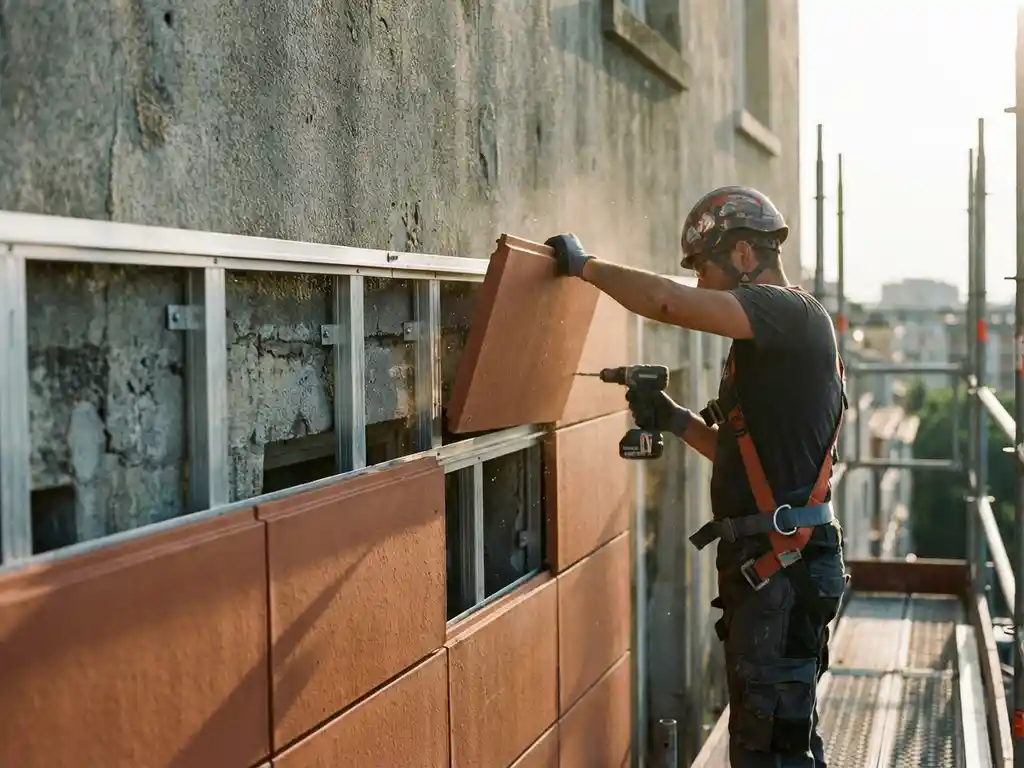
Yes, you can overclad an existing building with terracotta, making it one of the most effective ways to modernise older structures. Overcladding involves installing a new ceramic facade system over the existing building envelope, providing improved aesthetics, thermal performance and weather protection. This renovation approach works particularly well with lightweight terracotta systems that do not require extensive structural modifications.
What does it mean to overclad a building with terracotta?
Overcladding with terracotta means installing a new ceramic facade system directly over an existing building’s exterior walls. This process creates a ventilated facade system that sits independently of the original structure, supported by a lightweight mounting framework attached to the building.
Terracotta cladding systems consist of ceramic tiles or panels that are mechanically fixed to vertical or horizontal support rails. These rails are anchored to the existing structure through the old facade, creating an air gap between the new ceramic surface and the original building envelope. This gap provides excellent thermal insulation and allows moisture to escape naturally.
Building owners choose terracotta overcladding to transform tired-looking structures into modern, attractive buildings without the expense and disruption of complete demolition. The ceramic tile renovation process typically takes weeks rather than months, making it an efficient solution for facade modernisation projects.
Can any existing building structure support terracotta overcladding?
Most existing buildings can support terracotta overcladding, but each structure requires professional assessment to ensure adequate load-bearing capacity. Modern ceramic facade systems are surprisingly lightweight, typically weighing 40–50 kilograms per square metre, making them suitable for many building types.
Buildings constructed from concrete, steel frame or solid masonry generally provide excellent support for overcladding solutions. Timber-framed structures can also accommodate ceramic cladding systems, particularly when using ultra-lightweight terracotta products designed specifically for reduced structural loading.
The structural assessment considers several factors:
- Foundation strength and building age
- Existing wall construction and condition
- Wind loading requirements for the location
- Seismic considerations in earthquake-prone areas
- Thermal movement and expansion joint requirements
Buildings from the 1960s onwards typically have sufficient structural capacity for terracotta installation without reinforcement. Older structures may need localised strengthening at fixing points, but this rarely prevents overcladding projects from proceeding.
What are the main benefits of overcladding with terracotta versus other materials?
Terracotta overcladding offers superior durability, fire resistance and thermal performance compared to metal, composite or vinyl alternatives. Ceramic facades maintain their appearance for decades without fading, warping or requiring the regular maintenance that other cladding materials demand.
Fire safety advantages make terracotta particularly attractive for building envelope upgrades. Ceramic materials achieve A1 fire rating classification, meaning they are completely non-combustible and do not contribute to fire spread. This contrasts sharply with composite panels or timber cladding that can present fire risks.
The thermal performance of terracotta cladding systems helps reduce building energy consumption. The ventilated cavity behind the ceramic tiles creates natural air circulation that keeps the building cooler in summer and provides additional insulation in winter.
Aesthetic versatility sets ceramic tile renovation apart from other options. Terracotta can be manufactured in virtually any colour, texture or finish, from smooth contemporary surfaces to rustic traditional appearances. The material ages gracefully, developing subtle character rather than deteriorating like painted metal or plastic alternatives.
Long-term value considerations favour terracotta because it requires minimal maintenance and can last more than 50 years without replacement. Other materials may need repainting, panel replacement or regular cleaning to maintain an acceptable appearance.
How much does it cost to overclad an existing building with terracotta?
Terracotta overcladding represents a significant investment that varies based on building size, design complexity and site accessibility. The total project cost includes material selection, structural assessment, installation complexity and any required building modifications.
Several factors influence the overall investment requirements:
- Building height and facade area requiring coverage
- Terracotta tile size, colour and surface finish selection
- Access requirements and scaffolding complexity
- Structural modifications or reinforcement needs
- Planning permissions and building regulation compliance
- Site location and local labour availability
The lifecycle value proposition of ceramic facade renovation becomes apparent when considering long-term building ownership. Terracotta systems require minimal maintenance over their lifespan of more than 50 years, eliminating regular repainting, panel replacement or cleaning costs associated with other materials.
Energy savings from improved thermal performance contribute to the return on investment, particularly for older buildings with poor insulation. Many building owners find that reduced heating and cooling costs help offset the initial investment over time.
Professional consultation provides accurate project estimates based on specific building requirements and design preferences. This assessment considers all factors affecting total investment and helps optimise material selection for best value.
What is the typical installation process for terracotta overcladding?
The terracotta installation process begins with detailed structural assessment and design development, followed by systematic mounting and ceramic tile installation. Professional installation typically takes four to eight weeks, depending on building size and complexity.
The installation follows these key stages:
- Structural survey and design – Engineers assess the existing building and design the support system.
- Planning and permits – Obtaining necessary approvals and scheduling work.
- Access preparation – Installing scaffolding or mobile access equipment.
- Support rail installation – Mounting the vertical or horizontal framework to the existing structure.
- Insulation and weatherproofing – Adding thermal insulation and weather barriers where required.
- Ceramic tile installation – Systematically mounting terracotta panels from bottom to top.
- Finishing and cleanup – Installing trim pieces and sealants, and carrying out final quality checks.
Modern terracotta cladding systems use mechanical fixing methods that eliminate wet trades and weather delays. The ceramic tiles lock into the support rails using engineered connection systems that ensure secure attachment and allow for thermal movement.
Quality installation requires experienced professionals familiar with ceramic facade systems. Proper installation ensures weathertightness, thermal performance and the long-term durability of the overcladding solution.
How TONALITY® ceramic facades simplify building overcladding projects
TONALITY® ceramic facade systems are specifically engineered to make overcladding projects more efficient and reliable. The lightweight ceramic elements weigh approximately 40 kilograms per square metre, reducing structural loading requirements and making installation faster and safer.
Key advantages of TONALITY® systems include:
- Interlocking profile system – Ceramic elements lock securely into vertical aluminium retaining profiles for simple « mount and done » installation.
- Lightweight construction – Single-layer ceramic production creates strong, lightweight tiles suitable for timber construction and older buildings.
- A1 fire classification – Non-combustible ceramic provides excellent fire protection for building envelope upgrades.
- Precision manufacturing – Tiles produced to within one millimetre accuracy ensure a perfect fit and professional appearance.
- Flexible sizing options – Available from 150 × 300 mm up to 400 × 1,600 mm to suit different design requirements.
- Integrated graffiti protection – Surface treatment resists vandalism and simplifies maintenance.
- 100% recyclable – A sustainable solution that supports circular economy principles.
The TONALITY® installation system reduces project complexity while ensuring professional results. The interlocking profiles eliminate complex fixing details and provide consistent alignment throughout the facade. You can view examples of successful overcladding projects in our project references to see the transformation potential for your building.
Contact our technical team to discuss your overcladding project requirements and discover how TONALITY® ceramic facades can transform your building efficiently and beautifully.