

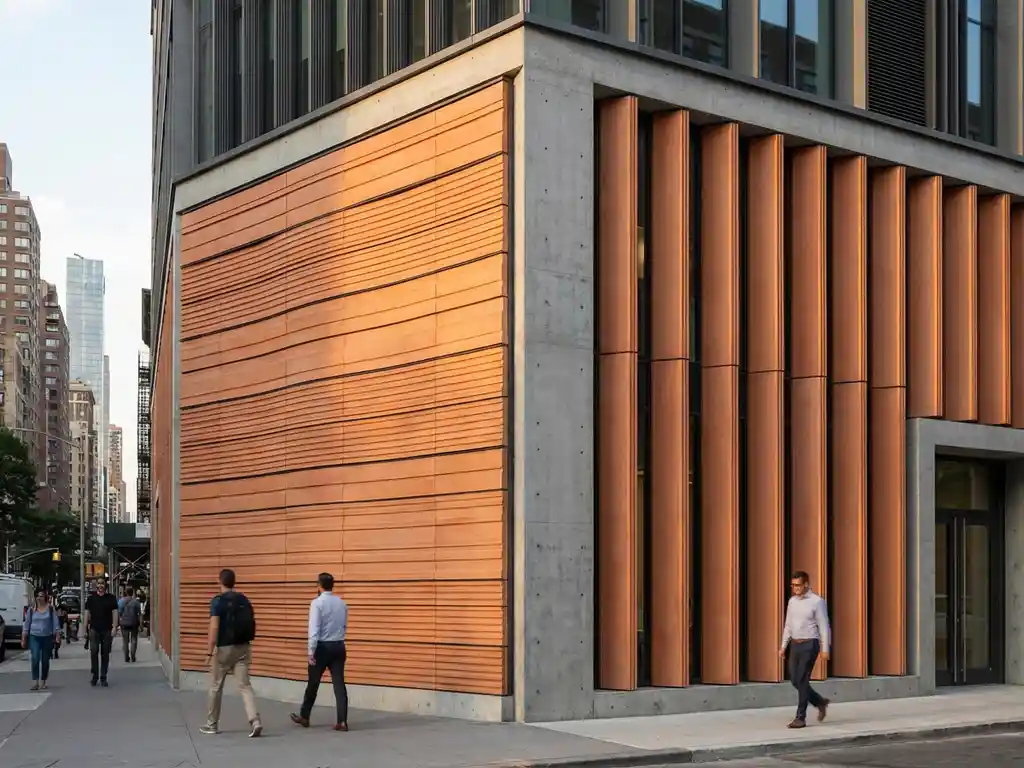
Terracotta orientation dramatically influences how people perceive buildings, affecting visual height, width, and overall architectural character. Vertical terracotta creates sleek, modern impressions that emphasise building height, while horizontal orientations produce stable, grounded appearances that enhance perceived width. The choice between orientations shapes shadow patterns, texture perception, and visual rhythm, making it a critical design decision for achieving the desired architectural impact.
Topic foundation
Terracotta orientation serves as one of the most powerful tools in ceramic facade design for manipulating building perception and visual impact. The direction in which terracotta elements are installed fundamentally alters how observers experience a structure’s proportions, character, and architectural intent.
Visual psychology plays a crucial role in how orientation affects building perception. Vertical lines naturally draw the eye upward, creating impressions of height and elegance, while horizontal lines encourage lateral eye movement, suggesting stability and breadth. This psychological response occurs automatically, making orientation choice essential for achieving specific architectural goals.
The interplay between terracotta orientation and building aesthetics extends beyond simple directional emphasis. Shadow patterns, surface texture appearance, and overall visual rhythm all change dramatically based on orientation decisions. Understanding these effects enables architects and designers to craft intentional visual experiences that support their design objectives.
What visual effects do vertical and horizontal terracotta orientations create?
Vertical terracotta orientation produces clean, contemporary visual effects that emphasise upward movement and sleek sophistication. The vertical lines create strong shadow patterns that change throughout the day, adding dynamic visual interest while maintaining an overall sense of height and elegance.
Vertical installations excel at creating modern, minimalist appearances that suit contemporary architectural styles. The uninterrupted vertical lines produce a sense of continuous upward flow, making buildings appear more refined and architecturally sophisticated. This orientation also tends to make surface textures appear smoother and more uniform from typical viewing distances.
Horizontal terracotta orientation generates completely different visual effects, creating strong impressions of stability and grounded presence. The horizontal lines produce distinctive shadow patterns that emphasise the building’s width and create visual rhythm across the facade. This orientation often appears more traditional and welcoming, making it suitable for residential and community-focused projects.
The horizontal approach enhances texture perception, as the repeated horizontal elements create more visible surface variation. This orientation can make buildings appear broader and more substantial, which is particularly effective for structures where stability and permanence are desired visual qualities.
How does terracotta orientation affect a building’s perceived proportions?
Vertical terracotta orientation makes buildings appear taller and more slender through optical illusion effects that draw the eye upward. This creates an impression of increased height even when actual building dimensions remain unchanged, making it particularly valuable for maximising perceived scale.
The vertical emphasis works by creating uninterrupted sight lines that encourage upward eye movement. This psychological effect can make shorter buildings appear more impressive and help tall buildings achieve a dramatic presence. Vertical orientation also tends to make wide buildings appear less bulky by breaking up horizontal mass with strong vertical elements.
Horizontal terracotta orientation produces the opposite effect, making buildings appear broader and more grounded. This orientation emphasises width over height, creating impressions of stability and substantial presence. Buildings with horizontal terracotta often appear more approachable and human-scaled, even when they are actually quite large.
The proportional manipulation achieved through horizontal orientation works particularly well for long, low buildings where emphasising horizontal flow supports the architectural intent. This approach can make tall buildings appear less imposing by breaking up vertical mass with strong horizontal elements that create visual anchoring points.
Which terracotta orientation works best for different architectural styles?
Vertical terracotta orientation suits contemporary, minimalist, and high-rise architectural styles where clean lines and modern sophistication are priorities. This orientation complements glass curtain walls, steel frame construction, and other contemporary materials commonly used in modern architecture.
Contemporary commercial buildings, luxury residential towers, and institutional projects often benefit from vertical orientation’s sleek appearance. The clean vertical lines work particularly well with other modern facade elements and support the geometric precision that characterises contemporary design approaches.
Horizontal terracotta orientation works exceptionally well for traditional, residential, and landscape-integrated architectural styles. This orientation complements brick, stone, and other traditional materials while supporting the human scale that residential projects require. The horizontal emphasis creates visual connections with natural horizon lines and landscape elements.
Traditional and transitional architectural styles benefit from horizontal orientation’s familiar visual rhythm and comfortable proportions. Educational buildings, healthcare facilities, and community centres often use horizontal terracotta to create welcoming, approachable appearances that support their public functions.
What practical factors should influence terracotta orientation decisions?
Installation considerations significantly impact terracotta orientation choices, with vertical installations often requiring different structural support systems and installation sequences compared to horizontal approaches. Understanding these practical requirements early in the design process prevents costly changes during construction.
Structural requirements vary between orientations, with vertical installations typically creating different load distribution patterns than horizontal systems. Building height limitations may favour certain orientations based on structural efficiency and material performance characteristics. Substrate compatibility also influences orientation decisions, as different wall systems may work better with specific installation approaches.
Maintenance access represents another crucial practical consideration. Vertical terracotta systems may require different cleaning approaches and access methods compared to horizontal installations. Weather exposure patterns affect both orientations differently, with horizontal installations potentially collecting more debris while vertical systems may experience different wind load patterns.
Long-term performance factors include thermal expansion behaviour, which varies between orientations based on exposure patterns and structural constraints. These practical considerations must be balanced with aesthetic goals to achieve successful terracotta facade installations that perform well over time.
How do environmental conditions affect terracotta orientation choices?
Wind load considerations vary significantly between vertical and horizontal terracotta orientations, with each creating different aerodynamic effects and structural load patterns. Vertical installations may experience different wind pressure distributions compared to horizontal systems, particularly on tall buildings where wind effects are more pronounced.
Water runoff patterns change dramatically based on orientation choice. Vertical terracotta installations tend to shed water more quickly and directly, while horizontal systems may require more attention to drainage details to prevent water accumulation. Regional climate factors, including prevailing wind directions and precipitation patterns, should influence orientation decisions.
Thermal expansion effects differ between orientations due to varying exposure patterns and structural constraints. Vertical installations may experience different thermal movement patterns compared to horizontal systems, particularly when exposed to intense solar radiation or significant temperature variations.
Weathering patterns and cleaning requirements also vary by orientation. Horizontal installations may collect more atmospheric debris and require different maintenance approaches, while vertical systems may experience more uniform weathering patterns. Understanding these environmental factors helps ensure long-term performance and appearance retention for ceramic facade installations.
How TONALITY® helps with terracotta orientation decisions
TONALITY® ceramic facade systems accommodate both vertical and horizontal orientations through their innovative interlocking aluminium profile system, providing complete design flexibility while maintaining structural integrity and installation efficiency.
The TONALITY® system offers comprehensive orientation support through:
- Flexible mounting systems that work equally well for vertical and horizontal installations
- Precise ceramic elements ranging from 150 x 300 mm up to 400 x 1,600 mm for optimal proportion control
- Lightweight construction at approximately 40 kilograms per square metre, suitable for various structural applications
- A1 fire classification ensuring safety compliance regardless of orientation choice
- Professional design consultation services to optimise orientation decisions for specific projects
The interlocking profile system simplifies installation regardless of orientation choice, while the precision manufacturing ensures consistent visual results. TONALITY® provides technical support throughout the design process, helping architects and specifiers make informed orientation decisions that balance aesthetic goals with practical performance requirements.
Contact TONALITY® today to discuss how their ceramic facade systems can support your specific orientation requirements and design objectives.