

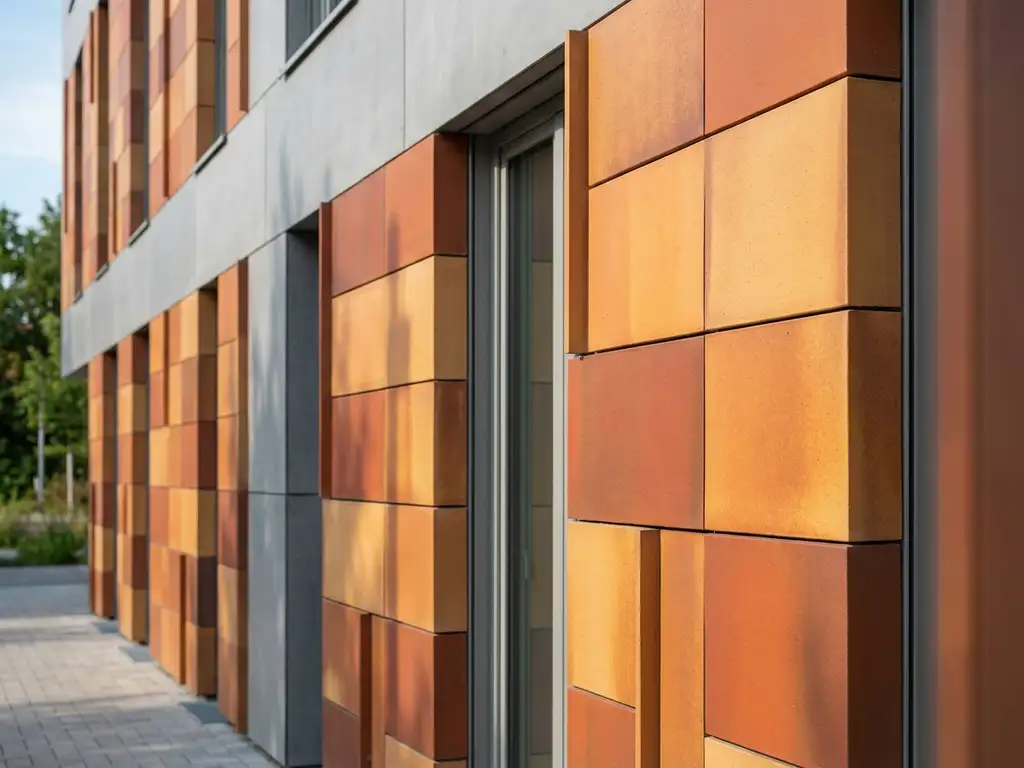
What are the most popular terracotta façade colors and finishes architects are choosing in 2026?
Architects in 2026 are gravitating toward warm earth tones and sophisticated neutral palettes in terracotta façades, with textured and smooth finishes dominating specifications. The most requested colors include deep terracotta reds, warm ochres, sophisticated grays, and natural clay tones that complement contemporary architectural aesthetics.
Surface finishes have evolved significantly, with architects specifying smooth, dense surfaces that offer superior weather resistance and minimal maintenance requirements. Textured finishes remain popular for adding visual depth and tactile interest to building façades. The trend toward natural, unglazed surfaces and formats reflects a growing preference for authentic material expression in modern architecture.
Color consistency has become a critical specification factor, with architects demanding precise color matching across large façade areas. Advanced manufacturing processes now enable ceramic façade systems to achieve remarkable uniformity while maintaining the natural character that makes terracotta façades so appealing to contemporary design sensibilities.
How are sustainable ceramic façade systems changing architectural specifications?
Sustainable ceramic façade systems are revolutionizing architectural specifications by offering 100% recyclable materials with significantly reduced environmental impact compared to traditional façade options. These systems feature A1 fire classification, meaning they contain no combustible components and contribute to enhanced building safety performance.
The manufacturing process has become increasingly energy-efficient, with high-temperature sinter firing creating durable surfaces that eliminate the need for chemical treatments or coatings. This approach results in façades that maintain their appearance and performance for decades without requiring maintenance interventions that generate waste or consume resources.
Architects are particularly drawn to the deconstruction capabilities of modern ceramic façade systems. Components can be easily separated and sorted for complete reusability at the end of a building’s lifecycle, supporting circular-economy principles that are becoming standard in sustainable design practices.
What new installation methods are making terracotta façades more accessible to architects?
Innovative interlocking systems with lightweight aluminum profiles have transformed terracotta façade installation from complex masonry work to straightforward mounting procedures. These systems typically weigh only 40 kilograms per square meter, enabling installation on lighter substructures and reducing overall construction complexity.
The profiled backing system allows ceramic elements to securely connect with vertical retaining profiles, creating a reliable mounting solution that significantly reduces installation time. This approach eliminates the need for specialized masonry skills, making terracotta façades accessible to a broader range of construction teams.
Precision manufacturing enables ceramic elements to be produced within millimeter tolerances, ensuring perfect alignment during installation. The simplified mounting process reduces labor requirements and construction timelines, making terracotta façades more attractive for projects with tight scheduling constraints.
Which building types are driving increased terracotta façade specifications?
Timber construction projects are leading the surge in terracotta façade specifications due to the excellent fire-protection properties and reduced structural-load requirements of modern ceramic systems. The A1 fire classification provides crucial safety benefits for wooden structures while maintaining design flexibility.
Commercial and mixed-use developments increasingly specify terracotta façades for their combination of aesthetic appeal and long-term performance characteristics. The maintenance-free properties align perfectly with commercial property management requirements, while the design versatility supports diverse architectural visions as demonstrated in our project references.
Educational and healthcare facilities are adopting ceramic façade systems for their durability and integrated graffiti protection. These building types benefit particularly from the UV resistance and permanent color stability that ensure façades maintain their intended appearance throughout extended service lives.
How are architects integrating terracotta façades with modern building technologies?
Architects are successfully combining terracotta façades with advanced building-envelope technologies by leveraging the material’s thermal properties and compatibility with contemporary insulation systems. The lightweight nature of modern ceramic elements allows for innovative ventilated façade designs that optimize building energy performance.
Smart-building integration has become seamless with terracotta façades, as the mounting systems accommodate sensors, lighting, and other technological components without compromising the façade’s integrity. The non-conductive properties of ceramic materials provide excellent compatibility with building automation systems.
Digital design tools now enable precise coordination between terracotta façade elements and building information modeling systems. This integration allows architects to optimize panel sizes, joint patterns, and installation sequences during the design phase, resulting in more efficient construction processes and superior aesthetic outcomes.
How TONALITY® Delivers Cutting-Edge Terracotta Façade Solutions
TONALITY® addresses these 2026 design trends through advanced ceramic façade systems manufactured in Germany’s premier clay region. Our solutions directly support architects’ evolving specifications with:
- An extensive color palette with consistent, UV-resistant finishes that maintain their appearance for decades
- 100% recyclable, A1-classified ceramic elements that support sustainable design goals
- A lightweight, interlocking installation system that reduces construction complexity and timelines
- Precision manufacturing enabling elements from 150 x 300 mm to 400 x 1,600 mm, with millimeter accuracy
- Integrated graffiti protection and maintenance-free performance for long-term value
Our sinter-fired ceramic elements deliver the performance characteristics architects demand while supporting innovative design approaches across all building types. Contact TONALITY® today to explore how our ceramic façade systems can enhance your next architectural project with proven German engineering and manufacturing excellence.
Related Articles
- 8 Key Differences Between Terracotta and Natural Stone Facades
- What is embodied carbon and how does terracotta compare to aluminum cladding?
- Can terracotta facades withstand extreme weather conditions?
- How long do terracotta facade systems last?
- How do you choose the right insulation system for facade renovation?