

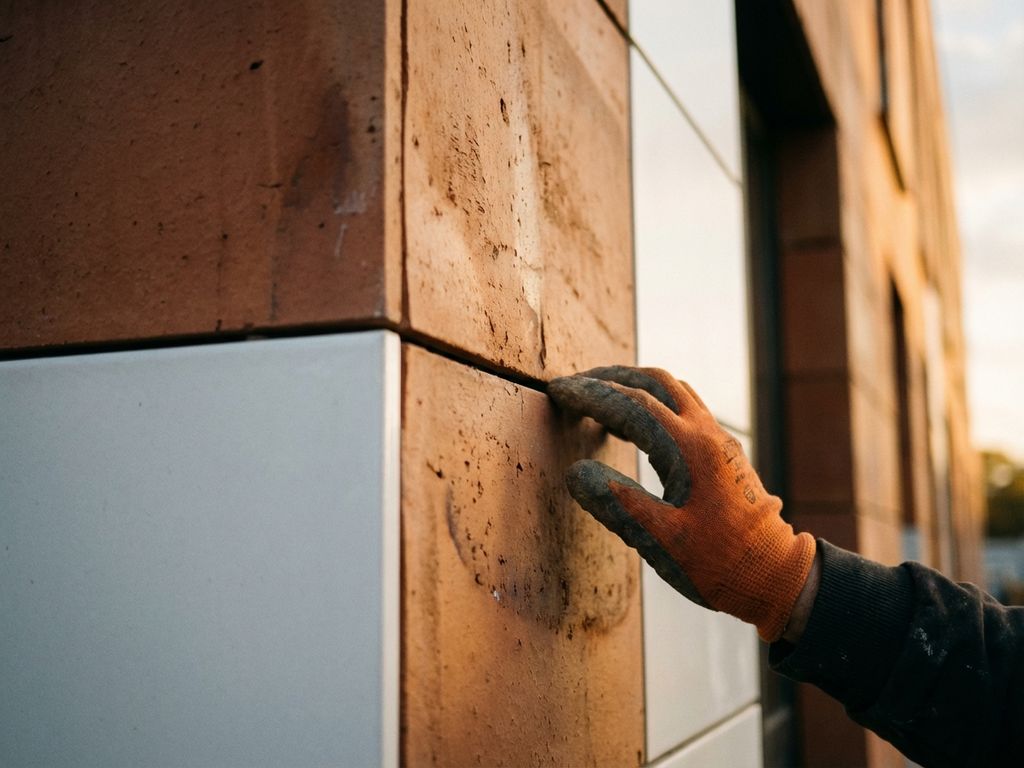
The main difference between terracotta and ceramic facades lies in their firing temperature and material density. Terracotta facades are fired at lower temperatures (around 950–1,000°C) and maintain a more porous structure, while ceramic facades undergo high-temperature firing (exceeding 1,200°C), creating a denser, less porous material. This fundamental difference affects their durability, weather resistance, and installation requirements for building applications.
What exactly are terracotta and ceramic facades?
Terracotta and ceramic facades are both clay-based building materials that provide protective and decorative exterior cladding systems. Terracotta, meaning « baked earth » in Italian, consists of natural clay fired at moderate temperatures to create a porous, breathable material with a distinctive earthy appearance. The manufacturing process involves shaping clay into panels or tiles and firing them in kilns at temperatures around 950–1,000°C.
Ceramic facades represent an advanced evolution of clay-based cladding materials. They undergo a specialised sinter-firing process at much higher temperatures, typically exceeding 1,200°C. This intense heat treatment fundamentally alters the clay’s molecular structure, creating a non-porous, dense surface with superior mechanical properties.
Both materials originate from natural clay deposits, but their distinct manufacturing processes result in different performance characteristics. Terracotta maintains more of clay’s natural porosity and texture, while ceramic facades achieve glass-like density and smoothness through high-temperature vitrification.
How do terracotta and ceramic facades differ in manufacturing and material properties?
The manufacturing processes create fundamentally different material properties between terracotta and ceramic facades. Terracotta production involves forming clay shapes and firing them at moderate temperatures, preserving the material’s natural porosity and allowing for thermal expansion and contraction. This process creates a material that breathes naturally but requires more maintenance over time.
Ceramic facade manufacturing employs sinter-firing technology at temperatures exceeding 1,200°C. This extreme heat causes clay particles to fuse completely, eliminating virtually all porosity and creating an incredibly dense, smooth surface. The result is a material with superior strength, dimensional stability, and resistance to environmental factors.
The density difference significantly impacts performance characteristics. Terracotta’s porous structure makes it lighter but more susceptible to water absorption and freeze–thaw damage. Ceramic facades achieve remarkable durability through their non-porous structure, preventing water infiltration and maintaining structural integrity across temperature variations.
Clay composition also varies between the two materials. Terracotta typically uses local clay with natural variations, while ceramic facades often employ specially selected, high-quality clay deposits that ensure consistent firing results and uniform material properties.
Which facade material offers better durability and weather resistance?
Ceramic facades provide superior durability and weather resistance compared to terracotta facades due to their non-porous structure and high-temperature manufacturing process. The dense surface created through sinter firing eliminates pathways for water infiltration, preventing freeze–thaw damage and reducing maintenance requirements significantly over the building’s lifetime.
Weather-resistance advantages of ceramic facades include permanent colour stability, UV resistance, and immunity to biological growth such as algae or moss. The smooth, dense surface naturally sheds water and resists staining, maintaining its appearance without regular cleaning or treatment.
Terracotta facades, while offering natural beauty and breathability, require more frequent maintenance due to their porous nature. They may experience colour fading, water staining, and potential structural issues in harsh climates with frequent freeze–thaw cycles.
Long-term performance analysis shows ceramic facades maintaining their structural integrity and appearance for decades with minimal intervention. Their non-combustible classification and resistance to environmental pollutants make them particularly suitable for urban environments and challenging climate conditions.
What are the key differences in installation methods and structural requirements?
Installation methods differ significantly between terracotta and ceramic facades, primarily due to weight considerations and mounting system requirements. Terracotta facades typically require robust substructures to support their weight and accommodate thermal movement, often necessitating complex anchoring systems and substantial structural support.
Ceramic facades offer simplified installation advantages through their lightweight design and precision manufacturing. Modern ceramic facade systems feature interlocking profiles that mount directly onto vertical aluminium retaining systems, reducing installation complexity and construction timelines considerably.
Structural requirements vary substantially between the two materials. Terracotta’s weight and thermal expansion properties demand careful engineering of support systems and movement joints. The installation process often involves multiple trades and extended timelines for proper weatherproofing and structural integration.
Ceramic facade systems streamline construction through their lightweight properties and precision tolerances. The reduced dead weight allows for lighter substructures, making them particularly advantageous for timber construction and renovation projects where structural capacity may be limited.
How do design possibilities and aesthetic options compare between the two materials?
Design flexibility varies considerably between terracotta and ceramic facades, with each material offering distinct aesthetic advantages. Terracotta provides natural texture variations and earthy colour palettes that create organic, traditional appearances. However, colour consistency and long-term stability can be challenging due to natural clay variations and weathering effects.
Ceramic facades offer extensive design possibilities through precise manufacturing control and advanced surface treatments. The high-temperature firing process enables a vast range of colours, textures, and finishes that remain stable throughout the building’s lifetime. Surface options include smooth, textured, metallic, and stone-like appearances.
Size-format capabilities differ significantly between the materials. Terracotta panels are typically limited by firing constraints and structural considerations, while ceramic facades can be manufactured in large formats ranging from 150 × 300 mm up to 400 × 1,600 mm, with precision tolerances within one millimetre.
Architectural flexibility benefits ceramic systems through their lightweight construction and modular design. This enables creative applications including curved surfaces, complex geometries, and innovative building forms that might be structurally challenging with heavier terracotta systems.
How TONALITY® ceramic facades provide superior performance and installation advantages
TONALITY® ceramic facades deliver exceptional performance through advanced sinter-firing technology and innovative installation systems that address the key limitations of traditional facade materials. The lightweight construction weighs only 40 kilograms per square metre, enabling rapid installation and reduced structural requirements.
Key performance advantages include:
- Building material class A1 certification, ensuring complete non-combustibility and superior fire protection
- Integrated graffiti protection, eliminating maintenance concerns in urban environments
- 100% recyclable construction, supporting sustainable building practices
- Precision manufacturing tolerances within one millimetre for perfect architectural alignment
- Interlocking profile system enabling simple « mount and done » installation
The simplified installation process reduces construction timelines and labour requirements significantly. The back-profiled ceramic elements interlock with vertical aluminium retaining profiles, eliminating complex anchoring systems and reducing potential installation errors.
For architects and specifiers seeking superior facade performance with streamlined installation, TONALITY® offers comprehensive project consultation services to optimise your requirements. Contact our technical team to discuss how ceramic facade systems can enhance your building’s performance and aesthetic vision.
Related Articles
- What are common maintenance issues with ceramic facades?
- Does vertical or horizontal terracotta panel orientation affect how a building is perceived?
- What is embodied carbon and how does terracotta compare to aluminum cladding?
- What BIM and Revit objects are available for terracotta facade specification?
- 10 Award-Winning Terracotta Facade Projects Every Architect Should See