

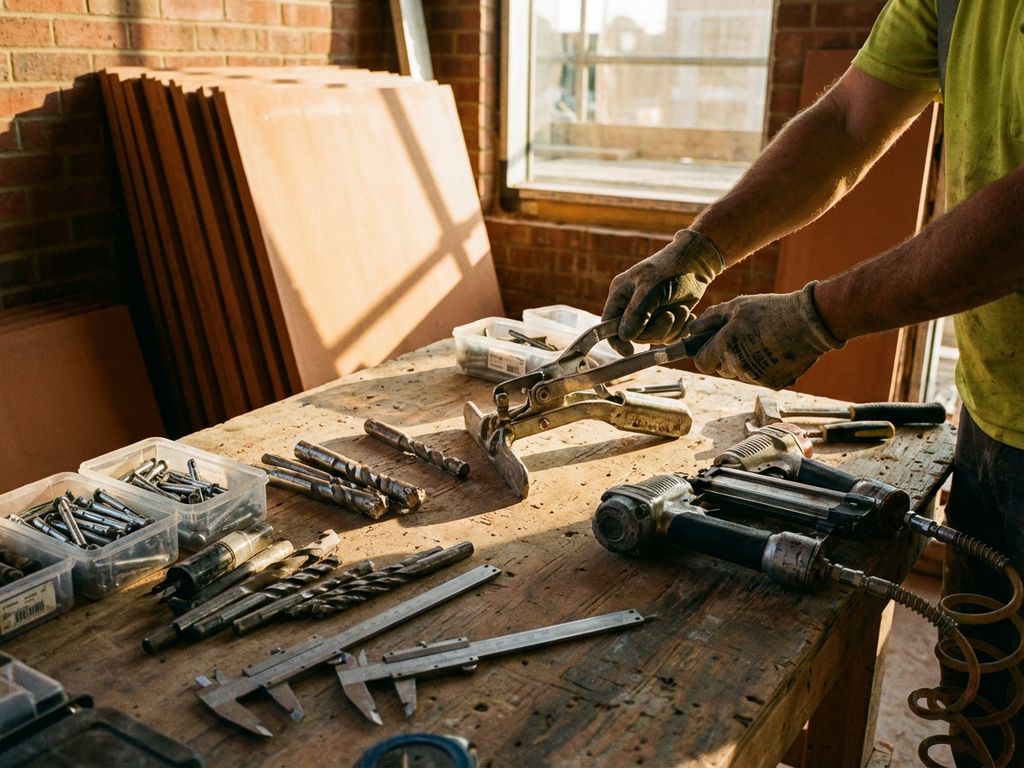
Terracotta facade installation requires a comprehensive toolkit that includes basic hand tools, specialised ceramic equipment, and safety gear. Essential tools include drills, levels, measuring equipment, ceramic cutting tools, and lifting systems for handling large panels. The specific tools required depend on the facade system design and installation method.
What basic tools do you need for terracotta facade installation?
Essential hand tools for terracotta facade installation include hammer drills, spirit levels, measuring tapes, marking tools, and standard fastening equipment. These fundamental tools form the backbone of any ceramic facade project and ensure precise installation.
Your basic toolkit should include a high-quality hammer drill with masonry bits for creating anchor points in the substrate. A 1200 mm spirit level ensures accurate horizontal and vertical alignment of facade elements. Steel measuring tapes (at least 5 metres) and chalk lines help mark installation points precisely.
Additional hand tools include adjustable spanners for tightening fixings, rubber mallets for gentle adjustments without damaging ceramic surfaces, and sharp utility knives for cutting sealants and membranes. A reliable laser level significantly improves accuracy when working across large facade areas, while a plumb line helps verify vertical alignment on multi-storey installations.
What specialised equipment is required for ceramic facade systems?
Specialised terracotta facade installation requires diamond-blade wet saws for cutting ceramic elements, pneumatic fixing tools, and ceramic-specific drill bits. These tools are designed to handle the unique properties of fired clay materials without causing damage or creating excessive dust.
Diamond-blade wet cutting systems are essential for accurate ceramic cutting. The water cooling prevents thermal shock that could crack the material. Variable-speed angle grinders with diamond discs handle smaller cuts and edge-finishing work.
Ceramic-specific carbide drill bits prevent cracking when creating fixing holes. Torque-controlled screwdrivers ensure consistent fixing tension without over-tightening, which could stress the ceramic elements. Profile-cutting tools may be needed for creating notches or adjustments to accommodate building details.
Pneumatic nail guns designed for facade work speed up installation of supporting structures. Sealant-application guns with consistent flow rates ensure weatherproof joints between elements.
How do you choose the right safety equipment for facade installation?
Safety equipment for terracotta facade installation must include fall protection systems, protective clothing, and dust control measures. Working at height with heavy ceramic materials requires comprehensive safety planning and appropriate personal protective equipment.
Full-body safety harnesses with shock-absorbing lanyards are mandatory for work above two metres. Choose harnesses with multiple attachment points for flexibility when working around obstacles. Safety helmets should meet current standards and include chin straps to prevent loss during windy conditions.
Eye protection is crucial when cutting or drilling ceramic materials. Safety glasses with side shields protect against flying debris, while dust masks prevent inhalation of ceramic particles. Cut-resistant gloves protect hands during material handling while maintaining grip sensitivity.
Scaffold systems or mobile elevated work platforms provide stable working surfaces. Edge-protection barriers prevent tools and materials from falling. Non-slip safety footwear with puncture-resistant soles protects against sharp debris and provides grip on various surfaces.
What lifting and positioning tools are essential for large ceramic panels?
Large-format terracotta panels require vacuum lifting systems, mechanical hoists, and positioning aids to ensure safe handling without surface damage. These tools distribute lifting forces evenly across the ceramic surface and provide precise control during installation.
Vacuum suction-cup lifters are the preferred method for handling smooth ceramic surfaces. Battery-powered units offer greater mobility, while manual systems provide backup capability. Multiple-pad configurations distribute weight across larger panels.
Mobile crane systems or building hoists transport materials to working height efficiently. Telescopic handlers with appropriate attachments can position panels precisely while maintaining operator safety at ground level.
Panel trolleys with soft-faced clamps transport materials horizontally without surface damage. Adjustable support frames hold panels at the correct angle during fixing. Temporary support brackets maintain panel position while permanent fixings are installed.
Mechanical positioning aids include fine-adjustment jacks for precise alignment and spacing tools that ensure consistent gaps between elements.
How TONALITY® simplifies terracotta facade installation
TONALITY’s innovative interlocking ceramic facade system significantly reduces tool requirements and simplifies installation through back-profiled elements and vertical aluminium retaining profiles. This system transforms complex facade installation into a straightforward mounting process, as demonstrated in our successful project implementations.
The TONALITY system offers these installation advantages:
- Back-profiled ceramic elements interlock with vertical aluminium profiles, eliminating complex fixing systems
- Lightweight panels (40 kg per square metre) reduce lifting equipment requirements and enable faster handling
- Precise manufacturing tolerances within one millimetre ensure consistent fitting without extensive adjustment
- Simple mounting process significantly reduces installation time and labour costs
- Flexible installation sequences allow work to continue around building details and services
Ready to discover how TONALITY’s innovative facade system can streamline your next project? Contact our technical team to discuss your specific requirements and receive detailed installation guidance tailored to your building’s needs.