

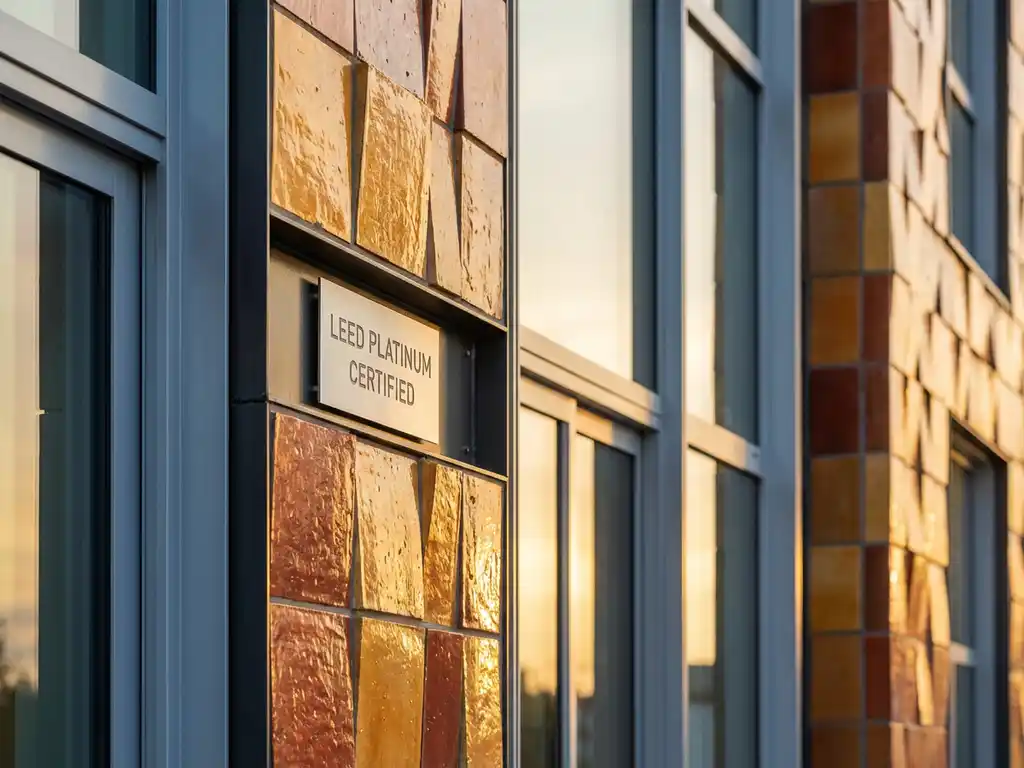
What LEED credits can terracotta facades help architects achieve?
Terracotta facades can help architects earn multiple LEED credits across four key categories: Materials and Resources (MR), Energy and Atmosphere (EA), Regional Materials, and Innovation in Design. These ceramic facade systems primarily contribute to MR Credit 4 (Recycled Content), MR Credit 5 (Regional Materials), and EA Credit 1 (Optimize Energy Performance) through their thermal properties and durability.
The versatility of ceramic facade materials in sustainable construction makes them particularly valuable for green building certification. Their noncombustible properties, classified as building material class A1, support fire safety requirements, while their 100% recyclable composition aligns with circular economy principles that LEED certification increasingly emphasizes. Additionally, the manufacturing process and material sourcing can contribute to regional materials credits when sourced locally.
How do terracotta facades contribute to LEED Materials and Resources credits?
Terracotta facades contribute to LEED Materials and Resources credits primarily through their recycled content, recyclability, and material optimization characteristics. These ceramic facade systems can earn points under MR Credit 4 for recycled content when manufactured with recycled clay, and MR Credit 3 for material ingredient optimization due to their natural, nontoxic composition.
The single-layer production process of high-quality terracotta facades eliminates the need for additional coatings or treatments, reducing overall material complexity. Their permanent color and UV resistance mean no repainting or refinishing is required throughout the building’s lifecycle, significantly reducing maintenance-related material consumption. Precise manufacturing tolerances and interlocking installation systems also minimize waste during construction, supporting the waste-reduction goals inherent in LEED certification.
Furthermore, ceramic facade elements offer complete end-of-life recyclability. They can be deconstructed and sorted by component type with minimal effort, enabling reuse in future construction projects. This circular approach to building materials aligns with LEED’s emphasis on sustainable material lifecycles and resource conservation.
What makes terracotta facades eligible for LEED Regional Materials credits?
Terracotta facades are eligible for LEED Regional Materials credits when clay extraction, manufacturing, and final production occur within 500 miles of the project site. This credit rewards the use of locally sourced building materials, reducing transportation-related environmental impacts while supporting regional economies and material traditions.
European regions with significant clay deposits, such as Germany’s Westerwald area, provide excellent opportunities for architects to earn these regional materials credits. The high-quality clay deposits found in these regions have supported ceramic production for centuries, creating established supply chains and manufacturing expertise. When architects specify ceramic facade materials from these regional sources, they can earn up to 2 LEED points under the Regional Materials credit.
The key to earning these credits lies in documentation and supply-chain transparency. Manufacturers must provide clear evidence of material sourcing locations, extraction sites, and manufacturing facilities. Transportation distance calculations must account for the weight and volume of materials, making the relatively low surface weight of terracotta facades—typically around 40 kilograms per square meter—advantageous for meeting regional materials criteria.
How do ceramic facade thermal properties support LEED Energy credits?
Ceramic facade thermal properties support LEED Energy credits by contributing to building envelope performance and reducing heating and cooling loads. The dense, sintered surface of terracotta facades, created through firing at temperatures exceeding 1,200 degrees Celsius, provides excellent thermal mass and weather resistance, enhancing overall building energy efficiency.
The thermal performance benefits extend beyond the material itself to the installation system. The low dead weight of ceramic facade elements allows for optimized insulation strategies in the wall assembly, as lighter substructures can accommodate thicker insulation layers without structural complications. This is particularly valuable in timber construction projects, where weight considerations significantly affect design options.
Additionally, the permanent color stability and UV resistance of ceramic facades help mitigate the heat island effect associated with fading materials. Dark-colored facades that maintain their reflective properties over time contribute to consistent thermal performance throughout the building’s lifecycle. Integrated graffiti protection and a maintenance-free surface also prevent the need for cleaning chemicals or treatments that could affect thermal performance.
What documentation do architects need for LEED terracotta facade credits?
Architects need comprehensive material documentation, including recycled-content certificates, regional sourcing verification, thermal performance data, and end-of-life recyclability statements, to earn LEED credits when specifying terracotta facades. This documentation must be provided by manufacturers and verified through third-party testing or certification programs recognized by the Green Building Certification Institute.
Essential documentation includes material safety data sheets (MSDS) that verify the nontoxic composition required for Materials and Resources credits. For regional materials credits, architects must obtain detailed supply-chain documentation showing extraction locations, manufacturing facilities, and transportation distances. The documentation should clearly demonstrate that all materials and processes occur within the 500-mile radius requirement.
Energy performance documentation requires thermal testing data and installation specifications that demonstrate the facade system’s contribution to building envelope efficiency. Fire safety documentation confirming A1 noncombustible classification supports both safety and sustainability goals. Finally, end-of-life documentation must include recyclability statements and deconstruction guidelines that verify the material’s contribution to circular economy principles.
How TONALITY® Ceramic Facades Support LEED Certification
TONALITY® ceramic facades provide architects with comprehensive LEED credit opportunities through their sustainable design and manufacturing approach. Produced in Germany’s Westerwald region using Europe’s largest high-quality clay deposits, these facades offer clear regional materials advantages for European projects while supporting multiple credit categories.
Key LEED benefits include:
- A1 noncombustible classification supporting fire safety and material optimization credits
- 100% recyclable composition with complete deconstruction and reusability capabilities
- Maintenance-free performance eliminating lifecycle material consumption
- Low surface weight enabling optimized insulation strategies for energy performance
- Comprehensive documentation package supporting credit verification requirements
For detailed specifications and material data, explore our surfaces and formats to understand the full range of sustainable ceramic facade options. Our team provides comprehensive documentation packages supporting LEED credit verification requirements. Contact our specification team to receive detailed LEED documentation and explore how TONALITY® ceramic facades can contribute to your green building certification goals while delivering lasting architectural performance.