

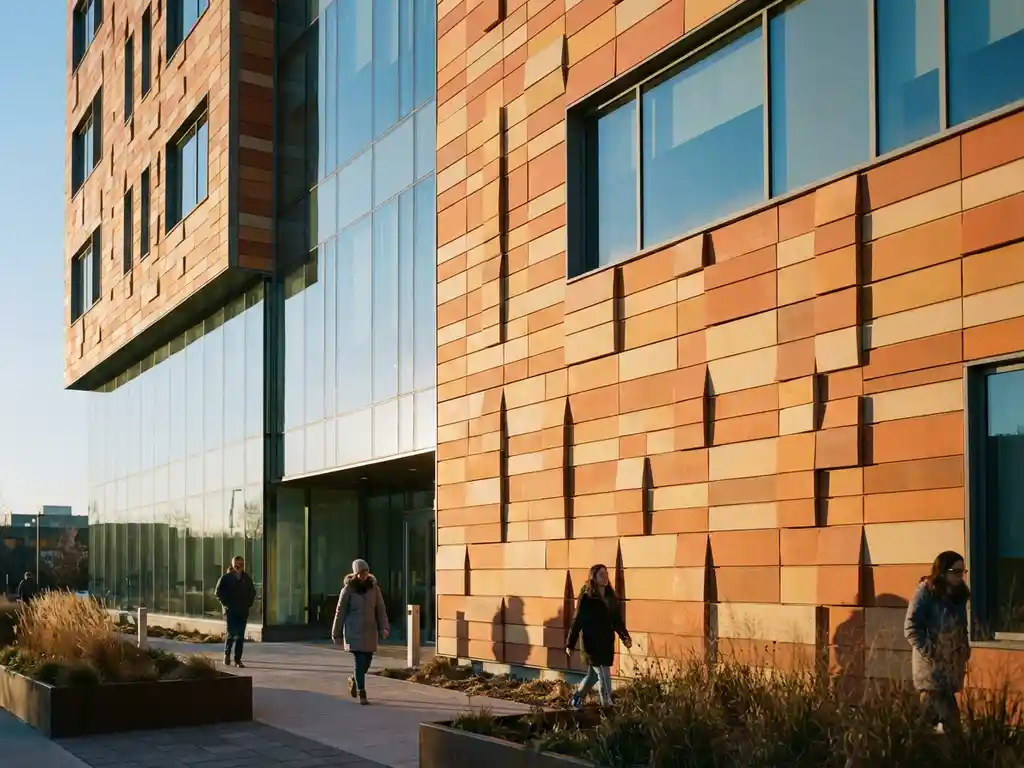
Hospitals and healthcare buildings choose terracotta facades because they offer exceptional hygiene benefits, durability, and safety features essential for medical environments. The non-porous ceramic surface resists bacterial growth, simplifies cleaning protocols, and meets strict fire safety requirements. These properties make terracotta facades an ideal choice for healthcare architecture, where patient safety and long-term performance are paramount.
What makes terracotta facades ideal for healthcare environments?
Terracotta facades possess inherent antimicrobial properties and non-porous surfaces that naturally resist bacterial growth and contamination. The dense ceramic material withstands harsh weather conditions while maintaining its appearance and offers extensive design flexibility to create calming, healing environments that support patient well-being.
The ceramic firing process creates an exceptionally smooth surface that prevents dirt accumulation and bacterial colonization. This characteristic proves particularly valuable in healthcare settings, where maintaining clean external environments supports overall facility hygiene. The material’s natural composition contains no organic compounds that could harbour microorganisms.
Healthcare architects appreciate terracotta’s aesthetic versatility, which allows them to design facades that promote healing through colour psychology and visual comfort. The material can be produced in various textures and finishes, enabling the creation of welcoming exteriors that reduce patient anxiety and support therapeutic environments.
Weather resistance ensures consistent performance across all climates without degradation that could compromise the building envelope. This reliability is crucial for healthcare facilities that must maintain controlled internal environments regardless of external conditions.
How do terracotta facades contribute to hospital infection control?
Terracotta’s non-porous ceramic surface prevents bacterial penetration and biofilm formation, making it extremely difficult for pathogens to establish themselves on the exterior building envelope. The smooth surface allows for thorough cleaning with standard hospital-grade disinfectants without damage, supporting comprehensive infection control protocols.
The material’s resistance to chemical cleaning agents means healthcare facilities can use the same powerful disinfectants on exterior surfaces that they employ for interior hygiene maintenance. This consistency in cleaning protocols simplifies staff training and ensures comprehensive facility sanitization.
Unlike porous materials that can trap contaminants, terracotta’s dense structure eliminates hiding places for bacteria, viruses, or fungi. This characteristic is particularly important for healthcare buildings, where immunocompromised patients require the highest levels of environmental protection.
The surface’s durability under repeated cleaning cycles ensures long-term hygiene performance without degradation. Healthcare facilities can maintain stringent cleaning schedules without worrying about surface damage that could create new contamination risks.
Why do terracotta facades reduce long-term maintenance costs for hospitals?
Terracotta facades require minimal maintenance due to their exceptional durability, permanent colour retention, and resistance to weathering. This reduces ongoing maintenance expenses, allowing healthcare facilities to redirect resources toward patient care rather than building upkeep, while ensuring consistent building performance over decades.
The material’s colour stability eliminates the need for repainting or refinishing, which represents significant cost savings over the building’s lifetime. Healthcare facilities often operate under tight budgets, making these long-term savings particularly valuable for maintaining high-quality patient services.
Weather resistance prevents common facade problems such as cracking, fading, or surface deterioration that require costly repairs. The ceramic material maintains its structural integrity and appearance through extreme temperature variations, UV exposure, and harsh weather conditions.
Cleaning requirements remain simple and infrequent compared with other facade materials. The smooth surface sheds dirt naturally and requires only periodic washing rather than specialised treatments or frequent maintenance interventions.
What fire safety advantages do terracotta facades offer healthcare buildings?
Terracotta facades achieve A1 fire classification as completely non-combustible materials, providing the highest level of fire safety for healthcare buildings. This classification means the material contains no combustible components and will not contribute to fire spread, offering critical protection for vulnerable patient populations who may have limited mobility.
Healthcare facilities house patients who cannot evacuate quickly during emergencies, making superior fire protection essential. The ceramic material’s complete non-combustibility ensures the building envelope will not fuel fires or produce toxic gases that could endanger patients, staff, or emergency responders.
The material maintains its structural integrity even under extreme heat exposure, preventing facade collapse that could block escape routes or emergency access. This reliability is crucial for healthcare buildings, where emergency response teams need guaranteed access to all areas.
Regulatory compliance becomes straightforward with A1-rated materials, as they exceed the requirements of most international fire safety codes for healthcare construction. This simplifies the approval process and provides long-term compliance assurance.
How do TONALITY® ceramic facades enhance healthcare building performance?
TONALITY® ceramic facade systems specifically address healthcare facility requirements through lightweight construction that reduces structural loads, precise installation methods that minimise disruption, and integrated features that support long-term facility operations. The systems offer complete recyclability, supporting healthcare organisations’ sustainability goals while delivering superior performance, as demonstrated in our healthcare project portfolio.
Key healthcare benefits include:
- Lightweight design at approximately 40 kilograms per square metre, reducing structural requirements and enabling retrofits
- Precise manufacturing tolerances within one millimetre for accurate installation and reliable weather sealing
- Integrated graffiti protection that maintains a professional appearance without additional treatments
- Simple mounting system that reduces installation time and minimises construction disruption to hospital operations
- Complete recyclability supporting healthcare sustainability initiatives and LEED certification goals
The single-layer ceramic construction eliminates potential failure points while providing excellent fire protection properties essential for healthcare applications. The interlocking profile system ensures reliable weather sealing that protects the building envelope and maintains controlled internal environments.
Healthcare facility managers seeking superior facade performance should consider how TONALITY® systems can enhance their buildings’ safety, durability, and operational efficiency. Contact our healthcare specialists to discuss your specific project requirements and discover how ceramic facades can support your facility’s mission of providing excellent patient care.
Related Articles
- Does vertical or horizontal terracotta orientation affect building perception?
- How much do ceramic facade systems cost?
- How do restorers match new terracotta panels to 100-year-old historic facades?
- Why is terracotta considered a low-carbon facade material?
- Terracotta vs GFRC: Weight, Cost, and Aesthetic Differences