

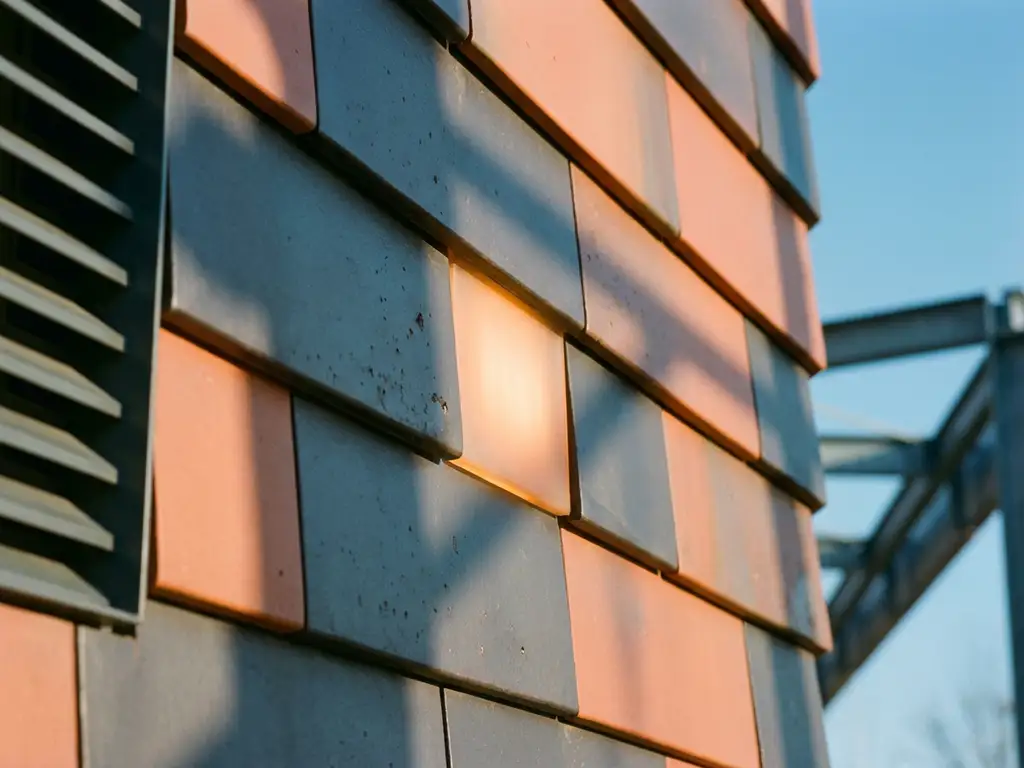
Fire safety regulations have become increasingly stringent in recent years, particularly following high-profile façade fire incidents worldwide. Building codes now impose strict requirements on façade materials, with many jurisdictions mandating non-combustible solutions for mid-rise and high-rise construction. Understanding how different façade materials perform under these evolving building codes is crucial for architects, developers, and building owners seeking compliant solutions.
Ceramic façades represent one of the most reliable approaches to meeting these demanding fire safety standards. Their inherent non-combustible properties and proven performance record make them an attractive option for projects where fire safety compliance is paramount.
What fire safety requirements do modern building codes have for façades?
Modern building codes require façade materials to meet specific fire resistance classifications, with many jurisdictions mandating A1- or A2-rated materials for buildings above certain heights. These requirements typically apply to structures over 18 meters in height, though some regions have lowered this threshold to 11 meters or even to ground level for certain building types.
The European classification system, which has been adopted or adapted by many countries, categorizes building materials from A1 (non-combustible) down to F (highly flammable). Class A1 represents the highest fire safety standard, indicating materials that do not contribute to the fire load and produce no flaming droplets during fire exposure. Many building codes now specifically require A1-rated façade materials for residential buildings, hospitals, schools, and other critical structures.
Beyond material classification, building codes also address façade system design, including requirements for fire stops, cavity barriers, and proper installation methods. These regulations aim to prevent fire spread through façade systems and ensure that the entire building envelope maintains its fire resistance properties throughout the structure’s lifespan.
How do ceramic façades achieve A1 fire rating classification?
Ceramic façades achieve an A1 fire rating through their fundamental material composition and manufacturing process. Made from natural clay fired at temperatures exceeding 1,200 degrees Celsius, ceramic materials are inherently non-combustible and contain no organic compounds that could ignite or contribute to fire spread.
The sintering process used in ceramic façade production creates a dense, vitrified material structure that remains stable even under extreme heat exposure. This high-temperature manufacturing process essentially pre-exposes the material to conditions far exceeding those encountered in building fires, ensuring consistent performance when subjected to fire testing protocols.
Testing for A1 classification involves subjecting materials to temperatures of 750 degrees Celsius while measuring heat release, mass loss, and flame duration. Ceramic façades consistently demonstrate zero contribution to the fire load, with no measurable heat release beyond that of the test apparatus itself. The material’s inorganic nature means it produces no toxic gases or flaming droplets during fire exposure, further supporting its A1 classification.
What’s the difference between ceramic and other façade materials in fire safety?
Ceramic façades offer superior fire safety compared to many alternative façade materials due to their completely inorganic composition. Unlike composite panels containing polymer cores or organic insulation materials, ceramic façades contain no combustible components that could ignite or contribute to fire spread.
Composite aluminum panels, commonly used in commercial construction, often contain polyethylene cores that can ignite and spread fire rapidly across building façades. Even fire-retardant versions typically achieve only A2 classification, meaning they may still contribute some heat release during fire conditions. Fiber cement panels, while non-combustible, can experience thermal shock and cracking under fire exposure, potentially compromising the façade system’s integrity.
Natural stone façades generally achieve good fire ratings but can be subject to thermal expansion and spalling under extreme heat, potentially creating falling-debris hazards. Timber façades, even when treated with fire retardants, remain organic materials that will eventually combust under sufficient heat exposure. Metal façades perform well thermally but can conduct heat rapidly, potentially affecting structural elements or interior spaces.
Ceramic façades maintain their structural integrity throughout fire exposure, showing no thermal shock, spalling, or dimensional changes that could compromise building safety or create falling hazards for occupants and emergency responders.
Do ceramic façades provide additional fire protection benefits beyond code compliance?
Ceramic façades offer several fire protection advantages that extend beyond basic code compliance requirements. Their thermal mass and low thermal conductivity help insulate building structures from external fire exposure, potentially slowing heat transfer to structural elements and providing additional evacuation time for occupants.
The material’s dimensional stability under extreme temperatures prevents the creation of gaps or openings in the façade system that could allow fire or smoke penetration into the building interior. This maintained integrity is particularly valuable in high-rise construction, where façade breaches can facilitate rapid vertical fire spread between floors.
Ceramic façades also eliminate concerns about toxic gas emissions during fire events. Many synthetic façade materials release harmful compounds when heated, creating additional hazards for occupants and emergency responders. The inorganic nature of ceramic materials ensures no toxic emissions, supporting safer evacuation and firefighting operations.
Additionally, ceramic façades maintain their protective properties throughout the building’s lifespan without degradation. UV exposure, weather cycling, and normal aging do not compromise the material’s fire resistance, ensuring consistent protection over decades of service life.
How TONALITY® Ceramic Facades Support Fire Safety Compliance
TONALITY® ceramic façades provide architects and developers with a proven solution for meeting the most demanding fire safety building codes. Our ceramic elements achieve an A1 fire rating through advanced manufacturing processes and natural material composition, ensuring full compliance with current and emerging fire safety regulations.
Key fire safety advantages of TONALITY® systems include:
- A1 non-combustible classification with zero contribution to the fire load
- Dimensional stability under extreme temperatures, preventing façade system breaches
- No toxic gas emissions during fire exposure
- Lightweight construction, reducing structural fire loading
- Permanent fire resistance properties that do not degrade over time
Our technical team provides comprehensive support for fire safety documentation and compliance verification throughout the design and approval process. You can explore our successful project implementations or contact TONALITY® today to discuss how our ceramic façade systems can help your project achieve superior fire safety performance while meeting all relevant building codes.
Related Articles
- What cleaning methods work best for terracotta cladding?
- 6 Terracotta Specification Errors That Lead to Costly Failures
- Terracotta vs Zinc Cladding: Aesthetics, Durability, and Maintenance Analysis
- What is the difference between terracotta and ceramic facades?
- 5 World-Class Universities That Specified Terracotta Facades