

As the construction industry faces mounting pressure to reduce its environmental impact, sustainable building materials have become a critical focus for architects, developers, and building owners. The choice of facade materials plays a particularly important role in a building’s overall environmental footprint, influencing everything from manufacturing emissions to end-of-life waste management.
Recyclable facades represent a significant step forward in sustainable construction, offering measurable environmental benefits throughout their entire life cycle. By understanding these advantages, construction professionals can make informed decisions that contribute to both immediate environmental goals and long-term sustainability objectives.
What makes a facade recyclable and environmentally friendly?
A facade is recyclable when its materials can be recovered, processed, and reused without significant quality degradation after the building’s service life ends. Environmentally friendly facades combine recyclability with sustainable production methods, low-impact raw materials, and minimal resource consumption during manufacturing.
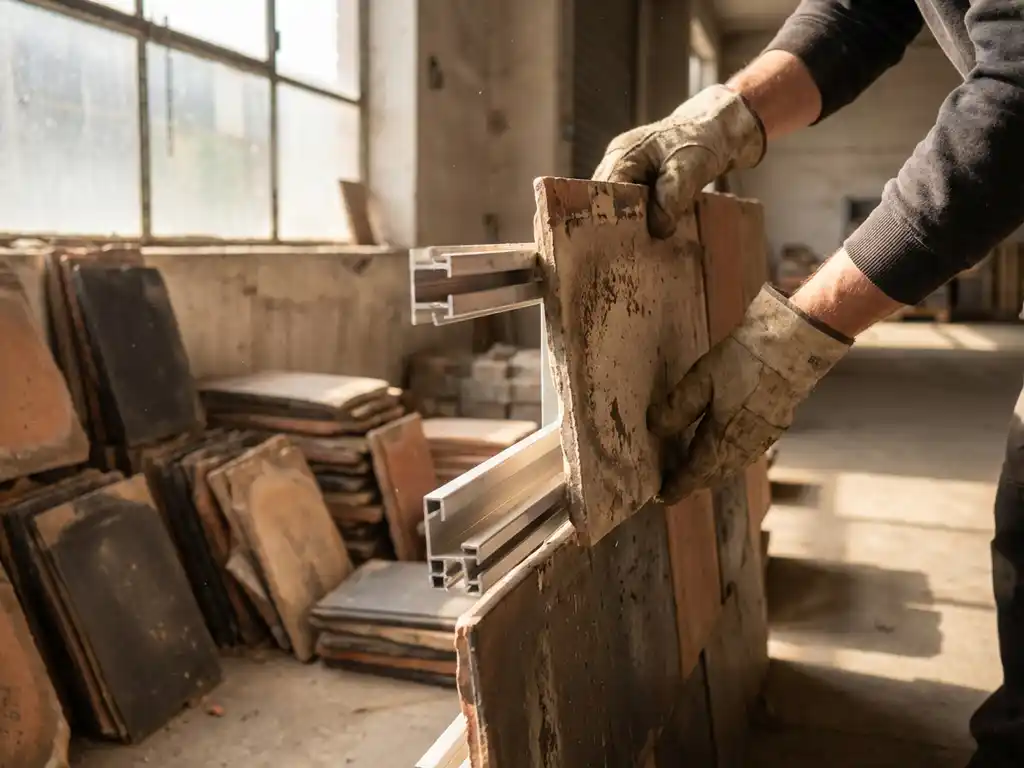
Key characteristics of recyclable facades include material compositions that maintain structural integrity through multiple use cycles, design systems that allow for easy disassembly, and manufacturing processes that minimize waste generation. Ceramic facades, for example, achieve recyclability through their inorganic composition and single-layer production methods that eliminate adhesives or composite layers that complicate recycling.
Environmental performance extends beyond recyclability to encompass the entire material life cycle. This includes sourcing raw materials from abundant natural deposits, using energy-efficient manufacturing processes, and creating products with extended service lives that reduce replacement frequency and associated environmental impacts.
How do recyclable facades reduce construction waste?
Recyclable facades reduce construction waste by enabling material recovery at end of life, minimizing manufacturing waste through efficient production processes, and extending building life cycles through durable performance that delays renovation needs.
During the demolition phase, recyclable facade systems can be deconstructed rather than demolished, allowing individual components to be sorted and prepared for reuse. This systematic approach diverts significant material volumes from landfills while preserving the embodied energy invested in the original manufacturing process.
Construction waste is also reduced during manufacturing. Advanced production methods for sustainable building materials often incorporate closed-loop systems in which production waste is immediately recycled back into the manufacturing process. This approach eliminates waste streams that would otherwise require disposal and reduces the overall material input required for facade production.
What is the carbon footprint difference between recyclable and traditional facades?
Recyclable facades typically have lower lifetime carbon footprints than traditional facades due to reduced manufacturing emissions per use cycle, extended service lives, and the avoidance of end-of-life disposal emissions through material recovery and reuse.
The carbon footprint advantage becomes most apparent when evaluated across multiple building life cycles. While initial manufacturing emissions may be comparable, recyclable facades distribute these emissions across several use cycles, effectively reducing the carbon intensity per year of service. Traditional facades that cannot be recycled require complete material replacement, generating new manufacturing emissions for each building cycle.
Transportation emissions can also favor recyclable facades over time, as recovered materials can often be processed locally rather than requiring new raw materials to be shipped over long distances. Additionally, the durability of many recyclable facade materials, such as ceramic systems, reduces maintenance-related emissions through resistance to weathering, UV degradation, and other environmental factors that require intervention in traditional systems.
How does facade recyclability support circular economy principles?
Facade recyclability directly supports circular economy principles by keeping materials in productive use, eliminating waste through design, and creating closed-loop systems in which end-of-life materials become inputs for new construction projects.
The circular economy model emphasizes designing out waste and pollution from the beginning of the product life cycle. Recyclable facades embody this principle through modular design systems that facilitate disassembly, material selection that maintains quality through multiple use cycles, and production methods that minimize resource extraction requirements.
This approach transforms the traditional linear «take-make-dispose» model into a regenerative system in which facade materials maintain their value and utility across multiple building life cycles. The result is reduced demand for virgin raw materials, decreased waste generation, and improved resource efficiency across the construction industry.
What are the long-term environmental benefits of choosing recyclable facades?
The long-term environmental benefits of recyclable facades include cumulative reductions in raw material extraction, decreased landfill burden, lower lifetime carbon emissions, and contributions to sustainable urban development patterns that prioritize resource conservation over resource consumption.
Over decades of use, recyclable facades create compounding environmental advantages as the same material stock serves multiple buildings and generations. This multiplier effect significantly reduces the environmental intensity of the built environment while maintaining high-performance building-envelope characteristics.
Preserving embodied energy is another crucial long-term benefit. Rather than losing the energy invested in material processing and manufacturing at the end of a building’s life, recyclable facades retain this energy investment across multiple use cycles, improving the overall energy efficiency of construction activities and reducing the environmental cost of urban development.
How TONALITY® Supports Sustainable Construction
TONALITY® ceramic facades deliver comprehensive environmental benefits through advanced recyclability and sustainable manufacturing processes. Our facade systems achieve complete recyclability through single-layer ceramic production that eliminates composite materials and adhesives that complicate end-of-life processing.
Key environmental advantages include:
- 100% recyclable ceramic elements that can be deconstructed and sorted by component type with minimal effort
- Complete reusability of facade tiles through precision manufacturing and durable ceramic composition
- Reduced substructure requirements due to low surface weight, minimizing overall material consumption
- Extended service life through permanent color and UV resistance that eliminates replacement cycles
- A1-classified non-combustible materials that provide inherent fire safety without chemical treatments
Discover how TONALITY® ceramic facades can support your sustainable construction goals while delivering exceptional performance and design flexibility. Contact our technical team to explore recyclable facade solutions for your next project, or explore our project references to see sustainable facade solutions in action.