

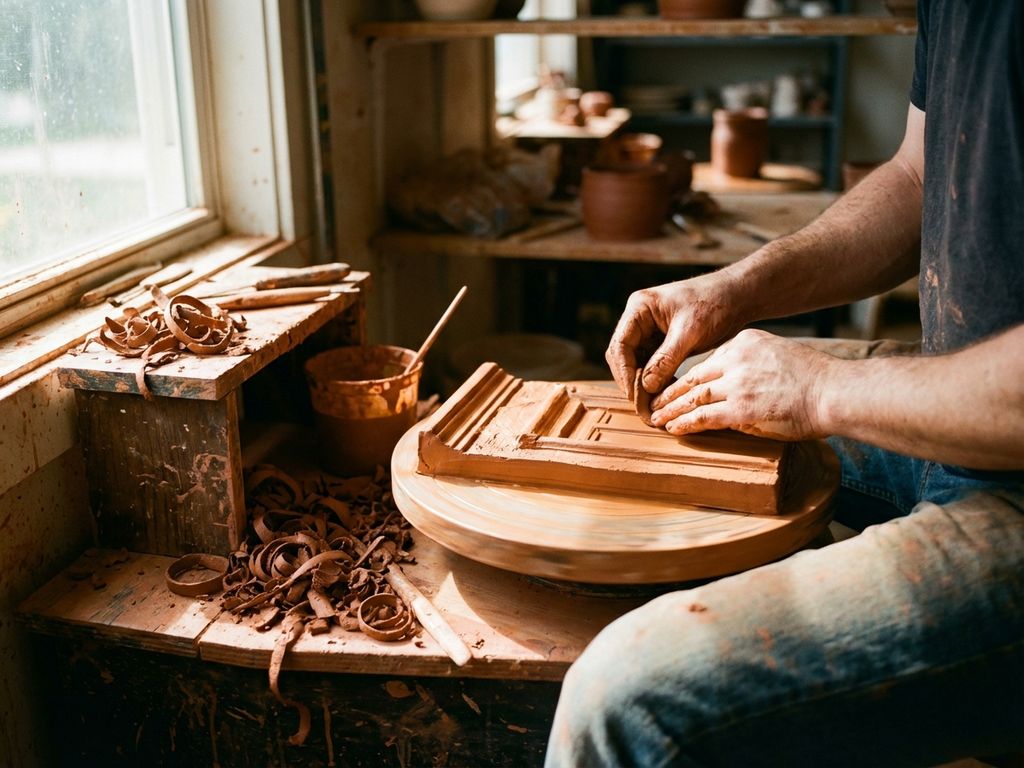
Terracotta facade panels are manufactured through a precise process involving clay preparation, shaping, and high-temperature firing at over 1,200°C. Manufacturing begins with selecting premium clay deposits, followed by careful preparation and forming into the desired shapes. The panels then undergo sinter firing, which creates their characteristic durability and weather resistance. Quality testing ensures dimensional accuracy and performance standards before finishing treatments are applied.
What are terracotta facade panels and how do they differ from other materials?
Terracotta facade panels are ceramic building elements made from fired clay that provide both structural and aesthetic functions for building exteriors. These panels consist of natural clay materials that have been shaped and fired at high temperatures to create durable, weather-resistant facade systems.
Unlike concrete panels, terracotta facades offer superior thermal performance and natural breathability. Metal facade systems require regular maintenance to prevent corrosion, whereas terracotta panels maintain their appearance without ongoing treatment. Traditional brick construction is heavier and requires more substantial structural support, whereas terracotta panels typically weigh only 40 kilograms per square metre.
Modern architects choose terracotta facades for their design versatility and sustainability credentials. The panels can be manufactured in various colours, textures, and formats, allowing for creative architectural expression. Their natural composition makes them completely recyclable, and they provide excellent fire resistance with A1 classification for non-combustible materials.
What raw materials go into terracotta facade panel production?
High-quality clay forms the primary raw material for terracotta facade panels, with specific clay types chosen for their mineral composition and firing characteristics. The clay must have consistent plasticity, low shrinkage rates, and predictable behaviour during the firing process to ensure dimensional stability.
Premium clay deposits, such as those found in Germany’s Westerwald region, contain ideal mineral compositions with low iron content and excellent workability. These clays produce panels with consistent colour and superior mechanical properties. The clay’s particle size distribution affects the final surface texture and strength characteristics of the finished panels.
Manufacturers may add carefully controlled additives to enhance specific properties. Grog (pre-fired clay particles) reduces shrinkage and improves thermal shock resistance. Silica sand can adjust the clay’s plasticity and firing behaviour. Natural minerals may be incorporated to achieve specific colours or surface effects, though many terracotta facades rely on the clay’s natural colour variations.
How is the clay prepared and shaped for facade panels?
Clay preparation begins with careful blending and homogenisation to achieve consistent material properties throughout each batch. The raw clay is crushed, screened, and mixed with a precise moisture content to ensure optimal workability and uniform firing characteristics.
The mixing process involves mechanical blending in pug mills or similar equipment to eliminate air pockets and achieve complete homogenisation. Moisture content is carefully controlled, typically between 18–22%, to provide proper plasticity for shaping while preventing excessive shrinkage during drying.
Shaping methods vary depending on the desired panel format and profile. Extrusion through custom dies creates panels with consistent cross-sections and integrated fixing profiles. Pressing techniques allow for more complex surface textures and three-dimensional forms. Some manufacturers use moulding processes for panels with intricate details or curved surfaces. The shaping process must account for the shrinkage that occurs during drying and firing.
What happens during the firing process for terracotta panels?
The firing process transforms shaped clay into durable ceramic material through controlled heating in kilns at temperatures exceeding 1,200°C. This high-temperature treatment initiates the sintering process, where clay particles fuse together to form a dense, strong material with low water absorption.
Firing occurs in multiple stages, beginning with gradual heating to remove remaining moisture and prevent cracking. The temperature rises slowly through the critical range where chemical changes occur in the clay minerals. Sinter firing at peak temperatures creates vitrification, where the clay particles bond at the molecular level.
Different kiln types serve various production needs, from tunnel kilns for continuous production to periodic kilns for specialised panels. The firing atmosphere (oxidising or reducing) affects the final colour and surface characteristics. Cooling must be controlled to prevent thermal stress that could cause cracking or dimensional variations. This process typically takes 24–48 hours from start to finish.
How are terracotta facade panels quality tested and finished?
Quality control begins with dimensional accuracy testing using precision measuring equipment to ensure panels meet specified tolerances. Manufacturers typically achieve accuracy within one millimetre for panel dimensions, which is crucial for proper installation and weatherproofing.
Strength assessments include flexural strength testing and impact resistance evaluation to verify structural performance. Surface finish evaluation examines colour consistency, texture uniformity, and the absence of defects such as cracks or surface irregularities. Water absorption testing confirms that the panels meet durability standards for exterior applications.
Finishing processes may include surface treatments for specific aesthetic effects or protective coatings for enhanced performance. Some panels receive glazing for particular colour requirements or surface characteristics. Quality control extends to packaging and handling procedures to prevent damage during transportation and storage. Each batch undergoes documentation to ensure traceability and consistent quality standards.
How TONALITY® helps with terracotta facade panel manufacturing
TONALITY® provides comprehensive ceramic facade solutions using specialised manufacturing processes and premium raw materials from Europe’s largest clay deposits in the Westerwald region. Their advanced sinter firing process at temperatures exceeding 1,200°C creates panels with exceptional durability and consistent quality.
Key manufacturing advantages include:
- Precision manufacturing with dimensional accuracy within one millimetre
- Lightweight panels at approximately 40kg per square metre for reduced structural requirements
- Complete facade systems with interlocking profiles and aluminium retention systems
- A1-classified non-combustible materials for superior fire protection
- 100% recyclable ceramic elements with integrated graffiti protection
- Permanent colour stability and UV resistance for maintenance-free performance
TONALITY® offers formats ranging from 150 x 300mm up to 400 x 1,600mm with various surface textures and natural colour options. Their complete system approach includes technical support for architects and installers. Contact TONALITY® today to discuss your terracotta facade requirements and discover how their advanced manufacturing capabilities can enhance your building project.