

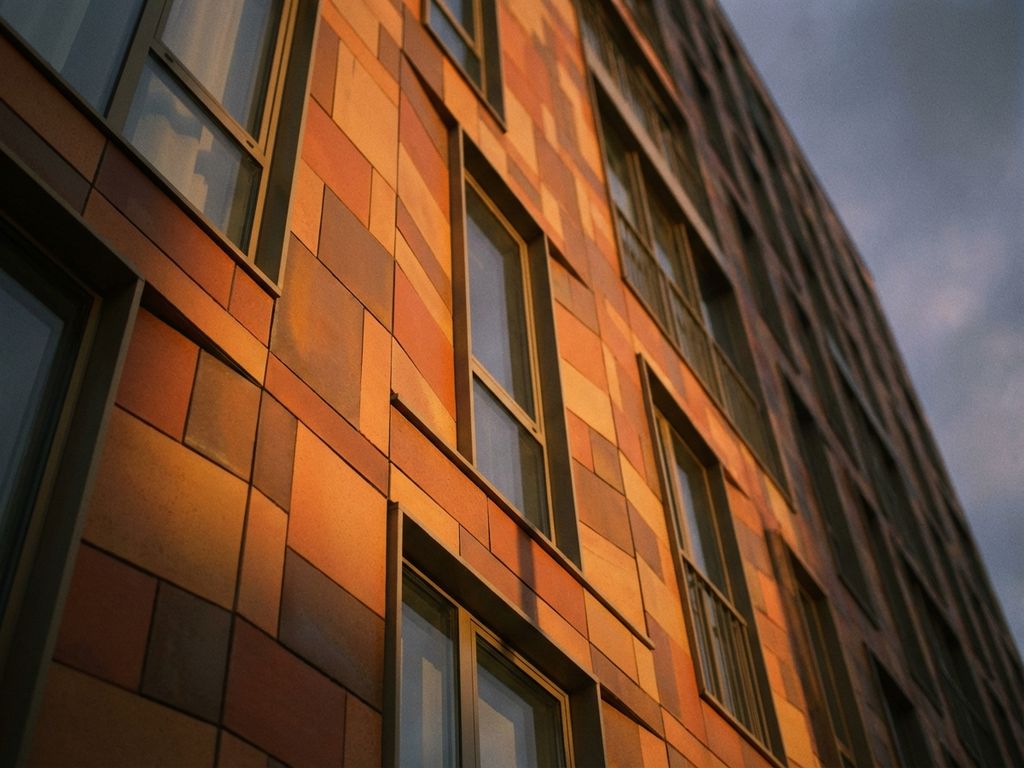
Ceramic facades offer superior durability, weather resistance, and design flexibility compared to traditional building materials. These high-performance cladding systems provide excellent insulation properties, require minimal maintenance, and contribute to sustainable building design through their recyclability and longevity. Keramikfassaden combine aesthetic appeal with practical benefits that make them increasingly popular in modern architecture.
What are ceramic facades and why are they becoming so popular?
Ceramic facades are exterior cladding systems made from fired clay materials that provide both protective and aesthetic functions for buildings. These panels are manufactured through high-temperature firing processes, typically exceeding 1,200 degrees Celsius, which create dense, non-porous surfaces with exceptional durability and weather resistance.
The manufacturing process involves shaping clay into panels of various sizes and textures, then firing them at extreme temperatures to achieve vitrification. This process eliminates porosity and creates a surface that resists moisture penetration, thermal expansion, and environmental degradation. The result is a building material that maintains its appearance and structural integrity for decades.
Modern architecture increasingly favours ceramic facades because they offer unparalleled design versatility while delivering superior performance characteristics. Architects appreciate the ability to create custom colours, textures, and finishes that complement any architectural style. The material’s lightweight properties also enable more flexible structural designs and reduce foundation requirements compared to traditional masonry systems.
How do ceramic facades compare to traditional building materials?
Ceramic facades significantly outperform traditional materials like brick, stone, metal, and concrete in multiple key areas. They are approximately 30% lighter than conventional ceramic elements while maintaining superior strength and durability characteristics. This weight reduction allows for simpler structural support systems and more cost-effective installation processes.
Maintenance requirements for ceramic facades are substantially lower than for traditional materials. Unlike brick or stone, which may require regular repointing or sealing, ceramic surfaces maintain their integrity without ongoing intervention. Metal facades often suffer from corrosion and thermal expansion issues, while concrete can develop cracks and staining over time.
Installation complexity favours ceramic systems due to their modular design and lightweight construction. Traditional masonry requires skilled craftspeople and weather-dependent installation schedules. Ceramic panels can be installed quickly in various weather conditions using standard construction equipment. The precision manufacturing of ceramic elements also ensures consistent quality and appearance across the entire facade.
What are the main durability and weather resistance benefits of ceramic facades?
Ceramic facades provide exceptional resistance to weathering, UV radiation, temperature fluctuations, and environmental pollutants through their vitrified surface structure. The high-temperature firing process creates a glass-like surface that prevents moisture penetration and eliminates the freeze-thaw damage common in porous materials.
UV radiation, which causes fading and degradation in many building materials, has minimal impact on properly fired ceramic surfaces. The inorganic nature of ceramic materials means colours remain stable for decades without significant fading or discolouration. This stability maintains the building’s aesthetic appeal throughout its service life.
Temperature fluctuations that cause expansion and contraction in other materials are well managed by ceramic facade systems. The material’s low thermal expansion coefficient and proper joint design accommodate thermal movement without stress cracking. Additionally, ceramic surfaces resist chemical attack from acid rain, salt spray, and urban pollutants that can damage limestone, concrete, and metal facades. This comprehensive weather resistance ensures long-term performance in challenging environmental conditions.
How do ceramic facades contribute to sustainable building design?
Ceramic facades support sustainable building practices through their complete recyclability, energy efficiency contributions, and extended service life. The natural clay materials used in ceramic production can be fully recycled at the end of the building’s life cycle, reducing waste and supporting circular economy principles.
Energy efficiency benefits arise from the thermal mass properties of ceramic materials and their ability to support high-performance insulation systems. The lightweight nature of modern ceramic facades allows for thicker insulation layers without structural penalties, improving building energy performance. The durability of ceramic systems also reduces the embodied energy associated with replacement and maintenance over the building’s lifetime.
Manufacturing sustainability is enhanced when ceramic producers use local clay sources, reducing transportation impacts. The longevity of ceramic facades, often exceeding 50 years with minimal maintenance, significantly reduces the environmental impact per year of service compared to materials requiring frequent replacement. This long-term sustainability approach makes ceramic facades an environmentally responsible choice for contemporary building projects.
What design possibilities do ceramic facades offer architects and builders?
Ceramic facades provide virtually unlimited design possibilities through extensive customisation options in colours, textures, sizes, and surface finishes. Modern manufacturing techniques enable the production of panels ranging from small-format tiles to large-scale elements, with surfaces that can be smooth, textured, ribbed, or profiled according to design requirements.
Colour options extend far beyond traditional terracotta tones to include contemporary greys, blacks, whites, and custom colours developed for specific projects. Surface treatments can create effects ranging from matte and satin finishes to high-gloss surfaces that reflect light dramatically. Textural possibilities include wood grain effects, stone textures, and geometric patterns that add visual interest and depth to building facades.
Installation patterns offer additional design flexibility, with panels arranged in traditional running bond patterns, stack bond layouts, or custom geometric configurations. The precision manufacturing of ceramic elements enables millimetre-perfect alignment and consistent joint widths that contribute to the overall aesthetic quality. These design capabilities allow ceramic facades to complement architectural styles from minimalist contemporary designs to buildings that reference traditional masonry construction methods.
How TONALITY® helps with ceramic facade implementation
TONALITY® provides comprehensive ceramic facade solutions through our advanced manufacturing processes and extensive customisation capabilities. Our high-temperature firing process at over 1,200 degrees Celsius creates exceptionally smooth, dense surfaces that deliver superior performance and aesthetic quality for any architectural project.
Our ceramic facade solutions include:
- Precision manufacturing with elements sized from 150 × 300 mm to 400 × 1,600 mm with millimetre accuracy
- Over 2,700 combination possibilities including smooth, ribbed, waved, and profiled surfaces
- 30% lighter weight compared to conventional ceramic elements, enabling flexible installation
- Complete recyclability and sustainable manufacturing using local Westerwald clay
- Expert technical support throughout the design and installation process
We combine traditional ceramic craftsmanship with modern manufacturing technology to deliver facade systems that meet all building physics requirements while providing exceptional design freedom. Contact our technical team to discuss how we can support your next ceramic facade project with customised solutions that meet your specific architectural and performance requirements.
Related Articles
- Can architectural design improve energy efficiency?
- What are the thermal performance advantages of terracotta systems?
- What are the cost differences between terracotta installation methods?
- 7 Ways to Create Depth and Shadow Effects with 3D Terracotta Panels
- How do restorers match new terracotta panels to 100-year-old historic facades?
Articles connexes
- What are the latest trends in architectural design?
- How to Detail Terracotta Facades at Corners, Soffits, and Window Reveals
- What BIM and Revit objects are available for terracotta facade specification?
- 10 Technical Tests Every Terracotta Facade Should Pass
- Is fiber cement or terracotta more durable for building facades?