

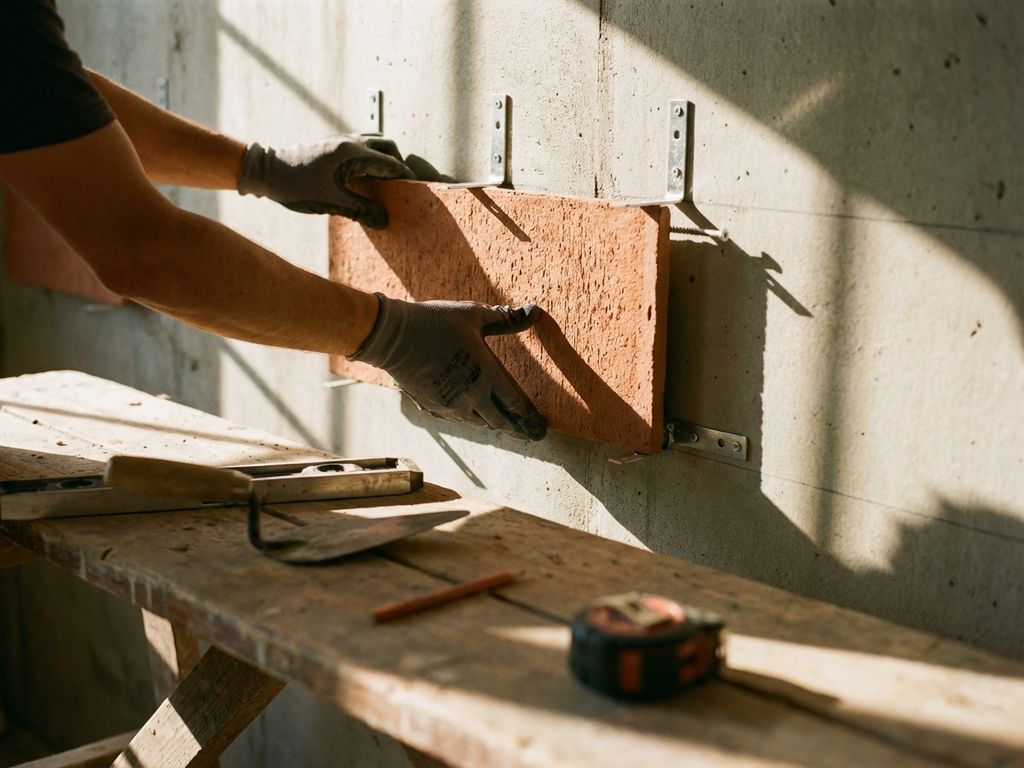
Mounting terracotta cladding on concrete walls involves securing ceramic panels using mechanical fixing systems, rail systems, or bracket mounting methods. The process requires proper wall preparation, appropriate tools, and careful attention to weatherproofing. With the right approach, terracotta façades provide excellent durability, thermal performance, and aesthetic appeal for concrete structures.
What is terracotta cladding and why choose it for concrete walls?
Terracotta cladding consists of fired clay panels that are attached to building exteriors for protection and aesthetic enhancement. These ceramic elements undergo high-temperature firing processes that create dense, durable surfaces with excellent weather resistance and dimensional stability.
The manufacturing process involves shaping natural clay into panels and then firing them at temperatures exceeding 1,200 degrees Celsius. This sintering process creates a low-porosity surface that resists moisture penetration, UV degradation, and thermal expansion.
For concrete walls, terracotta cladding offers several key advantages:
- Exceptional durability with minimal maintenance requirements over decades
- Natural fire-resistant properties classified as building material class A1
- Superior thermal performance that helps regulate building temperature
- Wide range of colours, textures, and formats for design flexibility
- Excellent compatibility with concrete substrates
The natural composition of terracotta façades makes them particularly suitable for concrete applications, as both materials share similar thermal expansion characteristics and structural compatibility.
What are the different mounting systems for terracotta cladding?
Three primary mounting systems accommodate different concrete wall types and project requirements: mechanical fixing systems, rail systems, and bracket mounting methods. Each system offers distinct advantages for specific applications and structural conditions.
Mechanical fixing systems involve direct attachment of terracotta panels to concrete walls using specialised fasteners. This method works well for solid concrete walls with adequate thickness and structural integrity. The system requires precise drilling and proper sealing around penetration points.
Rail systems utilise vertical or horizontal aluminium profiles mounted to the concrete substrate. Terracotta panels are then attached to these rails using interlocking mechanisms or clips. This approach allows for easier installation and better accommodation of building movement.
Bracket mounting methods employ individual brackets fixed to the concrete wall, supporting each terracotta panel independently. This system provides excellent adjustability and is well suited to irregular concrete surfaces or retrofit applications.
The choice between systems depends on factors including:
- Concrete wall thickness and structural capacity
- Building height and wind load requirements
- Insulation integration needs
- Access requirements for future maintenance
How do you prepare concrete walls for terracotta cladding installation?
Proper concrete wall preparation involves surface assessment, cleaning, structural verification, and insulation planning. This foundation work ensures secure mounting and long-term performance of the terracotta cladding system.
Begin with a thorough surface assessment to identify any cracks, spalling, or structural defects in the concrete. Document these issues and address them through appropriate repair methods before proceeding with cladding installation.
Surface cleaning removes dirt, efflorescence, loose concrete, and any existing coatings that might interfere with attachment of the mounting system. Use appropriate cleaning methods such as pressure washing, mechanical abrasion, or chemical cleaning, depending on the type of contamination.
Structural integrity checks verify that the concrete wall can support the additional loads from the cladding system. Consider factors including:
- Concrete strength and thickness measurements
- Existing reinforcement location and condition
- Foundation adequacy for the additional façade weight
- Building movement joints and their accommodation
Insulation considerations involve planning for thermal bridge prevention and vapour barrier placement. Mark locations for mounting points and ensure appropriate sealing strategies around penetrations.
What tools and materials do you need for mounting terracotta cladding?
Professional terracotta cladding installation requires specialised tools, high-quality fasteners, mounting hardware, and comprehensive safety equipment. Having the right materials ensures efficient installation and long-term system performance.
Essential tools include:
- Hammer drill with masonry bits for concrete penetration
- Spirit levels and laser levels for accurate alignment
- Measuring tapes and marking tools for layout
- Torque wrenches for proper fastener installation
- Cutting tools for panel adjustments when necessary
Fastening materials must suit concrete substrates and local wind loads. Stainless steel anchors, bolts, and screws prevent corrosion and ensure structural integrity. Chemical anchors may be required for high-load applications.
Mounting hardware varies by system type but typically includes aluminium profiles, brackets, clips, and gaskets. All components should be compatible and designed for the specific terracotta panel dimensions and weight.
Safety equipment encompasses fall protection harnesses, scaffolding or lift equipment, protective eyewear, and dust masks for drilling operations. Weather protection may be necessary during installation to prevent moisture infiltration.
How do you ensure proper weatherproofing and thermal performance?
Effective weatherproofing combines proper sealing techniques, thermal bridge prevention, integrated insulation, and ventilation planning. These elements work together to protect the building structure while optimising energy performance.
Sealing techniques focus on preventing water infiltration at all potential entry points. Use high-quality sealants around mounting penetrations, panel joints, and interface areas with other building components. Vapour-permeable sealants allow moisture to escape while preventing water entry.
Thermal bridge prevention involves careful design of mounting connections to minimise heat transfer through the cladding system. Thermal breaks in mounting hardware and proper insulation continuity maintain building envelope performance.
Insulation integration requires coordination between the cladding system and the building insulation. Continuous insulation behind the cladding prevents thermal bridging, while proper vapour barrier placement controls moisture movement.
Ventilation requirements include:
- Adequate air gaps behind panels for moisture evaporation
- Ventilation openings at the top and bottom of cladding systems
- Drainage provisions for any water that penetrates the outer layer
- Protection of ventilation openings from pest infiltration
How TONALITY® helps with terracotta cladding installation
TONALITY® provides an advanced ceramic façade system that simplifies terracotta cladding installation while delivering superior performance. The system features profiled ceramic elements that interlock with vertical aluminium retaining profiles, creating a secure and efficient mounting solution.
Key advantages of the TONALITY® system include:
- Lightweight design at only 40 kilograms per square metre, reducing structural loads
- Precise manufacturing tolerances within one millimetre for a perfect fit
- Interlocking aluminium profile system for simplified installation
- Integrated graffiti protection and permanent colour stability
- A1 fire classification for non-combustible safety
- 100% recyclable materials for sustainable construction
The system’s mount-and-done installation approach reduces labour time and complexity compared with traditional mounting methods. The precise ceramic elements eliminate the need for extensive on-site adjustments, while the lightweight construction allows for reduced substructure requirements.
Contact TONALITY® today to discover how its innovative ceramic façade system can streamline your next terracotta cladding project while delivering exceptional long-term performance and aesthetic appeal.