

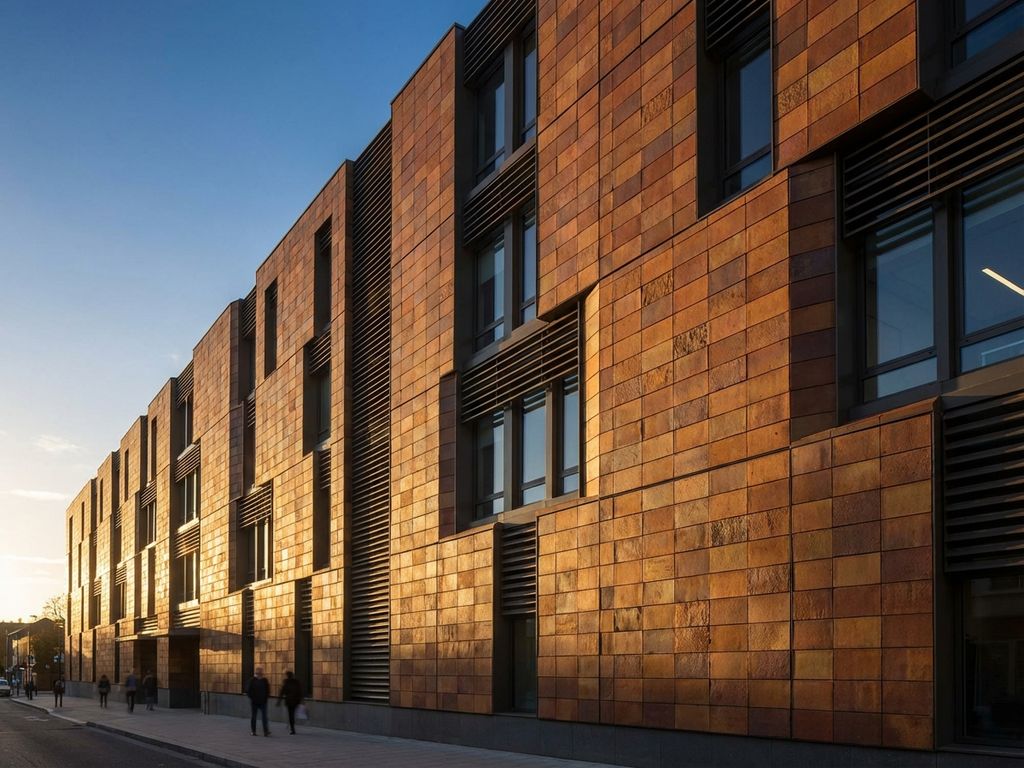
Terracotta facades are ceramic cladding systems made from fired clay that provide durable, attractive exterior building surfaces. They offer exceptional fire resistance, design flexibility, and low maintenance requirements while being environmentally sustainable. Modern terracotta systems feature lightweight installation methods and come in various colours, textures, and formats to suit diverse architectural applications.
What exactly is a terracotta facade and how does it differ from other materials?
A terracotta facade is a ceramic cladding system manufactured from natural clay that has been shaped, glazed, and fired at high temperatures exceeding 1,200 degrees Celsius. This intensive firing process creates a dense, non-porous surface that maintains its appearance and structural integrity for decades without requiring significant maintenance.
The manufacturing process involves forming clay into precise panels, applying surface treatments for colour and texture, and then firing them in kilns to achieve the final ceramic properties. This differs significantly from other facade materials in several key ways.
Compared to traditional brick, terracotta facades offer much greater design flexibility with larger panel sizes, more colour options, and smoother finishes. Unlike natural stone, ceramic facades provide a consistent appearance without natural variations that can affect uniformity. Metal cladding systems may offer similar installation benefits, but terracotta provides superior fire resistance and thermal properties.
The ceramic composition means terracotta facades are classified as building material class A1, making them completely non-combustible. This gives them a significant safety advantage over composite panels or timber cladding systems that may contain flammable components.
Why do architects choose terracotta facades for modern buildings?
Fire resistance and design versatility make terracotta facades particularly attractive to architects working on contemporary projects. The ceramic material provides excellent safety credentials while offering extensive creative possibilities through various colours, textures, and panel configurations that can realise virtually any architectural vision.
Durability represents another major advantage, as properly installed terracotta facades can last 50–100 years with minimal maintenance. The ceramic surface resists UV degradation, weathering, and pollution, maintaining its original appearance throughout the building’s lifecycle. This long-term performance reduces replacement costs and building disruption over time.
Environmental sustainability appeals to architects focused on green building practices. Terracotta facades are 100% recyclable, manufactured from natural clay materials, and can be completely deconstructed for reuse. The production process uses natural materials without harmful chemicals or treatments that might affect indoor air quality.
The lightweight nature of modern terracotta systems allows architects to specify them for timber-frame construction and retrofit projects where structural loading is a concern. Panels typically weigh only 40 kilograms per square metre, significantly less than traditional masonry or stone cladding systems.
What types of buildings commonly use terracotta facade systems?
Commercial and residential developments frequently specify terracotta facades because they provide a premium appearance with practical benefits. Office buildings, retail centres, and mixed-use developments benefit from the professional aesthetic and low maintenance requirements that reduce ongoing operational costs.
Educational facilities choose terracotta for its safety properties and durability. Schools and universities require building materials that can withstand heavy use while maintaining their appearance. The non-combustible properties provide additional safety assurance for buildings with high occupancy levels.
Healthcare structures use terracotta facades because the smooth, dense surface resists dirt accumulation and can be easily cleaned. Hospitals and medical centres require exterior materials that support hygiene standards while providing attractive, calming environments for patients and visitors.
Residential developments, particularly apartment buildings and housing estates, specify terracotta for its combination of aesthetic appeal and practical performance. The material works well for both contemporary and traditional architectural styles, providing flexibility for developers working in different market segments.
Retrofit and renovation projects often choose terracotta because the lightweight panels can be installed over existing structures without requiring extensive structural modifications. This makes them ideal for modernising older buildings while improving their thermal and visual performance.
How are terracotta facades installed and what makes the process efficient?
Terracotta facade installation uses mechanical fixing systems that attach ceramic panels to vertical aluminium rails mounted on the building structure. The panels feature profiled backs that interlock with the support rails, creating a secure connection that allows for thermal movement while maintaining weather protection.
The installation process begins with mounting the aluminium substructure to the building frame, ensuring proper alignment and spacing. The lightweight nature of the system means less robust structural support is required compared to heavier cladding materials, reducing foundation and frame requirements.
Individual panels are then positioned and secured to the rail system using mechanical fixings. The interlocking design means each panel supports the ones above and below, distributing loads evenly across the facade. This system allows for quick installation, as panels can be fitted in sequence without complex lifting equipment.
Weather sealing is achieved through the panel design and installation method rather than relying on sealants that require ongoing maintenance. The overlapping panel system creates natural drainage paths while preventing water penetration behind the cladding.
Quality control during installation is simplified because panels are manufactured to precise tolerances, typically within one millimetre. This precision reduces on-site adjustments and ensures a consistent appearance across large facade areas.
What maintenance do terracotta facades require over time?
Minimal maintenance requirements make terracotta facades cost-effective over their operational lifetime. The ceramic surface naturally resists dirt accumulation, weathering, and biological growth, requiring only periodic cleaning to maintain optimal appearance.
Regular maintenance typically involves annual visual inspections to check for any mechanical fixing issues or damage from impact. The robust ceramic material rarely suffers from weathering damage, but mechanical fixings may require occasional adjustment or replacement as buildings settle over time.
Cleaning requirements depend on the building location and environmental conditions. Urban environments with higher pollution levels may require more frequent cleaning, typically every 2–3 years. The smooth ceramic surface can be cleaned using standard building maintenance equipment and techniques without special treatments or chemicals.
The integrated graffiti protection means any unwanted markings can be removed without damaging the underlying ceramic surface. This is particularly valuable for buildings in urban areas where vandalism might be a concern.
Long-term durability expectations for quality terracotta facades extend to 50–100 years with proper installation and minimal maintenance. The ceramic material does not degrade from UV exposure, freeze–thaw cycles, or normal weathering conditions that affect other facade materials.
How TONALITY® helps with terracotta facade solutions
TONALITY® provides comprehensive ceramic facade solutions through advanced manufacturing processes and innovative installation systems. Our sinter firing process at temperatures exceeding 1,200 degrees Celsius creates exceptionally dense, smooth surfaces that deliver superior long-term performance and aesthetic consistency.
Our ceramic facade systems offer architects and builders:
- Precision manufacturing with panels produced to within one millimetre tolerance for perfect installation alignment
- Lightweight design at approximately 40 kilograms per square metre, suitable for timber construction and retrofit applications
- Flexible sizing options from 150 × 300 mm up to 400 × 1,600 mm to suit any architectural requirement
- Simple installation systems using profiled backs that interlock with aluminium retaining profiles
- Complete fire safety with A1 classification for non-combustible performance
- Extensive design possibilities through a wide range of colour, surface, and format options
Contact our technical team to discuss your terracotta facade requirements and discover how TONALITY® ceramic systems can enhance your next building project with proven performance and exceptional design flexibility.
Related Articles
- What makes terracotta safer than ACM panels after Grenfell?
- Why is terracotta considered a low-carbon facade material?
- How do architects create parametric designs with terracotta facades?
- 5 Historic Buildings Successfully Restored with New Terracotta
- Terracotta vs HPL Panels: Technical Performance Comparison