

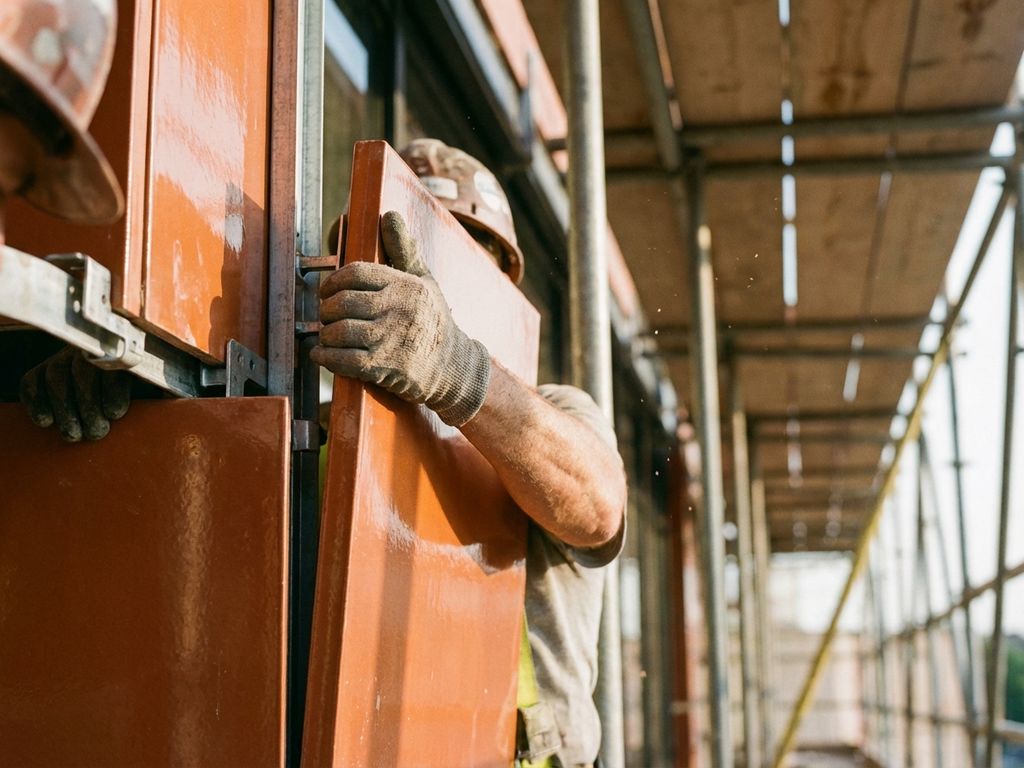
Terracotta facade assembly follows a systematic process that involves proper preparation, specialised tools, and precise installation techniques. Professional installation typically requires mounting ceramic elements onto aluminium retaining profiles with careful attention to alignment and spacing. The entire process emphasises quality control measures to ensure the long-term performance and aesthetic appeal of the finished facade system.
What tools and materials do you need for terracotta facade assembly?
Successful terracotta facade installation requires specialised tools and high-quality materials to ensure professional results. Essential equipment includes measuring tools such as laser levels and tape measures, mounting hardware such as aluminium retaining profiles and fixing brackets, plus safety equipment including harnesses and protective gear.
The complete toolkit encompasses several categories of equipment. Measuring and marking tools include spirit levels, chalk lines, and measuring tapes for precise positioning. Power tools such as drill drivers, impact wrenches, and cutting equipment handle the installation of the mounting hardware. Safety equipment remains paramount and includes fall protection harnesses, hard hats, and non-slip footwear for working at height.
Material specifications focus on the ceramic elements themselves and their supporting framework. Terracotta facade tiles must meet specific dimensional tolerances and surface quality standards. The mounting system requires corrosion-resistant aluminium profiles designed to accommodate thermal movement whilst maintaining a secure attachment to the building structure.
How do you prepare the building structure for terracotta facade installation?
Building preparation begins with a comprehensive structural assessment to verify load-bearing capacity and surface conditions. The substructure must accommodate the facade weight whilst providing adequate fixing points for the mounting system. Proper preparation includes checking wall flatness, installing insulation layers, and ensuring weatherproofing integrity.
Structural evaluation examines the existing wall construction to confirm that it can support the additional facade load. This assessment considers both dead loads from the ceramic elements and wind loads that the facade system will experience. Any structural deficiencies require rectification before proceeding with installation.
Surface preparation involves creating a level, clean mounting surface for the aluminium retaining profiles. This may require additional framework or adjustment layers to achieve the necessary flatness tolerances. Insulation installation follows building regulations whilst maintaining continuity to prevent thermal bridging through the facade system.
What is the correct sequence for installing terracotta facade elements?
Installation follows a bottom-up progression starting from accurately positioned reference lines and corner details. The sequence begins with mounting the aluminium retaining profiles, followed by installing ceramic elements row by row. Each element interlocks with the vertical profiles through back-profiled edges that ensure secure positioning.
Layout planning establishes the starting position and joint locations across the entire facade surface. This planning phase determines how elements align with architectural features such as windows and doors. Reference lines marked at regular intervals guide the installation team throughout the mounting process.
The mounting technique involves positioning each ceramic element against the aluminium retaining profile and engaging the interlocking mechanism. Elements slide into position and lock securely without requiring additional mechanical fixings. This system allows for thermal movement whilst maintaining weather-tight joints between adjacent elements.
How do you ensure proper alignment and spacing during facade assembly?
Maintaining precise alignment requires continuous monitoring using laser levels and string lines throughout the installation process. Proper spacing accounts for thermal expansion joints whilst ensuring a uniform visual appearance. Professional techniques include regular measurement checks and adjustment procedures to correct any deviations promptly.
Alignment control starts with accurately positioned reference points that guide the entire installation. These reference lines must account for building tolerances and any irregularities in the substrate. String lines stretched between reference points provide visual guides for maintaining straight courses across the facade surface.
Thermal expansion management involves calculating movement allowances based on element size and local temperature variations. Expansion joints positioned at predetermined intervals accommodate this movement without compromising the integrity of the facade. The joint spacing depends on material properties and expected temperature ranges.
What quality control measures should you follow during terracotta installation?
Quality control encompasses systematic inspection procedures at each installation stage to identify and correct issues before they affect subsequent work. Essential checks include verifying secure mounting, confirming proper alignment, and testing weather-seal integrity. Documentation of inspection results ensures accountability and provides a reference for future maintenance.
Regular inspection procedures examine the security of the mounting system and the accuracy of element positioning. These checks occur at predetermined intervals during installation rather than waiting until completion. Any defects identified require immediate correction to prevent compound problems affecting larger facade areas.
Common installation errors include inadequate profile fixing, incorrect element spacing, and misaligned reference lines. Prevention strategies involve thorough planning, regular measurement verification, and clear communication between installation team members. Final quality checks confirm that the completed facade meets specification requirements and performance standards.
How TONALITY® simplifies terracotta facade assembly
TONALITY® revolutionises facade installation through innovative back-profiled ceramic elements that interlock directly with aluminium retaining profiles. This system eliminates complex mechanical fixings whilst ensuring secure, weatherproof installation. The lightweight design reduces substructure requirements and significantly accelerates installation timelines.
Key system advantages include:
- Back-profiled ceramic elements that slide and lock into position without additional fixings
- Lightweight construction at approximately 40 kilograms per square metre, reducing structural loads
- Simplified mounting process requiring only profile installation and element positioning
- Integrated thermal expansion accommodation preventing stress-related failures
- Weather-tight joints achieved through precision manufacturing tolerances
The TONALITY® system transforms complex facade installation into a streamlined process that reduces both time and labour requirements whilst maintaining superior performance standards. Contact our technical team to discover how this innovative mounting system can simplify your next terracotta facade project.