

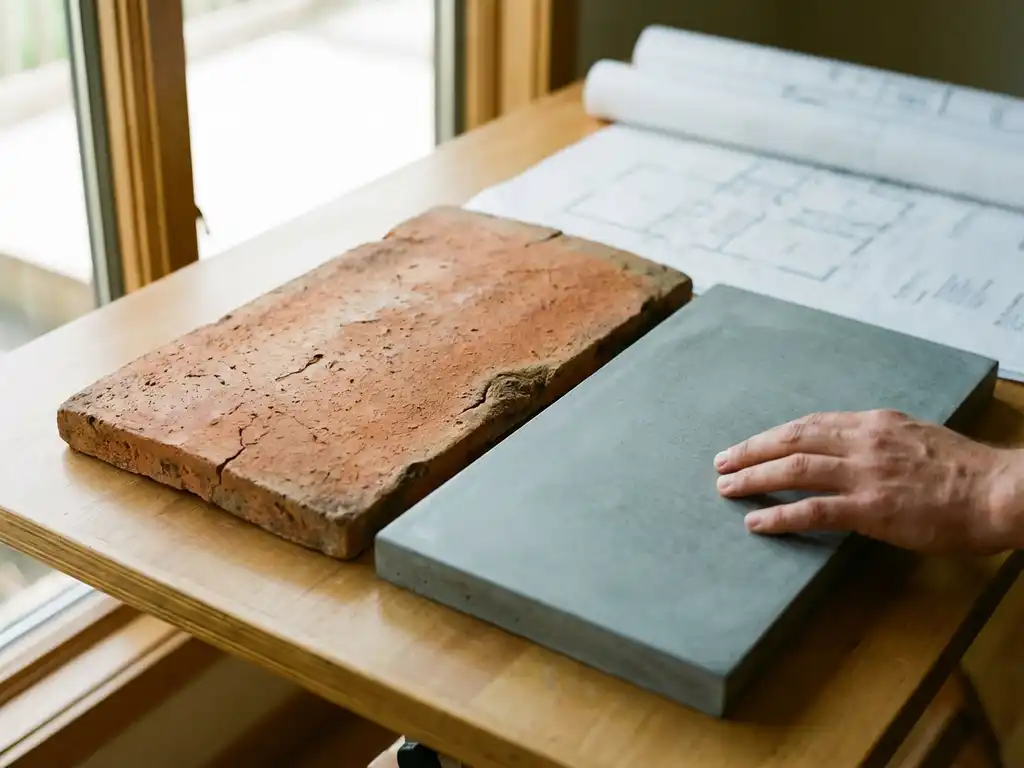
Choosing between terracotta and GFRC significantly impacts your facade project’s structural requirements, budget, and aesthetic outcome. Terracotta offers the durability of natural clay with higher density, while GFRC provides the flexibility of a composite material with lighter weight. Understanding ceramic facade weight, cost implications, and performance characteristics helps architects and builders select the optimal cladding materials for their specific project requirements and environmental conditions.
Topic foundation
Material selection forms the cornerstone of successful facade projects, determining everything from structural engineering requirements to long-term maintenance costs. The choice between terracotta and GFRC influences load calculations, installation methods, and building performance for decades.
Modern facade material comparison involves evaluating multiple factors beyond initial appearance. Weight considerations affect foundation design and structural support systems. Cost analysis extends beyond material prices to include installation complexity, maintenance schedules, and lifecycle performance. Climate compatibility determines durability and appearance retention across different geographic locations.
Understanding these interconnected factors enables informed decisions that balance immediate project needs with long-term building performance. The following comprehensive comparison addresses the most critical questions architects and specifiers encounter when choosing between these popular cladding materials.
What’s the actual weight difference between terracotta and GFRC facades?
Terracotta typically weighs 35–45 kg per square metre, while GFRC ranges from 25–35 kg per square metre. This weight difference significantly impacts structural requirements, with terracotta demanding more robust support systems and potentially affecting foundation design in renovation projects.
The density variation stems from manufacturing processes and material composition. Terracotta’s fired clay structure creates a denser, more solid material. GFRC’s glass fibre reinforcement allows for thinner sections while maintaining strength, resulting in lower overall weight.
Structural implications extend beyond simple load calculations. Heavier terracotta systems require more substantial mounting hardware and support frameworks. This affects both material costs and installation complexity. Buildings with weight restrictions, particularly in seismic zones or heritage renovations, may favour lighter GFRC solutions.
Installation teams also benefit from lighter materials. GFRC panels are easier to handle manually, reducing crane time and labour costs. However, proper installation techniques remain crucial for both materials to ensure long-term performance and safety.
How do terracotta and GFRC costs compare for facade projects?
GFRC generally offers lower initial material costs, but total project expenses depend heavily on design complexity, installation requirements, and long-term maintenance needs. Terracotta’s higher upfront investment is often offset by superior durability and minimal maintenance requirements over the building’s lifecycle.
Installation costs vary significantly between materials. Terracotta’s weight requires more substantial support structures and potentially larger installation crews. GFRC’s lighter weight enables faster installation but may require more frequent maintenance interventions.
Lifecycle cost analysis reveals important considerations. Terracotta’s natural firing process creates exceptional durability, often lasting 50+ years with minimal maintenance. GFRC may require periodic repairs or protective treatments, particularly in harsh environmental conditions.
Project scale influences cost-effectiveness. Large installations may favour GFRC for reduced structural requirements, while smaller projects might benefit from terracotta’s longevity. Design complexity also affects pricing, with intricate shapes potentially favouring GFRC’s moulding capabilities over terracotta’s forming limitations.
What are the key aesthetic differences between terracotta and GFRC?
Terracotta delivers natural clay textures and rich, varied colour tones that develop subtle character over time. GFRC offers greater design flexibility with complex shapes and consistent surface finishes, but may lack the organic warmth and natural variation that characterise fired clay products.
Manufacturing processes create distinct aesthetic possibilities. Terracotta’s firing process produces unique colour variations and natural textures that cannot be perfectly replicated. Each piece carries slight variations that contribute to overall visual richness and authenticity.
GFRC excels in achieving complex geometries and precise dimensional consistency. Moulding capabilities enable intricate details, curves, and sculptural elements that would be challenging or impossible with traditional terracotta forming methods.
Surface treatments differ significantly between materials. Terracotta relies on natural clay colours and glazes applied before firing. GFRC can incorporate various aggregates, pigments, and surface treatments applied during casting, offering broader colour and texture possibilities while maintaining uniformity across large installations.
Which facade material performs better in different climates?
Terracotta excels in extreme weather conditions due to its fired clay composition and natural thermal properties. GFRC performs well in moderate climates but may require additional protection in areas with severe freeze-thaw cycles or intense UV exposure.
Thermal performance varies between materials. Terracotta’s mass provides natural thermal stability, helping regulate temperature fluctuations. Its low thermal conductivity reduces heat transfer, contributing to building energy efficiency. GFRC’s thinner sections offer less thermal mass but enable better insulation integration.
Moisture handling represents a critical performance factor. Terracotta’s fired structure resists water penetration while allowing vapour transmission. GFRC requires careful detailing to prevent moisture infiltration, particularly at joints and connections.
UV resistance differs significantly. Terracotta’s fired clay composition provides inherent UV stability, maintaining colour and surface integrity for decades. GFRC may experience surface degradation or colour fading without proper UV-resistant formulations and protective treatments.
How TONALITY® ceramic facades outperform traditional options
TONALITY® ceramic facade systems combine the best characteristics of both terracotta and GFRC while addressing their traditional limitations. Our lightweight facade systems deliver exceptional performance through advanced ceramic technology and innovative installation methods.
Key advantages include:
- Ultra-lightweight design at approximately 40 kg/m² reduces structural requirements
- A1 fire classification provides superior fire resistance without combustible components
- Interlocking profile system enables rapid, precise installation
- Integrated graffiti protection and permanent UV resistance
- 100% recyclable materials supporting sustainable construction
- Precision manufacturing within 1 mm tolerance for consistent quality
The single-layer ceramic production process creates dense, smooth surfaces that outperform traditional materials in durability and maintenance requirements. Our sinter firing process at over 1,200°C ensures consistent quality and long-term performance across all climate conditions.
Ready to explore how TONALITY® ceramic facades can enhance your next project? Contact our technical team for detailed specifications and project-specific guidance.
Knowledge synthesis
Successful facade material selection requires balancing weight considerations, cost implications, aesthetic requirements, and climate performance. Terracotta offers proven durability and natural beauty but demands robust structural support. GFRC provides design flexibility and lighter weight while requiring careful specification for long-term performance.
Consider your project’s specific requirements: structural limitations, budget constraints, design complexity, and environmental conditions. Lightweight facade systems like advanced ceramics may offer optimal solutions that combine traditional material benefits with modern performance enhancements.
The ceramic vs GFRC durability comparison ultimately depends on quality manufacturing, proper installation, and appropriate material selection for specific applications. Consult facade specialists to evaluate options based on your project’s unique requirements and long-term performance expectations.