

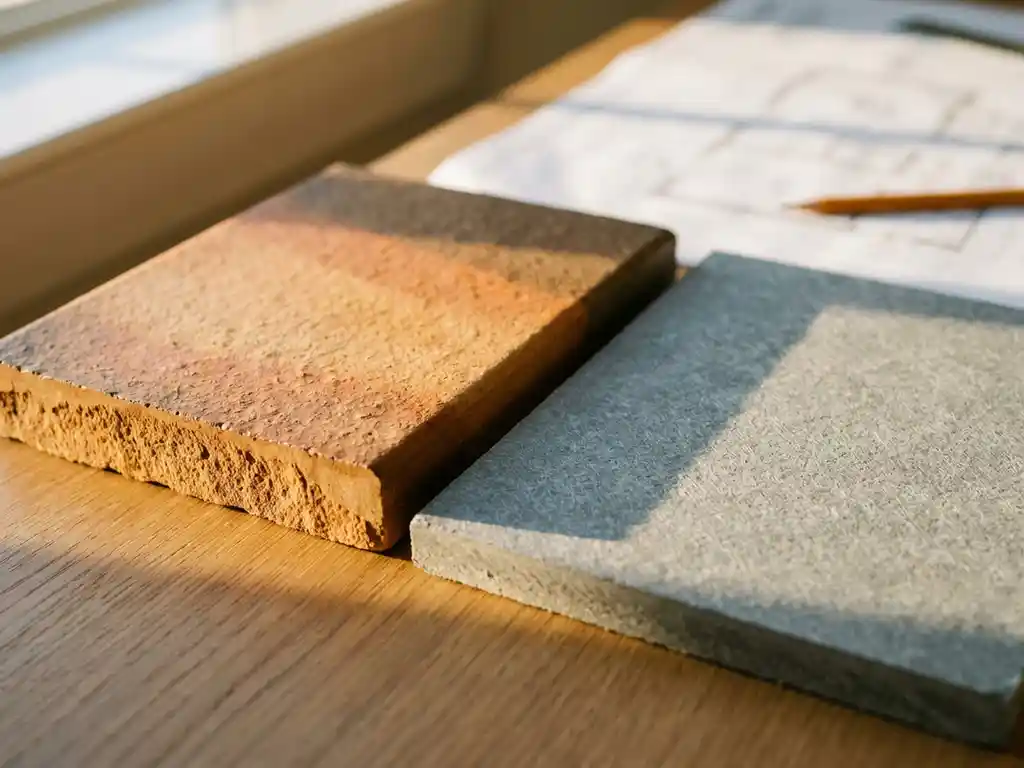
When architects and building professionals evaluate facade cladding options, the choice often comes down to balancing performance, aesthetics, and long-term value. While fiber cement cladding has gained popularity as a modern building material, terracotta cladding continues to prove its worth as a superior ceramic facade solution. This ancient material, refined with contemporary manufacturing techniques, offers compelling advantages that make it increasingly attractive for today’s demanding building projects.
Understanding the key differences between terracotta and fiber cement cladding can help you make informed decisions that impact both immediate project success and long-term building performance. Let’s explore why terracotta consistently outperforms fiber cement across multiple critical factors.
1. Superior fire resistance and safety performance
Terracotta cladding achieves an A1 non-combustible rating, representing the highest level of fire safety classification available for building materials. This ceramic facade material contains no organic compounds that can ignite or contribute to fire spread, making it inherently safer than fiber cement alternatives.
Fiber cement cladding, while generally fire-resistant, contains cellulose fibers and other organic materials that can compromise its fire performance under extreme conditions. The manufacturing process of terracotta involves firing clay at temperatures exceeding 1000°C, essentially pre-exposing the material to conditions far more severe than any building fire.
Building code compliance becomes straightforward with terracotta’s superior fire ratings. Many jurisdictions require non-combustible materials for high-rise applications, making terracotta the natural choice for projects where safety cannot be compromised.
2. Exceptional durability and weather resistance
The longevity of terracotta cladding significantly exceeds that of fiber cement systems, particularly when exposed to harsh weather conditions. Terracotta’s ceramic structure provides superior resistance to freeze-thaw cycles, a critical advantage in climates with temperature fluctuations.
UV degradation poses minimal threat to terracotta surfaces, as the material’s color and structural integrity remain stable under constant sun exposure. Fiber cement cladding, by contrast, can experience color fading and surface degradation over time, particularly in lighter shades and high-UV environments.
Impact resistance represents another area where terracotta excels. The material’s inherent hardness and structural integrity help it withstand mechanical damage that might crack or chip fiber cement panels. This durability translates into fewer repairs and replacements throughout the building’s lifecycle.
3. Natural aesthetic versatility and design freedom
Terracotta offers architects exceptional design flexibility through its natural material properties and manufacturing possibilities. The ceramic facade system supports an extensive range of colors, textures, and surface finishes that remain vibrant and consistent over decades.
Custom sizing and complex geometric shapes are achievable with terracotta manufacturing techniques, enabling architects to realize unique design visions. Surface textures range from smooth, contemporary finishes to deeply embossed patterns that create dramatic shadow play and visual interest.
Fiber cement’s aesthetic options, while improving, remain limited by manufacturing constraints and the material’s composite nature. The uniform appearance that initially appeals to some designers can become monotonous across large facade areas, lacking the subtle variations that make terracotta visually engaging.
4. Lower maintenance requirements over time
Terracotta’s self-cleaning properties and resistance to biological growth significantly reduce ongoing maintenance demands compared to fiber cement systems. The material’s non-porous surface prevents moisture absorption that can lead to algae, moss, or lichen development.
Cleaning requirements for terracotta typically involve simple water washing, as the smooth ceramic surface releases dirt and pollutants naturally during rainfall. Fiber cement may require more intensive cleaning methods and periodic treatments to maintain its appearance and prevent biological growth.
Replacement cycles favor terracotta substantially, with properly installed ceramic tiles lasting decades without significant deterioration. The long-term cost implications of reduced maintenance, fewer replacements, and minimal repair requirements make terracotta an economically sensible choice despite higher initial investment.
5. Environmental sustainability and recyclability
Terracotta’s environmental credentials stem from its natural clay composition and energy-efficient manufacturing processes that have been refined over centuries. The material requires no chemical treatments or synthetic additives that might pose environmental concerns during production or disposal.
End-of-life recyclability positions terracotta as a truly sustainable building material. Ceramic tiles can be crushed and reused as aggregate in new construction projects or returned to the earth without environmental impact. This contrasts with fiber cement’s complex composite structure, which presents challenges for recycling and disposal.
Carbon footprint considerations favor terracotta when viewed across the complete building lifecycle. The material’s exceptional durability means fewer replacements and less embodied energy consumption over the building’s operational life, offsetting any initial manufacturing energy requirements.
6. Superior installation advantages
Installation efficiency with terracotta systems often surprises contractors familiar with more complex cladding materials. The precision manufacturing of ceramic tiles ensures consistent dimensions and fitting tolerances that streamline the installation process.
Weight considerations work in terracotta’s favor for many applications, as modern ceramic facade systems can be engineered to provide excellent performance while minimizing structural loads. This efficiency allows for reduced substructure requirements compared to some fiber cement systems.
Construction timeline benefits emerge from terracotta’s predictable installation characteristics and reduced need for on-site adjustments. Weather resistance during installation means work can continue in conditions that might halt fiber cement installation, keeping projects on schedule.
How TONALITY® delivers superior terracotta solutions
TONALITY® addresses all these advantages through advanced ceramic facade systems engineered for contemporary building demands. Our terracotta cladding solutions combine traditional ceramic excellence with modern manufacturing precision to deliver:
- A1 fire-rated ceramic tiles with proven safety performance
- Comprehensive design support for custom colors, textures, and configurations
- Streamlined installation systems that reduce construction time and complexity
- Technical expertise to optimize facade performance and longevity
- Sustainable manufacturing processes with full lifecycle support
Ready to explore how terracotta cladding can enhance your next project? Contact our technical team to discuss your specific requirements and discover the TONALITY® advantage in ceramic facade systems.