

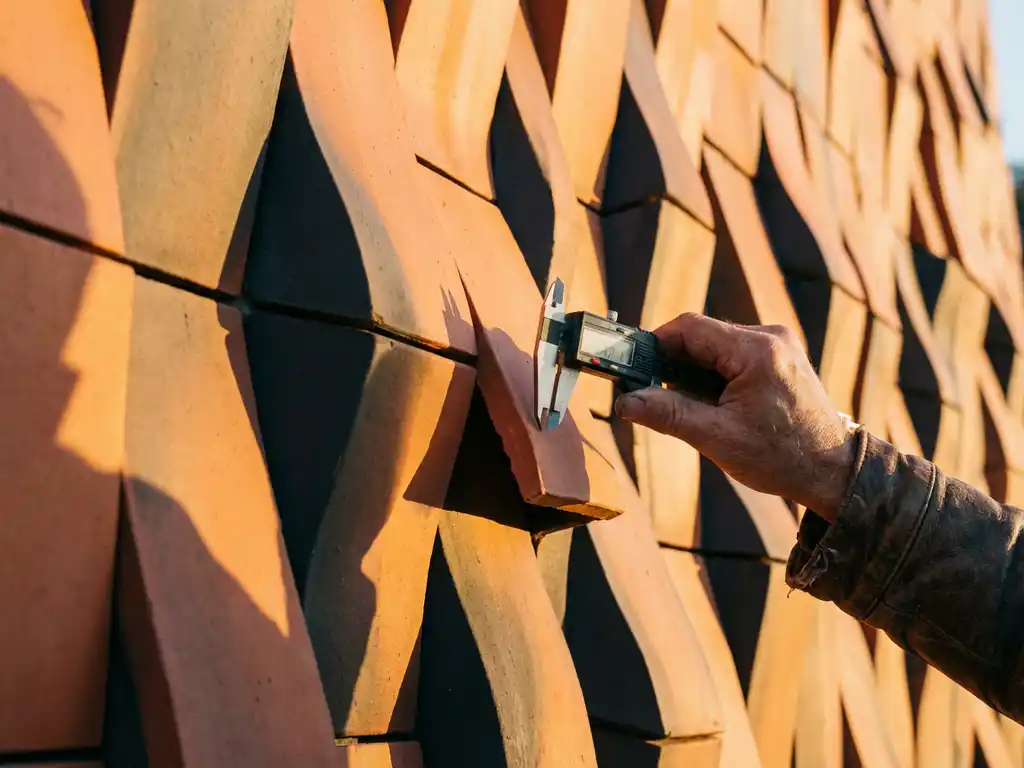
What Is Parametric Design for Terracotta Facades?
Parametric design for terracotta facades is a digital design methodology that uses algorithms and mathematical parameters to create complex, adaptive ceramic facade systems. Instead of designing each element individually, architects define rules and relationships that automatically generate facade patterns, optimize panel sizes, and adapt to changes in building geometry.
This computational approach revolutionizes how architects work with ceramic cladding systems. By establishing parameters such as panel dimensions, surface textures, color gradients, and structural constraints, designers can explore thousands of facade variations within minutes. The parametric model responds dynamically to changes in building shape, environmental factors, or aesthetic preferences, making the design process both more efficient and more creative.
The real power of parametric design lies in its ability to handle the geometric complexity of modern architecture while maintaining the structural integrity required for ceramic facade systems. When architects modify building curves or adjust panel specifications, the entire facade system updates automatically, ensuring that all elements remain properly aligned and manufacturable.
How Does Computational Design Differ From Traditional Facade Planning?
Computational design differs from traditional facade planning by using algorithmic processes and data-driven decision-making instead of manual drawing and intuitive design choices. While traditional methods rely on architects sketching patterns and manually calculating panel layouts, computational design employs software algorithms to generate, test, and optimize facade solutions automatically.
Traditional facade design typically follows a linear process: concept sketches, pattern development, panel sizing, and technical drawings. Each design iteration requires significant manual work, limiting the number of alternatives architects can explore. Changes to building geometry often necessitate restarting the facade design process from scratch.
In contrast, computational design creates a flexible framework in which facade systems adapt intelligently to design changes. The software can simultaneously consider multiple constraints, including structural loads, manufacturing limitations, aesthetic goals, and environmental performance. This parallel processing capability allows architects to optimize facade technology across multiple criteria at once, achieving better overall building performance than traditional trial-and-error methods.
Which Software Tools Do Architects Use for Parametric Terracotta Design?
Architects primarily use Grasshopper for Rhino, Dynamo for Revit, and specialized plugins such as Kangaroo and Galapagos for parametric terracotta design. These design platforms provide visual programming interfaces that allow designers to create complex ceramic facade patterns without traditional coding knowledge.
Grasshopper remains the most popular choice for parametric architecture projects due to its extensive library of components for geometric manipulation and pattern generation. Architects can create custom algorithms that automatically distribute ceramic panels across complex building surfaces while maintaining proper spacing and alignment. The software excels at generating intricate surface patterns and optimizing panel layouts for manufacturing efficiency.
Dynamo integrates seamlessly with Revit’s BIM environment, making it ideal for projects requiring detailed documentation and coordination with other building systems. For advanced optimization, architects often combine these tools with specialized solvers such as Galapagos for evolutionary algorithms or Kangaroo for physics-based simulations that ensure ceramic cladding systems perform structurally under real-world conditions.
How Do Architects Generate Complex Patterns for Ceramic Facades?
Architects generate complex patterns for ceramic facades by defining mathematical rules that control panel arrangement, surface variation, and geometric relationships across the building envelope. These algorithms can create everything from subtle gradients to dramatic three-dimensional textures by manipulating parameters such as panel rotation, size variation, and surface relief.
Pattern generation typically begins with establishing a base grid system that divides the facade into manageable ceramic panel zones. Architects then apply transformation rules that modify individual panels based on factors such as solar exposure, viewing angles, or structural requirements. Advanced algorithms can incorporate environmental data to create responsive patterns that optimize building performance while maintaining aesthetic coherence.
The most sophisticated ceramic facade design approaches combine multiple pattern-generation techniques. Architects might use Voronoi diagrams for organic, cell-like divisions; sine waves for rhythmic undulations; or fractal geometry for self-similar patterns at different scales. These mathematical foundations ensure that complex facade systems maintain visual logic while accommodating the practical constraints of ceramic manufacturing and installation.
What Are the Technical Challenges in Parametric Terracotta Design?
The primary technical challenges in parametric terracotta design include managing manufacturing tolerances, ensuring structural performance across varied panel geometries, and coordinating complex installation sequences. Each uniquely shaped ceramic element must meet precise dimensional requirements while maintaining the overall facade system’s structural integrity.
Manufacturing constraints pose significant limitations on parametric freedom. While algorithms can generate infinite geometric variations, ceramic production requires consideration of firing shrinkage, mold complexity, and quality control standards. Architects must balance design ambition with practical manufacturing capabilities, often requiring iterative optimization between computational models and production feedback.
Installation coordination becomes exponentially more complex with parametric designs. Each ceramic panel may have unique dimensions, attachment points, and installation sequences that must be clearly documented and communicated to construction teams. The parametric model must generate not only the facade geometry but also comprehensive installation instructions, connection details, and quality control checkpoints to ensure successful project delivery.
How Do Architects Optimize Parametric Designs for Manufacturing?
Architects optimize parametric designs for manufacturing by incorporating production constraints directly into their algorithmic models, ensuring that every generated facade variation remains manufacturable within ceramic production capabilities. This involves setting parameters for minimum panel dimensions, maximum curvature radii, and standardized connection details.
The optimization process begins with establishing clear manufacturing boundaries within the parametric model. Architects define acceptable ranges for panel thickness, surface texture depth, and geometric complexity based on ceramic firing and molding requirements. Advanced algorithms can automatically reject design variations that exceed these manufacturing limits while continuing to explore viable alternatives.
Successful optimization requires close collaboration between design teams and ceramic manufacturers throughout the parametric development process. Regular feedback loops help refine algorithmic constraints to match actual production capabilities. This collaborative approach ensures that computationally generated facades maintain their design intent while achieving the dimensional precision and surface quality that ceramic facade systems demand.
How TONALITY® Supports Parametric Ceramic Facade Design
TONALITY® provides comprehensive support for parametric ceramic facade design through precise manufacturing capabilities and flexible format options that seamlessly integrate with computational design workflows. Our ceramic elements can be produced to within one millimeter of precision across formats ranging from 150 x 300 mm up to 400 x 1,600 mm, giving architects the dimensional accuracy required for complex parametric geometries.
Key advantages for parametric projects include:
- Millimeter-precise manufacturing that maintains parametric design intent
- Flexible format options supporting diverse algorithmic pattern requirements
- A simple interlocking installation system that accommodates complex geometries
- Low surface weight (40 kg/m²), enabling lightweight substructures for parametric designs
- A1 fire classification, ensuring safety compliance across computational facade variations
Ready to bring your parametric ceramic facade vision to life? Contact our technical team to discuss how TONALITY® can support your computational design project with precision manufacturing and expert guidance. You can also explore our completed parametric facade projects to see how other architects have successfully implemented complex computational designs.
Related Articles
- 8 Key Differences Between Terracotta and Natural Stone Facades
- Which LEED credits can architects achieve with terracotta facade specification?
- 10 Technical Tests Every Terracotta Facade Should Pass
- How do aluminum and steel substructures compare for terracotta?
- Where are terracotta facade systems most commonly applied?