

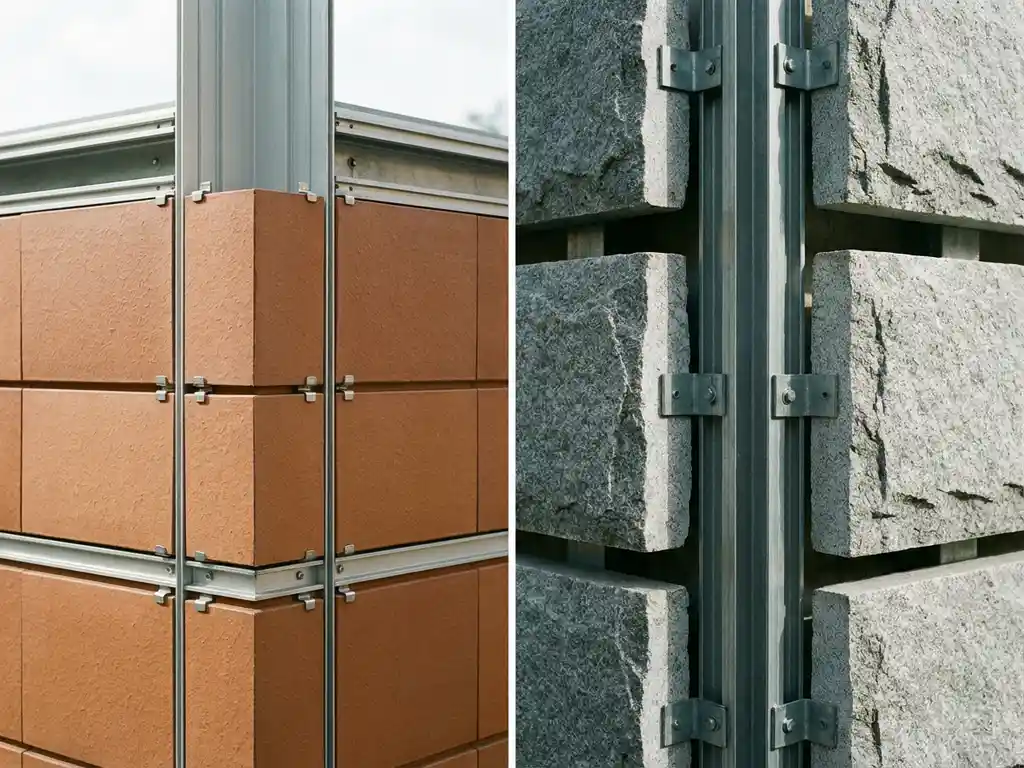
What is the actual weight difference between terracotta and natural stone facades?
Terracotta facade weight typically ranges from 35 to 50 kilograms per square meter, while natural stone cladding weighs significantly more—typically 80 to 150 kilograms per square meter—depending on the stone type and thickness. This means terracotta facades are approximately 60% to 70% lighter than traditional natural stone systems.
The weight difference becomes even more pronounced when comparing specific materials. Granite and limestone cladding systems often exceed 100 kg/m², while marble can reach up to 150 kg/m². In contrast, modern ceramic facade systems maintain their lightweight properties while delivering comparable aesthetic appeal and superior performance characteristics.
This substantial weight reduction in terracotta facades translates directly into reduced structural loads on buildings. The lower weight gives architects and engineers greater design flexibility while reducing the complexity and cost of the supporting structures required for installation.
How does facade weight affect structural requirements and installation costs?
Facade weight directly impacts structural engineering requirements, with heavier materials demanding more robust support systems, reinforced anchoring points, and potentially upgraded building frameworks. Lightweight facades such as terracotta require simpler substructures and reduce overall construction complexity.
Heavy natural stone cladding necessitates substantial structural modifications to accommodate the increased load. Buildings must incorporate reinforced concrete elements, steel framework upgrades, and more complex anchoring systems. These requirements often extend throughout the building structure, affecting foundations and load-bearing elements.
The installation process for lightweight ceramic facade materials offers significant advantages in handling and labor efficiency. Reduced crane time, simpler lifting equipment, and faster installation procedures contribute to shorter project timelines. Additionally, the reduced structural requirements translate into long-term value through easier maintenance access and lower ongoing structural stress on the building.
What are the performance differences between lightweight and heavy facade materials?
Lightweight facade materials such as terracotta often outperform heavier alternatives in durability, weather resistance, and thermal performance while maintaining structural integrity. Modern ceramic facades offer superior color retention and UV resistance and require minimal maintenance compared to natural stone systems.
The manufacturing process for ceramic facades involves high-temperature firing that creates dense, non-porous surfaces with excellent weather resistance. This contrasts with natural stone, which can be susceptible to weathering and staining and often requires regular maintenance treatments to preserve its appearance and structural integrity.
Thermal performance is another key distinction between lightweight and heavy facade materials. Ceramic facades provide consistent thermal properties and can be engineered to meet specific insulation requirements. Heavy stone facades may create thermal-bridging issues and require additional insulation strategies to meet modern energy-efficiency standards.
Which facade material is better for timber construction projects?
Terracotta facades are significantly better suited to timber construction due to their lightweight properties, fire-resistance classification, and compatibility with wood-frame structural systems. Natural stone cladding typically exceeds the load-bearing capacity of standard timber construction.
Timber construction benefits enormously from reduced facade weight, as wood structures have inherent load limitations compared to steel or concrete frameworks. The approximately 40 kg/m² surface weight of ceramic facades falls well within typical timber-construction parameters, while natural stone systems often require structural reinforcement that negates the benefits of timber building methods.
Fire-safety considerations make ceramic facades particularly valuable for timber construction projects. Ceramic materials achieve building-material class A1 classification, meaning they are completely non-combustible and contain no flammable components. This fire resistance helps address concerns about timber-construction fire safety while maintaining the environmental and construction benefits of wood building systems.
How TONALITY® Delivers Lightweight Facade Solutions
TONALITY® ceramic facades provide an optimal balance of lightweight construction and superior performance, with a surface weight of only 40 kg/m². Our advanced sinter-firing process creates exceptionally durable ceramic elements that outperform traditional materials while reducing structural requirements.
Key advantages of TONALITY® lightweight facade systems include:
- A simple interlocking installation system requiring minimal structural support
- A1 fire classification, making them ideal for timber construction projects
- Maintenance-free surfaces with permanent color and UV resistance
- 100% recyclable materials supporting sustainable construction goals
- Precise manufacturing tolerances ensuring consistent installation and appearance
Ready to explore how lightweight ceramic facades can enhance your next construction project? Contact our technical specialists to discuss your specific requirements and discover the performance advantages of modern ceramic facade systems. You can also view our completed projects in our project references to see these systems in action.