

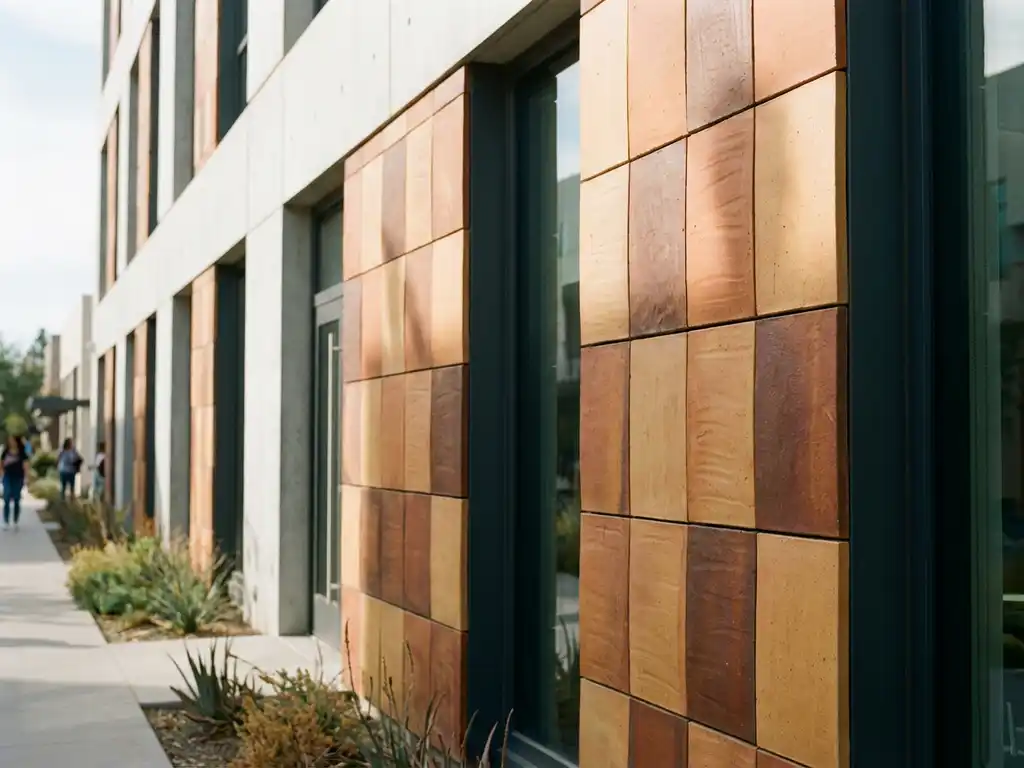
The most significant terracotta facade trends in 2026 focus on sustainability, advanced surface textures, expanded format options, and integrated smart technologies. These contemporary facade solutions combine environmental responsibility with enhanced design flexibility, offering architects unprecedented creative possibilities while meeting strict performance standards. Modern terracotta systems now feature improved installation methods and lifecycle benefits that address current architectural challenges.
What are the most significant terracotta facade trends emerging in 2026?
Five major terracotta facade trends are reshaping architectural design in 2026: sustainable manufacturing processes, expanded colour palettes, innovative surface textures, flexible format variations, and integrated smart technologies. These developments represent the evolution of ceramic facade systems toward more environmentally conscious and design-flexible solutions.
Sustainable innovations lead the transformation, with manufacturers adopting cleaner production methods and emphasising recyclability. The focus has shifted toward reducing carbon footprints while maintaining the superior performance characteristics that make terracotta facades attractive to architects.
Surface texture innovations offer unprecedented variety, from ultra-smooth finishes to deeply textured surfaces that create dramatic shadow play. These options enable architects to achieve specific aesthetic goals while maintaining the practical benefits of ceramic cladding systems.
Format flexibility has expanded significantly, with larger panels and custom sizing becoming standard offerings. This trend supports contemporary architectural preferences for clean lines and minimal joint visibility while accommodating complex building geometries.
Why are architects increasingly choosing terracotta over traditional facade materials?
Architects favour terracotta facades for their superior sustainability credentials, exceptional durability, minimal maintenance requirements, and outstanding fire safety properties. Unlike traditional materials, ceramic facades offer consistent performance across decades while supporting green building certifications and environmental regulations.
The sustainability advantages are compelling: terracotta is made from natural clay, requires no chemical treatments, and maintains its appearance without regular maintenance interventions. This reduces lifecycle environmental impact compared to materials requiring frequent cleaning, painting, or replacement.
Design versatility sets terracotta apart from conventional facade materials. The ability to achieve precise colours, varied textures, and custom formats provides creative freedom that concrete, metal, or stone panels cannot match. This flexibility supports architectural vision while maintaining structural integrity.
Fire safety properties make terracotta particularly attractive for contemporary building codes. Classified as non-combustible building material class A1, ceramic facades naturally contain no flammable components, supporting safer building design without compromising aesthetic goals.
How do modern terracotta facade systems address sustainability concerns?
Contemporary terracotta facade systems achieve sustainability through complete recyclability, energy-efficient production methods, reduced carbon footprints, natural material composition, and extended lifecycle performance. These characteristics align with green building standards and support environmental certification programmes across different markets.
The recyclability aspect is particularly significant: ceramic facades can be completely deconstructed and sorted by component type with minimal effort. This enables complete material reuse at building end-of-life, supporting circular economy principles in construction.
Energy efficiency benefits extend beyond the material itself. The thermal properties of ceramic facades contribute to building energy performance, while their durability eliminates the energy costs associated with maintenance, replacement, or treatment of alternative materials.
Natural material composition eliminates concerns about chemical additives or synthetic components. Terracotta facades contain only clay-based materials fired at high temperatures, creating a stable, inert surface that does not release compounds or require chemical treatments throughout its service life.
What design possibilities do 2026 terracotta facade innovations offer?
The latest terracotta facade technologies enable extensive colour customisation, diverse surface texture variations, flexible format options, creative pattern possibilities, and seamless architectural integration. These innovations expand creative expression while maintaining the practical performance characteristics that make ceramic facades suitable for demanding applications.
Colour customisation has reached new levels of precision and variety. Modern firing techniques allow for subtle gradations, bold statements, and consistent colour matching across large installations. This capability supports architectural concepts requiring specific colour palettes or unique aesthetic approaches.
Surface texture innovations range from mirror-smooth finishes to deeply embossed patterns. These options enable architects to create visual interest, control light reflection, and establish building character through facade treatment alone.
Format flexibility accommodates both traditional and contemporary architectural approaches. From small-format tiles that reference historical precedents to large-format panels that create clean, modern appearances, size options support diverse design intentions while maintaining installation efficiency.
How do you choose the right terracotta facade system for your project?
Selecting appropriate terracotta facade solutions requires evaluating building type, climate considerations, aesthetic requirements, installation methods, maintenance expectations, and lifecycle value. The right choice balances performance requirements with design goals while ensuring long-term satisfaction and building performance.
Building type influences system selection significantly. Residential projects may prioritise different characteristics from commercial or institutional buildings. Consider structural requirements, occupancy patterns, and performance expectations when evaluating ceramic facade options.
Climate considerations affect both performance and appearance over time. While terracotta facades perform well across different climate conditions, understanding local weather patterns helps optimise system selection for specific environmental challenges.
Installation methods vary between systems and affect project timelines, labour requirements, and overall installation success. Modern ceramic facade systems offer simplified installation approaches that reduce complexity while ensuring reliable long-term performance.
How TONALITY® helps with terracotta facade trends
TONALITY® ceramic facade systems directly address 2026 terracotta trends through advanced manufacturing processes, comprehensive design flexibility, and proven sustainability credentials. Our solutions support contemporary architectural requirements while delivering the performance characteristics that make ceramic facades superior to alternative materials.
Key advantages include:
- Complete recyclability and 100% natural material composition supporting green building standards
- Extensive colour, texture, and format options enabling unlimited design possibilities
- Simplified installation systems with lightweight panels reducing structural requirements
- A1 fire safety classification providing non-combustible facade solutions
- Maintenance-free performance with integrated graffiti protection and UV resistance
- Precision manufacturing enabling custom formats from 150 x 300 mm to 400 x 1,600 mm
Our ceramic facade systems combine traditional craftsmanship with modern manufacturing precision, delivering solutions that meet current architectural demands while anticipating future requirements. Contact our technical team to explore how TONALITY® can support your next facade project with innovative ceramic solutions.
Related Articles
- Terracotta vs HPL Panels: Technical Performance Comparison
- The Ultimate Material Selection Matrix: Choosing Between 8 Facade Materials
- What seismic considerations apply to terracotta facade design?
- What questions should architects ask terracotta manufacturers?
- What fire safety ratings do terracotta facade panels have?