

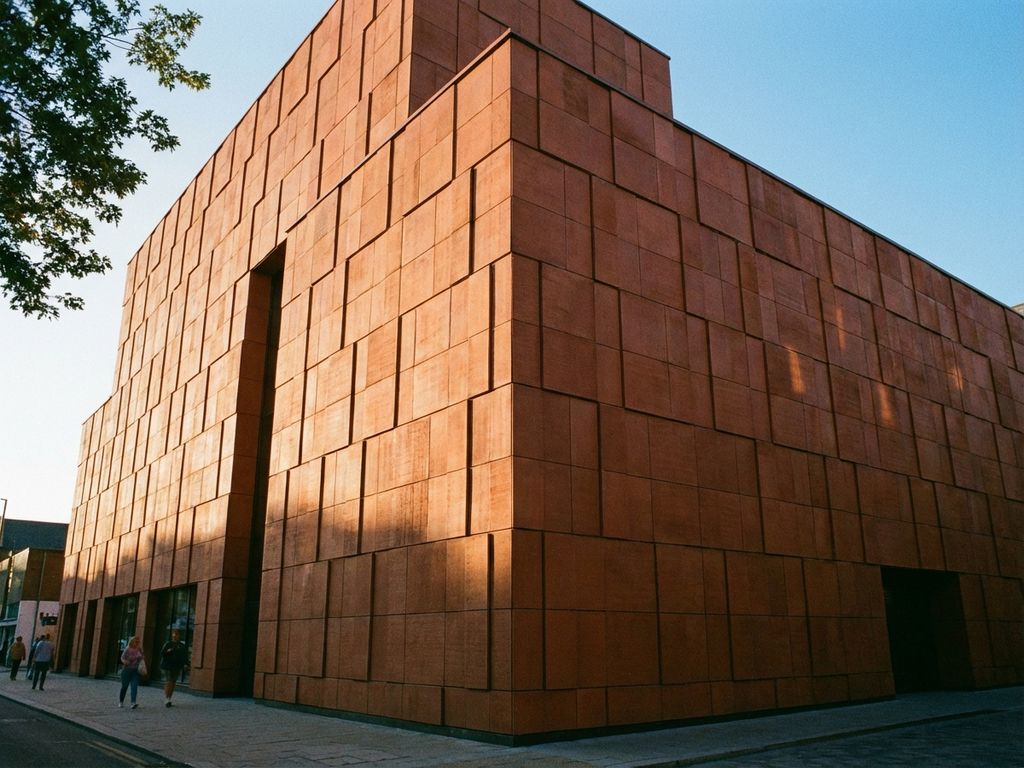
Terracotta facade cladding is a ceramic building material that protects and enhances building exteriors through fired clay panels. It provides exceptional weather resistance, fire protection, and design flexibility while requiring minimal maintenance. This comprehensive guide addresses the most common questions about terracotta cladding systems, their benefits, and long-term performance expectations.
What exactly is terracotta facade cladding and how does it work?
Terracotta facade cladding consists of fired clay panels that form a protective outer layer on building exteriors. These ceramic elements are manufactured by shaping natural clay and firing it at extremely high temperatures, typically exceeding 1,200 degrees Celsius, creating a dense, durable material that resists weathering and maintains structural integrity.
The manufacturing process transforms raw clay into a vitrified ceramic material through controlled heating. This sinter-firing process eliminates porosity and creates smooth, non-porous surfaces that repel water and resist environmental damage. The ceramic composition provides natural fire resistance and thermal stability.
Terracotta cladding systems typically feature interlocking panels that are mounted to structural frameworks using mechanical fixings. The panels create a ventilated facade system with an air cavity between the cladding and the building structure, allowing moisture management and optimised thermal performance.
What are the main benefits terracotta cladding provides to buildings?
Terracotta cladding offers comprehensive building protection, including superior weather resistance, excellent fire performance, and outstanding durability with minimal maintenance requirements. The material’s ceramic properties provide consistent performance across diverse climate conditions while offering extensive design possibilities.
Weather protection is the primary benefit, with terracotta’s non-porous surface effectively repelling water, resisting UV degradation, and maintaining colour stability over decades. The material naturally resists freeze-thaw cycles and thermal expansion without cracking or deteriorating.
Fire safety represents another critical advantage, as terracotta achieves building material class A1 classification, meaning it is completely non-combustible. This property makes it particularly valuable for high-rise construction and buildings requiring enhanced fire protection.
The aesthetic versatility allows architects significant design freedom with various colours, textures, and formats available. Terracotta panels can be manufactured in precise dimensions and custom configurations to achieve specific architectural visions while maintaining performance standards.
How does terracotta facade cladding protect buildings from weather damage?
Terracotta cladding creates a weatherproof barrier through its dense, vitrified ceramic structure that prevents water penetration while managing thermal movement and wind loads. The material’s inherent properties and installation methods work together to provide comprehensive environmental protection.
Water resistance is achieved through the ceramic’s non-porous surface, which prevents moisture absorption and eliminates the risk of freeze-thaw damage. The smooth, dense surface allows water to run off efficiently without penetrating the material or creating conditions for biological growth.
Thermal expansion is managed through proper joint design and fixing systems that accommodate movement without compromising the facade’s integrity. The ceramic material itself exhibits low thermal expansion coefficients, reducing stress on the cladding system during temperature fluctuations.
Wind loads are distributed through the mechanical fixing systems that transfer forces to the structural framework. The relatively lightweight nature of ceramic panels reduces dead loads while maintaining excellent resistance to wind pressures and suction forces.
UV protection comes naturally from the ceramic composition, which does not degrade under ultraviolet exposure. This ensures consistent appearance and performance throughout the building’s lifecycle without colour fading or surface deterioration.
What makes terracotta cladding different from other facade materials?
Terracotta distinguishes itself through its ceramic composition and manufacturing process, offering superior durability, fire resistance, and design flexibility compared to metal, stone, concrete, or composite alternatives. The high-temperature firing process creates unique properties not available in other cladding materials.
Unlike metal cladding systems, terracotta does not corrode, oxidise, or suffer from galvanic reactions. It maintains consistent performance without protective coatings that require periodic renewal, eliminating long-term maintenance concerns associated with metal facades.
Compared to natural stone, terracotta offers greater design consistency and precision manufacturing. Each panel can be produced to exact specifications with uniform colour and texture, while stone varies naturally and may require extensive sorting and matching during installation.
Compared to composite materials, terracotta provides superior fire performance and environmental resistance. Many composite systems contain organic components that can degrade over time or present fire risks, whereas terracotta remains completely inorganic and non-combustible.
Installation advantages include lower weight than stone or concrete alternatives, reducing structural requirements and enabling faster installation. Precision manufacturing allows tight tolerances and consistent joint lines that are difficult to achieve with natural materials.
How long does terracotta facade cladding last on buildings?
Terracotta facade cladding typically lasts 50–100 years or more with minimal maintenance requirements. The ceramic material’s fired composition provides exceptional longevity, with many historical terracotta buildings demonstrating performance spanning multiple centuries under diverse environmental conditions.
The expected lifespan depends on several factors, including manufacturing quality, installation standards, environmental exposure, and maintenance practices. Properly manufactured and installed terracotta facades in most climates require only periodic cleaning and joint inspection.
Maintenance requirements remain minimal throughout the material’s lifecycle. The smooth, non-porous surface resists dirt accumulation and biological growth, typically requiring only occasional washing with water. Joint sealants may need periodic inspection and renewal, but the ceramic panels themselves remain unaffected.
Signs of wear are rare with quality terracotta systems. The material does not fade, chalk, or deteriorate under normal environmental exposure. Any issues typically relate to installation details rather than material degradation, making proper installation crucial for long-term performance.
Warranty provisions vary by manufacturer, but quality terracotta systems often carry extended warranties reflecting the material’s proven durability. The long service life contributes significantly to lifecycle value despite higher initial investment compared to some alternatives.
How TONALITY® helps with terracotta facade cladding solutions
TONALITY® provides advanced ceramic facade systems manufactured using specialised sinter-firing processes at temperatures exceeding 1,200 degrees Celsius. This creates exceptionally smooth, dense surfaces that ensure consistently high-quality appearance and long-lasting, low-maintenance performance for building projects.
The TONALITY® facade systems offer several key advantages:
- Lightweight construction: Single-layer ceramic elements weigh only 40 kilograms per square metre, reducing structural requirements.
- Simple installation: Profiled backing interlocks with vertical aluminium retaining profiles for straightforward mounting.
- Fire safety: A1 classification ensures complete non-combustibility for enhanced building safety.
- Design flexibility: Panels are available from 150 x 300 mm up to 400 x 1,600 mm with millimetre precision.
- Environmental responsibility: 100% recyclable materials support sustainable construction practices.
- Integrated protection: Built-in graffiti resistance and permanent UV stability minimise ongoing maintenance requirements.
Contact TONALITY® today to discuss how our ceramic facade systems can enhance your building project with superior performance, design flexibility, and long-term value. Our technical team provides comprehensive support from specification through to installation completion.
Related Articles
- How do terracotta facades perform in coastal and high-salinity environments?
- Does vertical or horizontal terracotta orientation affect building perception?
- How are terracotta facade panels manufactured?
- How do restorers match new terracotta panels to 100-year-old historic facades?
- 10 Technical Tests Every Terracotta Facade Should Pass