

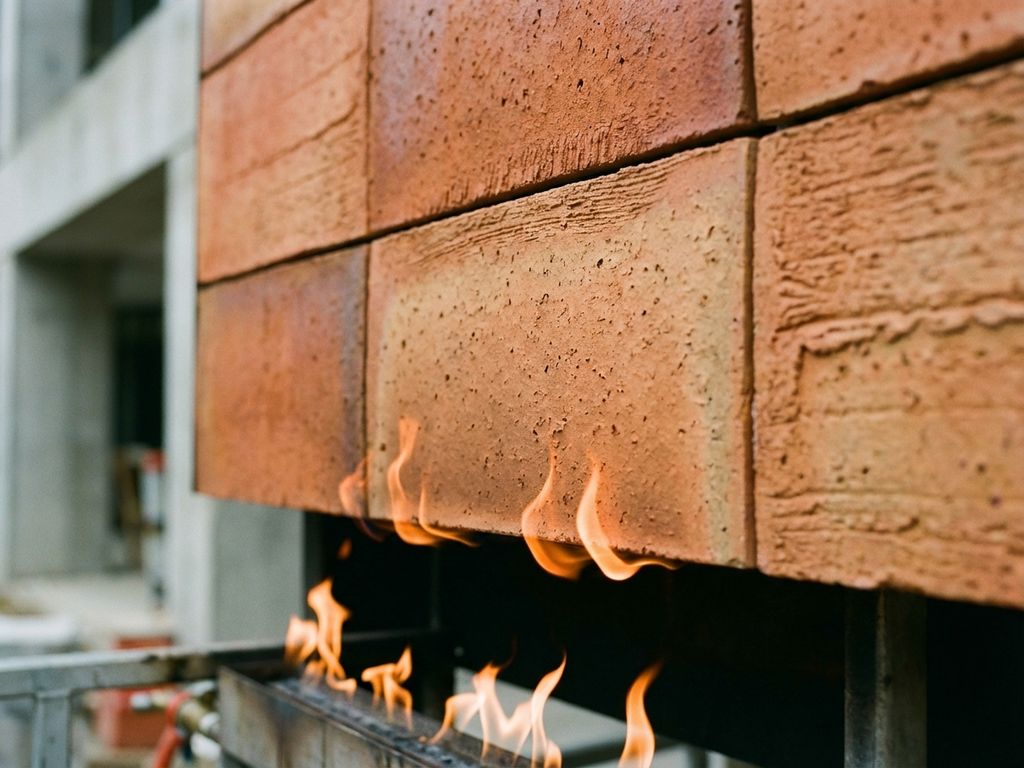
Terracotta facades typically achieve A1 fire safety ratings, the highest classification in European fire standards. This non-combustible rating means the ceramic material contains no flammable components and will not contribute to fire spread. The exceptional fire resistance results from high-temperature manufacturing processes that exceed 1,200°C, creating inherently fire-safe building materials that meet stringent safety requirements.
What fire safety ratings do terracotta facade panels typically receive?
Terracotta facade panels consistently achieve Euroclass A1 fire ratings, representing the highest level of fire safety in European building standards. This classification indicates completely non-combustible materials that produce no heat contribution under fire conditions.
The European fire classification system ranges from A1 (non-combustible) through F (highly flammable). A1-rated materials like terracotta facades offer superior protection because they:
- Generate no smoke or flaming droplets during fire exposure
- Maintain structural integrity at extreme temperatures
- Contribute zero heat release to fire development
- Require no additional fire-retardant treatments
The sinter firing process used in terracotta production creates this exceptional fire resistance. When clay materials are fired at temperatures exceeding 1,200°C, they undergo complete ceramic transformation, eliminating any organic compounds that could burn. This manufacturing process essentially “pre-burns” the material, making it impossible to ignite under normal fire conditions.
Why are ceramic facade materials considered non-combustible?
Ceramic facade materials achieve non-combustible status through their fundamental molecular composition and high-temperature manufacturing process. Clay-based ceramics contain only inorganic compounds that cannot burn or release flammable gases when exposed to fire.
The scientific basis for ceramic fire resistance lies in the material’s crystal structure. During the sinter firing process at temperatures above 1,200°C, clay particles fuse into a dense, stable matrix. This transformation:
- Eliminates water molecules and organic matter completely
- Creates strong ionic and covalent bonds between particles
- Forms a vitrified surface that resists thermal decomposition
- Produces materials with melting points far above typical fire temperatures
Unlike composite materials, timber cladding, or metal panels with organic coatings, ceramic facades contain no combustible components whatsoever. Even under extreme heat, they maintain their structural properties without releasing toxic gases or contributing to fire intensity. This inherent safety makes ceramic materials fundamentally different from other facade options that require chemical treatments or protective coatings to achieve fire resistance.
What do building codes require for facade fire safety?
European building regulations mandate comprehensive fire testing and documentation for all facade materials, with specific requirements varying by building height, occupancy type, and local jurisdiction. A1-rated materials like terracotta facades automatically satisfy the most stringent requirements.
Key regulatory requirements include:
- Fire reaction testing according to EN 13501-1 standards
- Smoke production and flaming droplet assessments
- Heat release measurements during fire exposure
- Complete material composition documentation
- Installation system fire performance verification
Building codes typically require stricter fire safety measures for structures above certain heights, often 18–22 metres depending on jurisdiction. High-rise buildings frequently mandate A1- or A2-rated facade materials exclusively. The approval process involves submitting certified test reports, material safety data sheets, and installation specifications to building control authorities.
A1-rated ceramic facades simplify compliance significantly because they automatically meet the highest safety standards without additional testing or special approvals. This streamlined approval process reduces project delays and eliminates uncertainty about regulatory acceptance.
How do terracotta facades perform in fire spread prevention?
Terracotta facades excel at fire compartmentalisation by creating effective barriers that prevent vertical and horizontal fire spread across building exteriors. Their non-combustible properties and properly designed installation systems maintain building fire safety integrity during emergency situations.
The fire prevention performance of ceramic facades is achieved through several mechanisms:
- Zero contribution to flame spread or fire intensity
- Maintenance of structural stability during fire exposure
- Prevention of falling debris that could spread fire to lower floors
- Protection of underlying structural elements from direct flame contact
Installation systems play a crucial role in maintaining fire safety performance. Properly engineered mounting systems with appropriate fire-resistant insulation and cavity barriers ensure that the facade assembly performs as intended under fire conditions. The lightweight nature of ceramic panels reduces structural loading while maintaining superior fire resistance.
Fire compartmentalisation becomes particularly important in multi-storey buildings, where facade fires can rapidly spread between floors. Terracotta facades interrupt this fire path, giving occupants more time to evacuate and emergency services better opportunities for effective intervention.
How does TONALITY® help with fire safety compliance?
TONALITY® ceramic facade systems deliver certified A1 fire rating compliance through advanced sinter firing technology and comprehensive documentation support. The company’s manufacturing process ensures consistent non-combustible properties while simplifying building approval processes.
Key fire safety advantages include:
- Certified A1 fire rating with complete test documentation
- Sinter firing process at temperatures exceeding 1,200°C, ensuring non-combustible properties
- Lightweight installation reducing structural fire loading requirements
- Integrated mounting systems designed for fire safety integrity
- Comprehensive technical support for building code compliance
- Complete material documentation for regulatory submissions
The lightweight design of TONALITY® facade elements, at approximately 40 kilograms per square metre, provides additional fire safety benefits. Reduced structural loading allows for lighter substructures while maintaining superior fire resistance. This combination is particularly valuable for timber construction projects requiring excellent fire protection properties, as demonstrated in our successful project implementations.
Ready to ensure your project meets the highest fire safety standards? Contact TONALITY® today for comprehensive technical documentation and expert guidance on ceramic facade fire compliance requirements.
Related Articles
- Why do hospitals and healthcare buildings choose terracotta facades?
- 10 Reasons Terracotta Outperforms Aluminum Composite Panels
- What are the benefits of terracotta facades?
- What is embodied carbon and how does terracotta compare to metal facades?
- What BIM and Revit objects are available for terracotta facade specification?