

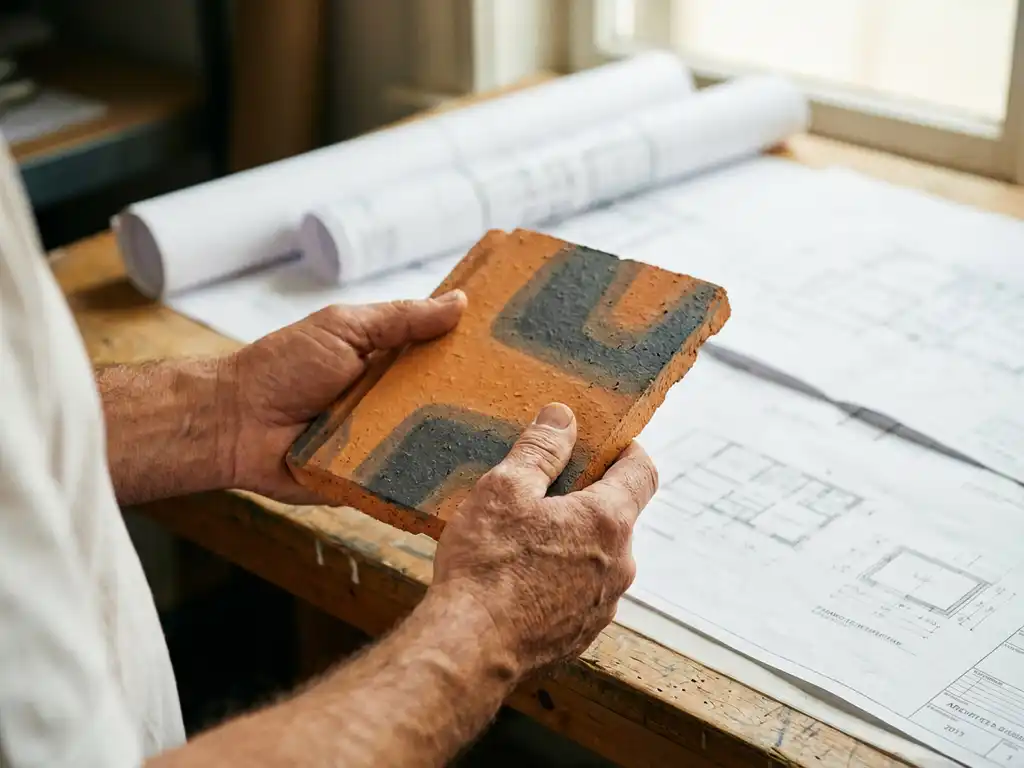
Architects must ask terracotta manufacturers about quality certifications, installation requirements, maintenance expectations, and technical specifications to ensure successful façade projects. These questions help evaluate manufacturing standards, system compatibility, and long-term performance. Proper vetting prevents costly mistakes and ensures the selected ceramic façade materials meet project requirements and building standards.
What quality certifications and testing standards should terracotta manufacturers provide?
Terracotta manufacturers should provide fire resistance certifications (particularly A1 classification), structural testing documentation, durability assessments, and comprehensive quality control processes. These certifications demonstrate compliance with building codes and ensure the ceramic façade materials meet the safety and performance standards required for architectural applications.
The A1 fire resistance rating is particularly crucial for terracotta façades, as it confirms the material is non-combustible and contains no flammable components. This classification is essential for meeting building safety regulations and insurance requirements. Architects should also request documentation of structural testing that validates the material’s ability to withstand wind loads, thermal cycling, and seismic forces.
Quality control processes should include dimensional accuracy testing, surface finish consistency checks, and batch-to-batch colour-matching verification. Manufacturers should provide certificates showing their testing frequency, acceptable tolerance ranges, and corrective action procedures when standards are not met. Additionally, architects should request third-party testing validation from recognised laboratories to ensure independent verification of performance claims.
How do installation requirements vary between different terracotta façade systems?
Installation requirements vary significantly based on mounting systems, substructure needs, surface weight considerations, and connection methods. Some terracotta systems use mechanical fixing with visible fasteners, while others employ concealed mounting systems or interlocking profiles that affect both installation complexity and aesthetic outcomes.
Surface weight directly impacts substructure requirements and installation approaches. Lightweight ceramic façade systems typically weigh 40–50 kilograms per square metre, allowing for simpler substructures and faster installation compared with heavier traditional terracotta systems. This weight difference affects crane requirements, labour scheduling, and overall construction timelines.
Different mounting systems require varying levels of installer expertise and specialised tools. Interlocking profile systems often simplify installation with straightforward mount-and-lock procedures, while traditional mechanical fixing systems may require more precise positioning and additional weatherproofing steps. Architects should evaluate installation complexity against available contractor expertise and project schedules when comparing terracotta manufacturers.
What are the long-term maintenance and performance expectations for terracotta façades?
High-quality terracotta façades require minimal maintenance, with periodic cleaning and visual inspections typically sufficient for decades of performance. Properly manufactured ceramic façade materials offer excellent weather resistance, colour stability, and durability that significantly reduce ongoing maintenance compared with other façade materials.
Cleaning schedules depend on environmental conditions and aesthetic requirements, typically ranging from annual cleaning in urban environments to every three to five years in cleaner locations. High-quality terracotta façades resist staining and weathering, making cleaning straightforward with standard pressure-washing techniques. Some systems include integrated graffiti protection that further reduces maintenance requirements.
Colour stability is a key performance indicator, with quality manufacturers offering UV-resistance guarantees spanning 20–30 years. Weather resistance should include freeze–thaw cycling, accommodation of thermal expansion, and water absorption rates below 6%. Warranty terms typically cover manufacturing defects for 10–15 years, with performance guarantees extending longer for premium systems. Architects should request specific performance data and warranty coverage details when evaluating different terracotta manufacturers.
Which technical specifications matter most when comparing terracotta manufacturers?
Critical technical specifications include dimensional tolerances, surface weight, water absorption rates, thermal performance characteristics, and manufacturing precision standards. These factors directly impact installation success, long-term performance, and compatibility with other building systems.
Dimensional tolerances within one millimetre are essential for proper system alignment and weather sealing. Precise manufacturing allows for predictable installation and reduces on-site adjustments that can compromise performance. Surface weight affects structural requirements, with lighter systems offering advantages for retrofit projects and timber construction applications.
Water absorption rates should remain below 6% to ensure freeze–thaw resistance and dimensional stability. Thermal performance characteristics, including coefficients of thermal expansion and thermal-bridging properties, affect system design and energy performance. Manufacturing precision encompasses colour consistency, surface finish uniformity, and edge quality, all of which impact both appearance and installation efficiency. Architects should request detailed technical data sheets and testing documentation to properly compare these specifications across different terracotta manufacturers.
How TONALITY® helps architects make informed terracotta decisions
TONALITY® addresses key architectural concerns through comprehensive technical documentation, proven installation systems, and extensive design flexibility. The ceramic façade solutions meet stringent quality standards while simplifying the specification and installation process for architectural projects.
- A1 fire resistance classification with a completely non-combustible ceramic composition
- Precision manufacturing with dimensional tolerances within one millimetre
- Lightweight design at approximately 40 kg/m², reducing substructure requirements
- Interlocking aluminium profile system for simplified installation procedures
- Extensive format range from 150 × 300 mm to 400 × 1600 mm, accommodating diverse design needs
- Integrated graffiti protection and permanent UV resistance for reduced maintenance
- 100% recyclable materials supporting sustainable building practices
For detailed technical specifications and project consultation, contact TONALITY® to discuss your specific ceramic façade requirements and receive comprehensive support throughout the design and specification process.
Related Articles
- How do perforated terracotta screens balance natural light with privacy?
- Terracotta vs Zinc Cladding: Durability and Lifecycle Analysis
- How do terracotta facades improve building energy efficiency?
- Wie verändern modulare Fassadenlösungen die Bauindustrie?
- Are terracotta facade systems worth the investment?