

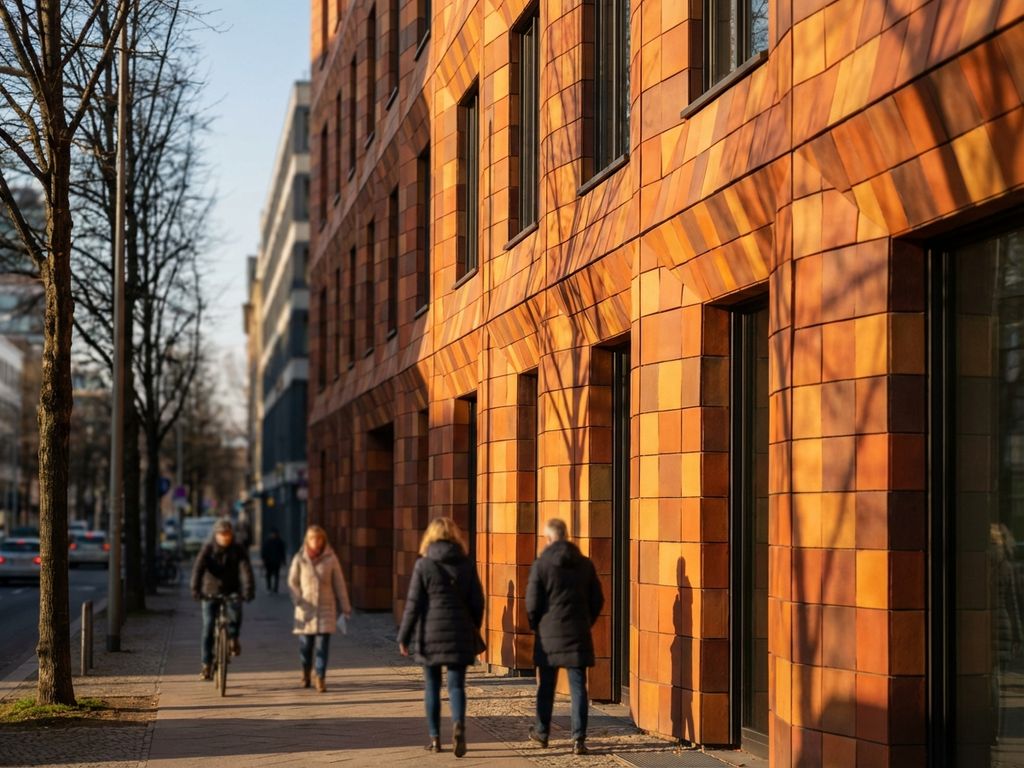
Terracotta facades are most commonly applied in commercial buildings, residential developments, and institutional structures where durability, fire resistance, and aesthetic versatility are priorities. These ceramic facade systems excel in urban environments, mixed-use developments, and public buildings due to their low maintenance requirements and design flexibility. Their applications span from luxury apartment complexes to office towers and educational facilities.
What are terracotta facade systems and why are they gaining popularity?
Terracotta facade systems are architectural cladding solutions made from fired clay that provide both protective and aesthetic functions for buildings. These systems consist of ceramic panels manufactured through high-temperature firing processes, typically exceeding 1,200 degrees Celsius, which creates dense, durable surfaces with exceptional weather resistance.
The manufacturing process involves shaping natural clay into precise panels, then firing them at extreme temperatures to achieve optimal density and strength. This process eliminates porosity while creating surfaces that resist water penetration, UV degradation, and thermal cycling. The result is a building material that maintains its appearance and structural integrity for decades.
Key benefits driving their popularity include:
- Fire resistance classification A1 (non-combustible)
- Minimal maintenance requirements over the building’s lifecycle
- Unlimited colour and texture possibilities
- Excellent thermal performance and energy efficiency
- Complete recyclability at end of service life
Modern construction increasingly values materials that combine performance with sustainability, making terracotta facades an attractive choice for architects and developers seeking long-term value.
Where do you typically see terracotta facades in residential construction?
Residential terracotta facades appear most frequently in multi-storey apartment buildings, luxury condominiums, and contemporary single-family homes. These applications benefit from terracotta’s ability to create distinctive architectural character while providing superior weather protection and energy efficiency.
Apartment complexes and condominiums use terracotta facades to achieve premium aesthetics without ongoing maintenance burdens for property managers. The material’s design flexibility allows architects to create varied visual textures and colour schemes that distinguish residential developments in competitive markets.
Single-family homes increasingly feature terracotta facades in contemporary and transitional architectural styles. The material works particularly well for accent walls, feature elements, and complete exterior cladding systems. Its lightweight properties make it suitable for various structural systems, including timber frame construction.
Mixed-use developments that combine residential and commercial spaces often employ terracotta facades to create cohesive design languages across different building functions. The material’s versatility allows seamless integration between residential upper floors and commercial ground levels.
Homeowners appreciate terracotta facades for their contribution to energy efficiency, helping reduce heating and cooling costs through excellent thermal performance. The material’s natural graffiti resistance and colour permanence ensure residential properties maintain their appearance with minimal intervention.
What commercial buildings benefit most from terracotta facade systems?
Commercial buildings that benefit most from terracotta facade systems include office towers, retail centres, hotels, and restaurants where brand identity, durability, and lifecycle value are essential considerations. These building types require facades that perform reliably while supporting architectural design goals.
Office buildings use terracotta facades to create professional, sophisticated appearances that reflect corporate values. The material’s precision manufacturing allows architects to achieve clean lines and consistent appearances across large facade areas. Its thermal performance contributes to building energy efficiency, supporting sustainable building certifications.
Retail centres benefit from terracotta’s design flexibility, enabling distinctive architectural features that attract customers while withstanding high-traffic environments. The material’s resistance to weathering and pollution ensures retail facades maintain their appeal without frequent cleaning or refinishing.
Hotels and restaurants choose terracotta facades for their ability to create memorable architectural statements that support brand positioning. The material’s colour stability ensures these hospitality venues maintain their intended appearance throughout changing seasons and weather conditions.
Corporate headquarters and business parks increasingly specify terracotta facades for their combination of professional aesthetics and practical performance. The material’s fire resistance properties provide safety benefits, while its low maintenance requirements reduce ongoing facility management costs.
How are terracotta facades used in institutional and public buildings?
Institutional and public buildings commonly feature terracotta facades in schools, hospitals, government facilities, and cultural institutions where safety requirements, longevity expectations, and public accountability drive material selection. These applications prioritise performance and durability over decades of service.
Educational facilities benefit from terracotta’s A1 fire classification, providing non-combustible exterior cladding that enhances building safety. Schools and universities appreciate the material’s resistance to vandalism and graffiti, reducing maintenance costs and preserving institutional appearance.
Healthcare facilities require facade materials that contribute to healing environments while meeting stringent safety standards. Terracotta facades provide clean, professional appearances that age gracefully without requiring frequent maintenance that could disrupt hospital operations.
Government buildings use terracotta facades to project stability and permanence while demonstrating responsible stewardship of public resources. The material’s longevity aligns with public sector requirements for infrastructure investments that serve communities for generations.
Cultural institutions, including museums, libraries, and performance venues, choose terracotta facades for their ability to create distinctive architectural character. These buildings often require unique aesthetic solutions that terracotta’s manufacturing flexibility can accommodate through custom colours, textures, and panel configurations.
Public safety considerations make terracotta particularly suitable for institutional applications, as its non-combustible properties and structural stability contribute to overall building resilience.
What factors determine where terracotta facade systems work best?
Terracotta facade systems work best where climate conditions, structural requirements, and design objectives align with the material’s inherent properties. Key considerations include environmental exposure, building height, architectural style compatibility, and regulatory requirements that influence material suitability.
Climate conditions significantly impact facade material selection. Terracotta performs exceptionally in environments with temperature fluctuations, high UV exposure, and moisture variations. Its thermal stability helps prevent cracking from freeze-thaw cycles, while UV resistance maintains colour integrity in sunny climates.
Building height and structural systems influence terracotta facade applications. The material’s lightweight properties make it suitable for high-rise construction where structural loading is critical. Its compatibility with various fixing systems allows integration with steel, concrete, and timber structures.
Architectural style compatibility determines aesthetic success. Terracotta facades complement contemporary, traditional, and transitional architectural styles through varied surface treatments and colours. The material’s precision manufacturing supports both minimalist and ornate design approaches.
Local building codes and regulations affect terracotta facade implementation. Its A1 fire classification satisfies stringent safety requirements in urban environments and high-occupancy buildings. Seismic considerations favour terracotta’s lightweight properties and flexible mounting systems.
Project timelines and construction logistics influence material selection. Terracotta’s prefabricated nature and straightforward installation methods suit projects with compressed schedules or complex coordination requirements.
How TONALITY® ceramic facades provide versatile solutions for diverse applications
TONALITY® ceramic facades address the varied application needs discussed through innovative manufacturing processes and comprehensive system solutions. Our ceramic elements are produced using advanced sinter firing at temperatures exceeding 1,200°C, creating unrivalled surface density and consistency that performs across residential, commercial, and institutional applications.
Technical advantages include:
- Low surface weight of approximately 40kg per square metre, ideal for diverse structural systems
- Precision manufacturing tolerance within one millimetre for a consistent appearance
- Panel sizes ranging from 150 x 300mm to 400 x 1,600mm for design flexibility
- Interlocking rear profiles with aluminium retention systems for simplified installation
- A1 fire classification providing non-combustible performance
- Integrated graffiti protection and permanent colour stability
- 100% recyclable materials supporting circular economy principles
Our lightweight system reduces substructure requirements while enabling rapid installation across all building types. The profiled rear surfaces interlock with vertical aluminium profiles, creating secure facades with minimal structural impact. To explore our complete range of surfaces and formats, visit our comprehensive product overview.
For architects and developers seeking proven performance in their projects, our extensive reference portfolio demonstrates successful applications across diverse building types and architectural styles. Contact TONALITY® today to explore how our ceramic facade solutions can enhance your next project with proven performance, design flexibility, and long-term value.
Related Articles
- 7 Cultural Institutions with Iconic Terracotta Facades
- What questions should architects ask terracotta manufacturers?
- How do perforated terracotta screens balance natural light with privacy?
- How does terracotta compare to natural stone for facade weight?
- 6 Common Terracotta Specification Mistakes (And How to Avoid Them)