

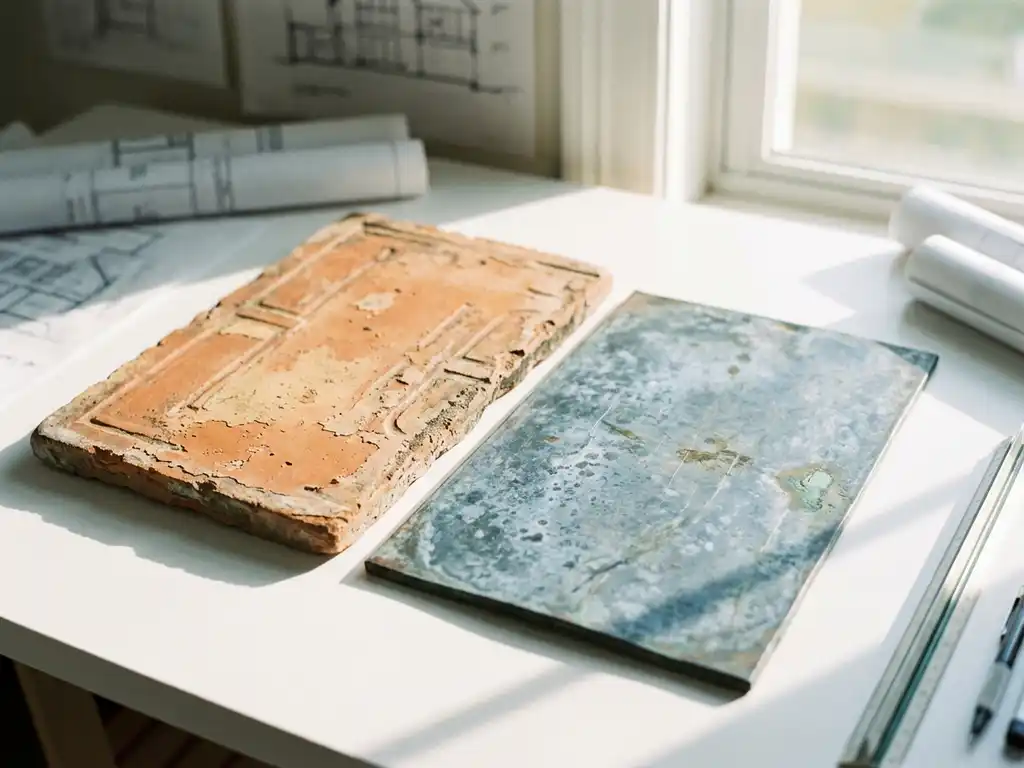
When choosing between terracotta cladding and zinc cladding, both materials offer distinct advantages for façade durability and lifecycle performance. Terracotta provides exceptional longevity through its ceramic composition and fire-resistant properties, while zinc offers natural weathering characteristics and recyclability. Understanding their fundamental differences, maintenance requirements, and climate performance helps architects and specifiers make informed decisions based on project requirements and long-term value considerations.
What are the key differences between terracotta and zinc cladding materials?
Terracotta cladding consists of fired ceramic tiles made from natural clay, while zinc cladding uses metal sheets or panels. Terracotta undergoes high-temperature firing that creates a dense, non-porous surface with exceptional durability. Zinc develops a protective patina over time that naturally shields the underlying metal from corrosion.
The manufacturing processes differ significantly. Terracotta tiles are shaped, glazed, and fired at temperatures exceeding 1,200 degrees Celsius, creating a building material class A1, non-combustible product. This process results in consistent colour and dimensional accuracy. Zinc cladding involves rolling and forming metal sheets, often with pre-weathered or mill finishes that can be applied during manufacturing.
Structurally, terracotta offers superior fire resistance and thermal stability. The ceramic composition provides excellent insulation properties and maintains its appearance without degradation. Zinc expands and contracts with temperature changes, requiring careful detailing to accommodate thermal movement while providing natural antimicrobial properties.
Aesthetically, terracotta allows for extensive colour options, textures, and formats during production. The ceramic surface maintains a consistent appearance throughout its lifecycle. Zinc develops character through natural weathering, transitioning from bright metallic finishes to distinctive patina colours over several years.
How long do terracotta and zinc facades actually last?
Terracotta facades typically last 50–100 years with minimal performance degradation, while zinc cladding systems generally provide 40–80 years of service life. The ceramic composition of terracotta resists weathering, UV radiation, and thermal cycling exceptionally well, maintaining structural integrity and appearance throughout its lifecycle.
Terracotta’s longevity stems from its fired ceramic structure, which becomes chemically inert and highly resistant to environmental stressors. The material does not suffer from corrosion, biological growth, or significant thermal expansion issues. Quality terracotta installations from decades past continue performing without the need for replacement, demonstrating proven facade longevity in real-world conditions.
Zinc cladding durability depends on environmental conditions and installation quality. The natural patina formation actually enhances protection over time, with the oxidised surface layer preventing deeper corrosion. However, zinc performance can be affected by atmospheric pollution, coastal salt exposure, and contact with incompatible materials that may accelerate corrosion.
Both materials resist freeze-thaw cycling effectively, though through different mechanisms. Terracotta’s low porosity prevents water absorption that could cause freeze damage. Zinc’s ductility allows it to accommodate thermal stresses without cracking, though repeated expansion cycles may eventually cause fatigue in poorly detailed installations.
What are the maintenance requirements for terracotta versus zinc cladding?
Terracotta cladding requires minimal maintenance, typically limited to occasional cleaning with water or mild detergents. Zinc cladding needs periodic inspection for mechanical damage and potential replacement of individual panels affected by severe weathering or impact damage.
Terracotta’s ceramic surface naturally sheds dirt and organic growth, requiring only periodic washing to maintain its appearance. The material’s density helps prevent staining, while its fired finish resists graffiti and other surface contamination. Most terracotta facades can be cleaned using standard building maintenance equipment without specialist treatments or protective coatings.
Zinc maintenance focuses on preserving drainage paths and preventing water accumulation that could accelerate corrosion. Regular inspection of joints, fixings, and flashings helps identify potential issues before they affect performance. The natural patina requires no treatment, though some projects may specify protective coatings in aggressive environments.
Facade maintenance schedules differ significantly between materials. Terracotta systems may require professional inspection every 10–15 years, primarily checking mechanical fixings rather than the ceramic elements themselves. Zinc installations benefit from annual visual inspections and cleaning of drainage systems, with more frequent attention in coastal or industrial environments.
Repair approaches also vary considerably. Damaged terracotta tiles can be individually replaced without affecting surrounding elements, thanks to mechanical fixing systems. Zinc repairs may require larger panel replacements to maintain weathering consistency and proper joint sealing.
Which cladding material offers better value over its lifecycle?
Terracotta cladding typically provides superior lifecycle value through its extended service life, minimal maintenance requirements, and consistent performance over decades. The building material lifecycle analysis favours ceramic facades due to their durability and low ongoing costs, despite a potentially higher initial investment.
The total cost of ownership calculation includes installation complexity, maintenance frequency, and replacement timing. Terracotta’s mechanical fixing systems often simplify installation compared to zinc’s requirements for thermal movement accommodation and specialised joining techniques. The ceramic material’s stability reduces long-term maintenance interventions significantly.
Energy performance considerations also affect lifecycle value. Terracotta’s thermal mass and insulation properties can contribute to building energy efficiency, potentially reducing operational costs over the facade’s service life. Zinc’s thermal conductivity requires careful insulation design to achieve comparable performance.
Replacement timing impacts long-term value substantially. Terracotta facades may never require complete replacement during a building’s useful life, while zinc systems might need renewal after several decades. The avoided replacement costs, including materials, labour, and building disruption, represent significant lifecycle savings.
Sustainability considerations increasingly influence value assessments. Both materials offer recyclability, though terracotta’s inert composition and potential for reuse in other applications may provide additional end-of-life value compared to metal recycling processes.
How do terracotta and zinc cladding perform in different climates?
Terracotta cladding performs consistently across all climate zones, from arctic conditions to tropical environments, due to its ceramic composition and thermal stability. Zinc cladding shows variable performance depending on atmospheric conditions, humidity levels, and temperature fluctuations that affect patina development and corrosion rates.
In coastal environments, terracotta’s inert ceramic surface resists salt spray and marine atmospheric effects completely. The material shows no degradation from chloride exposure that can accelerate metal corrosion. Zinc requires careful specification in coastal locations, with increased maintenance attention and potential protective measures to ensure adequate service life.
Temperature extremes affect both materials differently. Terracotta maintains dimensional stability through freeze-thaw cycles and high-temperature exposure without performance loss. Its low thermal expansion coefficient minimises stress on fixing systems. Zinc experiences significant thermal movement requiring accommodation through design details and flexible connections.
Urban pollution impacts vary between materials. Terracotta’s smooth, dense surface resists chemical attack from atmospheric pollutants and acid rain. Sustainable building materials like fired ceramics maintain their properties despite exposure to industrial emissions. Zinc patina formation can be accelerated or altered by atmospheric chemistry, potentially affecting appearance and protective characteristics.
Humidity and precipitation patterns influence long-term performance. Terracotta’s non-porous surface prevents moisture absorption that could cause freeze damage or biological growth. Zinc relies on proper drainage design to prevent water accumulation that might compromise the protective patina or cause localised corrosion.
How TONALITY® ceramic facades provide superior durability solutions
TONALITY® ceramic facade systems address durability challenges through advanced sinter-firing processes at temperatures exceeding 1,200 degrees Celsius, creating exceptionally smooth and dense surfaces that ensure a consistently high-quality appearance and long-lasting, maintenance-free performance.
The superior durability solutions include:
- Single-layer ceramic production with a low surface weight of approximately 40 kilograms per square metre, reducing structural requirements while maintaining exceptional strength
- Building material class A1 certification, providing non-combustible properties with a naturally fire-resistant composition
- Integrated graffiti protection and permanent colour and UV resistance, eliminating ongoing treatment requirements
- Precision manufacturing to within one millimetre accuracy, ensuring consistent installation and long-term performance
- Interlocking aluminium profile system enabling simple installation with reduced labour requirements and enhanced weather sealing
- 100% recyclability with component-level deconstruction capability for complete reusability
The ceramic elements’ profiled backs interlock with vertical aluminium retaining profiles, creating a robust system that accommodates building movement while maintaining weathertight performance. This innovative approach delivers superior facade longevity compared to traditional cladding systems.
For architects and specifiers seeking proven durability solutions with minimal lifecycle maintenance requirements, TONALITY® ceramic facades provide the ideal combination of performance, sustainability, and design flexibility. Contact our technical team to discuss how these advanced ceramic systems can enhance your next project’s long-term value and performance.