

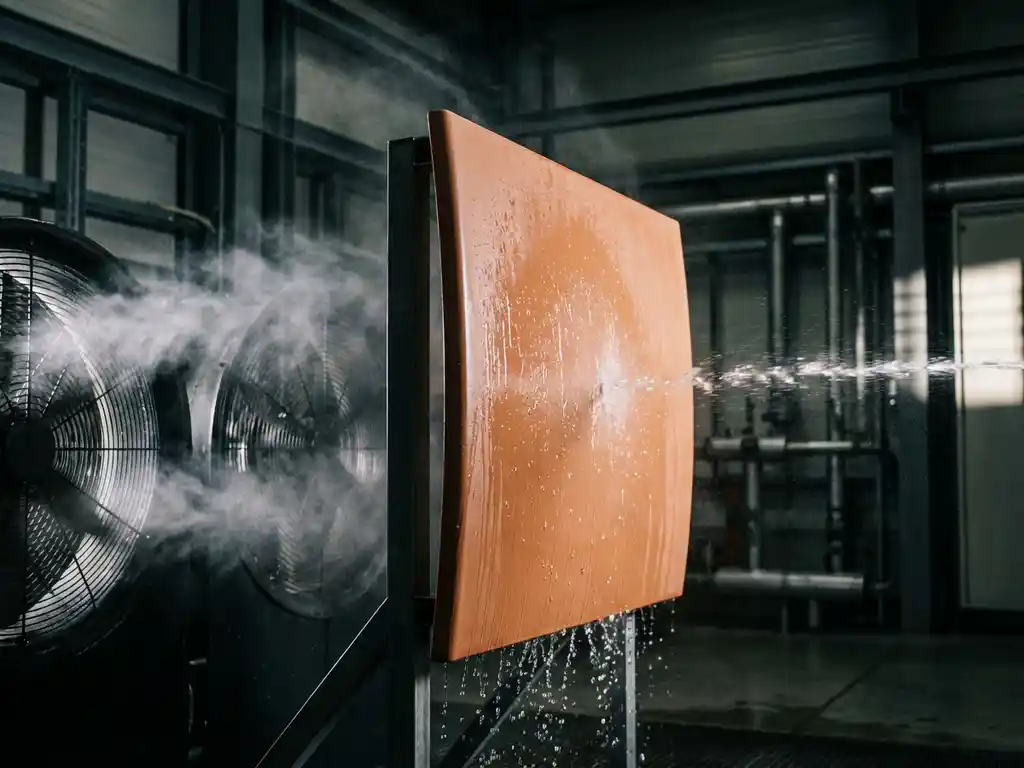
When designing buildings for extreme weather conditions, architects face unique challenges that require careful consideration of materials, installation methods, and long-term performance. Extreme weather events are becoming more frequent and intense, making weather-resistant architectural design more critical than ever for building durability and occupant safety.
From hurricane-force winds to temperature fluctuations exceeding 100 degrees, building facades must withstand nature’s most demanding conditions while maintaining their structural integrity and aesthetic appeal. Understanding how different materials and systems respond to these challenges is essential for creating resilient architectural solutions.
What Are the Main Extreme Weather Challenges for Building Facades?
Building facades face four primary extreme weather challenges: high winds, temperature extremes, moisture infiltration, and thermal cycling. These conditions can cause structural damage, material degradation, and system failures if they are not properly addressed during the design phase.
Wind loads create both positive and negative pressures that can stress facade systems beyond their design limits. Hurricane-force winds can generate pressures exceeding 150 pounds per square foot, requiring robust attachment systems and materials that maintain their integrity under dynamic loading conditions.
Temperature extremes present another significant challenge, with some climates experiencing temperature swings from minus 40 to plus 120 degrees Fahrenheit. These variations cause materials to expand and contract repeatedly, potentially leading to cracking, warping, or joint failures over time. Moisture infiltration compounds these issues by creating freeze-thaw cycles that can cause catastrophic material failures.
How Do Ceramic Facades Perform in High Wind Conditions?
Ceramic facades excel in high wind conditions due to their dense, non-porous structure and secure, interlocking installation systems. The material’s inherent strength, combined with proper mounting techniques, allows ceramic elements to withstand wind loads that would compromise other facade materials.
The key to ceramic facade wind resistance lies in the installation methodology. Modern ceramic facade systems use mechanical attachment points that distribute wind loads evenly across the building structure. These systems typically feature aluminum retaining profiles that create multiple connection points, preventing individual elements from becoming points of failure during extreme wind events.
Additionally, the smooth, dense surface of properly fired ceramic elements reduces wind turbulence and drag coefficients compared to textured materials. This aerodynamic advantage helps minimize the overall wind load on the building structure while maintaining the facade’s architectural integrity during severe weather events.
What Makes Ceramic Facades Resistant to Temperature Extremes?
Ceramic facades resist temperature extremes through their low coefficient of thermal expansion and the high firing temperatures used during manufacturing. The sintering process creates a stable material structure that maintains dimensional stability across wide temperature ranges without cracking or warping.
The manufacturing process is crucial to this temperature resistance. When ceramic elements are fired at temperatures exceeding 1,200 degrees Celsius, the clay particles fuse into a dense, homogeneous structure. This process eliminates internal stresses and creates a material that can withstand repeated thermal cycling without degradation.
Ceramic’s natural thermal properties also provide excellent insulation characteristics. The material’s low thermal conductivity helps reduce heat transfer through the building envelope, contributing to energy efficiency while protecting the underlying structure from temperature-related stress. This thermal stability ensures that ceramic facades maintain their appearance and performance for decades, even in climates with extreme seasonal variations.
How Do You Design Facade Systems for Moisture Protection?
Effective moisture protection in facade systems requires a multi-layered approach that combines water-resistant materials, proper drainage design, and vapor management strategies. The system must prevent water infiltration while allowing any moisture that does penetrate to escape safely.
The primary defense against moisture is material selection. Non-porous facade materials create the first barrier against water infiltration. However, complete moisture protection requires attention to joint design, flashing details, and drainage pathways. Properly designed systems incorporate weep holes, drainage cavities, and sloped surfaces that direct water away from the building structure.
Vapor management is equally important in moisture protection design. Building envelopes must balance preventing liquid water infiltration with allowing water vapor to escape. This requires careful consideration of vapor barriers, breathable membranes, and ventilation cavities that maintain the building’s thermal performance while preventing moisture accumulation that could lead to mold or structural damage.
What Installation Techniques Improve Weather Resistance?
Weather-resistant installation techniques focus on creating continuous barriers, eliminating thermal bridges, and ensuring proper load-transfer paths. These methods require precise execution and quality control to achieve optimal long-term performance under extreme conditions.
Mechanical fastening systems provide superior weather resistance compared to adhesive-only installations. Properly designed mechanical connections maintain their holding power even when subjected to thermal cycling and moisture exposure. The fastening pattern should distribute loads evenly and provide redundancy so that individual connection failures do not compromise the entire system.
Attention to detail at transitions, penetrations, and building corners is critical for weather resistance. These areas require specialized flashing, sealants, and reinforcement techniques to maintain the building envelope’s integrity. Quality installation also demands proper surface preparation, accurate alignment, and thorough inspection at each phase to ensure that the facade system performs as designed throughout its service life.
How TONALITY® Helps with Extreme Weather Design
TONALITY® ceramic facade systems provide comprehensive solutions for extreme weather challenges through advanced manufacturing processes and engineered installation systems. Our ceramic elements undergo sinter firing at temperatures exceeding 1,200 degrees Celsius, creating exceptionally smooth, dense surfaces that withstand the most demanding weather conditions.
Key weather resistance features include:
- A1 fire classification for non-combustible performance in extreme heat conditions
- Interlocking aluminum retaining profiles that provide secure wind-load resistance
- Low surface weight of approximately 40 kilograms per square meter, reducing structural stress
- Integrated graffiti protection and permanent UV resistance for lasting performance
- Precise manufacturing tolerances within one millimeter for weather-tight installations
Our naturally versatile ceramic facades offer unlimited design possibilities while delivering maintenance-free performance that stands up to nature’s most challenging conditions. For inspiration on successful extreme weather projects, explore our project references or contact our technical team to discuss how TONALITY® ceramic facade systems can enhance your next extreme-weather architectural design project.