

Thanks to the Tonality terracotta façade, the new sports hall at the Albert Schweitzer School in Dresden makes an architectural statement for child-friendly, sustainable building. The horizontally arranged terracotta elements pick up natural shades of green and create an inviting, learning-promoting environment for children and young people with special educational needs. At the same time, the façade meets all requirements for modern school construction: it is maintenance-free, ball-impact resistant, resistant to vandalism and permanently well kept thanks to integrated anti-graffiti protection. Installation of the ventilated rainscreen façade was time-saving, using only two fixing points – without the usual grid substructure. The project shows how architectural ambition can be combined with municipal practical value.
The Saxon state capital Dresden built a contemporary single-court sports hall with an adjoining multi-purpose room for the Albert Schweitzer School in Prohlis. The new building not only offers excellent conditions for physical education for children and young people with special educational needs, but is also versatile in use: a flexible partition wall enables individual and group use. With a spacious foyer and open access, the sports hall becomes a lively place of encounter – beyond everyday school life. The structural system and main rooms were realized in timber construction, while the ancillary areas were built as solid construction. Prefabricated concrete and timber elements enabled an efficient construction process and reduced resource use and CO₂ consumption. Overall, the city invested around €7.4 million, including around €2.7 million from funding provided by the Free State of Saxony.
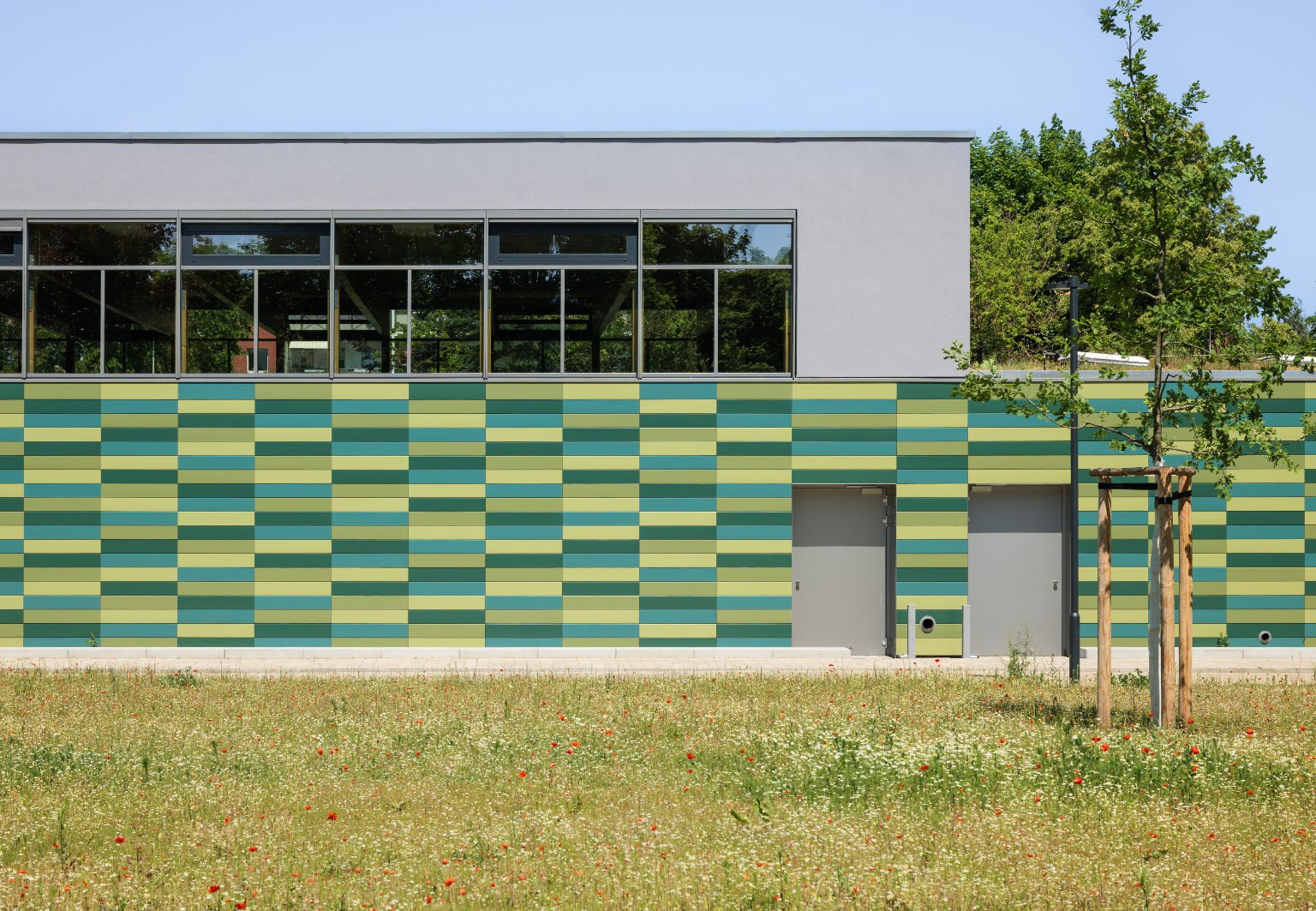
Photo: Klemens Renner
Robust in everyday school life: protection against vandalism and graffiti
The façade planning was carried out by the architectural office meyer-bassin und Partner freie architekten. For municipal buildings such as schools or sports halls, choosing a resistant façade material is particularly important. The Tonality terracotta façade not only protects against graffiti and vandalism, but also remains permanently attractive even under heavy use – a real gain for highly used municipal buildings. While fiber-cement surfaces often show visible traces under intensive use, such as scratches or color changes, Tonality terracotta remains permanently attractive – even without refinishing. This is made possible by the high shard density and the special manufacturing process of Tonality terracotta.
A façade that stays well maintained long-term, without maintenance effort – for a lifetime
In school construction, anti-graffiti protection is a key concern, as façades are often affected by tagging. Tonality terracotta façades put an end to labor-intensive refinishing: the integrated anti-graffiti protection is permanently incorporated into the surface during firing – without any additional coating. Unlike subsequently applied protective layers, which must be renewed regularly and can lead to color differences, Tonality’s anti-graffiti protection is anchored in the surface – permanently effective, color-stable and maintenance-free. Graffiti or felt-tip pen marks can be removed easily and without residue using commercially available cleaning agents, without affecting the surface or the color brilliance of the terracotta. For schools, this means façades that remain permanently well kept and attractive – without recurring maintenance effort and without visual compromises.
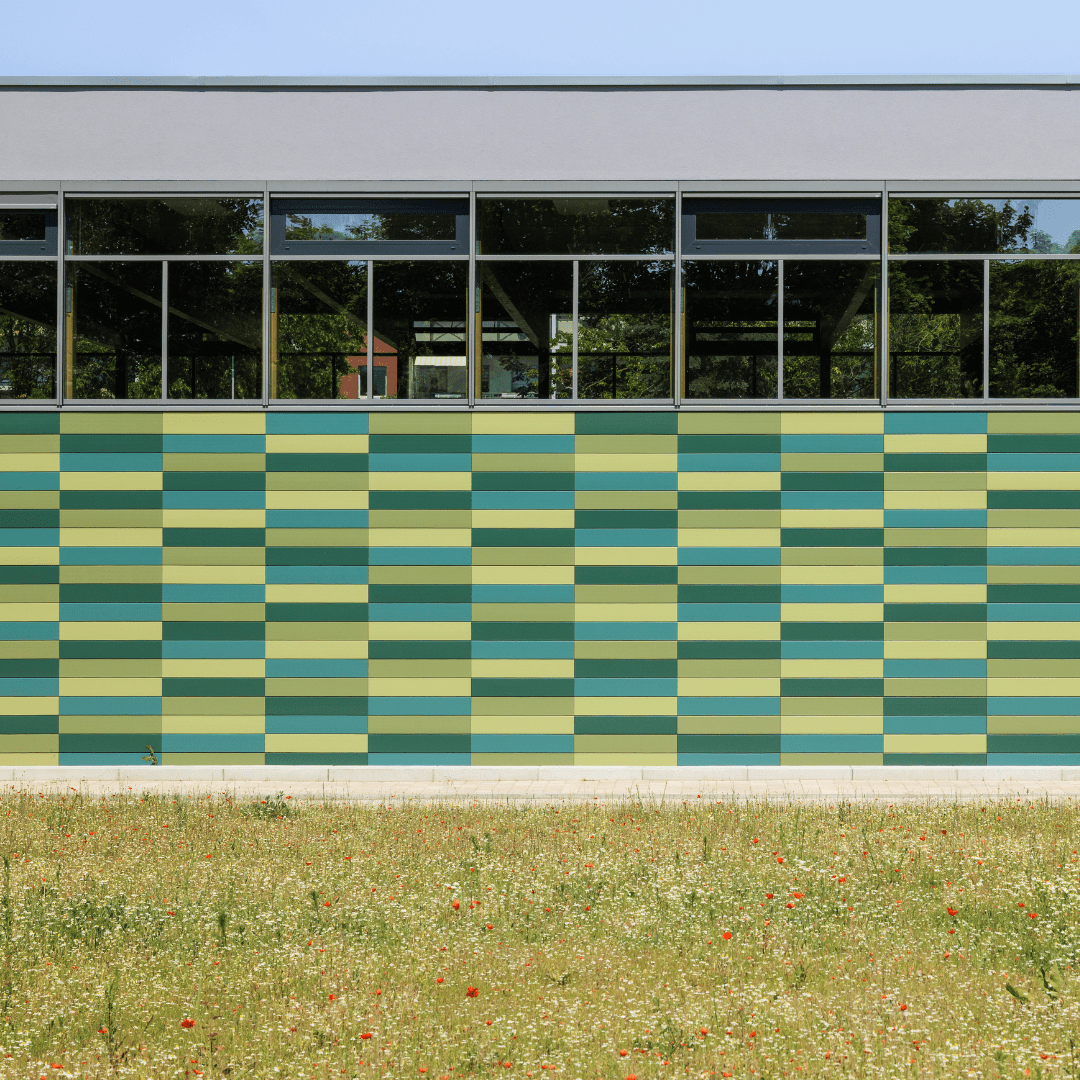
Photo: Klemens Renner
Function meets design, with a variety of colors as an aid to orientation
The architects wanted a natural color palette for this special project. The selection of nuances was quick, as the planners had already discovered their favorites in the comprehensive Tonality main catalog. However, any other color shade can also be realized on request. Color developments according to NCS are possible in various gloss levels from matte to high-gloss. Tonality has already realized more than 50 different green color applications. In Dresden, the choice fell on four different shades of green with a smooth, matte surface. The challenge during installation: the color grid precisely defined in advance by the architect had to be implemented exactly. The horizontal lines of the terracotta create calm, structure and a pleasant sense of scale – especially in the context of child-friendly building. They were arranged at different color intervals, giving the façade a lively appearance. If the color arrangement had followed the same repeating sequence, there would have been a risk of a monotonous look. The Tonality façade brings with its nature-inspired color design not only vibrancy to the neighborhood, but also strengthens the sustainable school concept. It facilitates orientation, strengthens identification with the location and makes the sports hall easy to recognize in the neighborhood. The different shades and the colorful design make diversity visible – a visual sign of openness, inclusion and community.
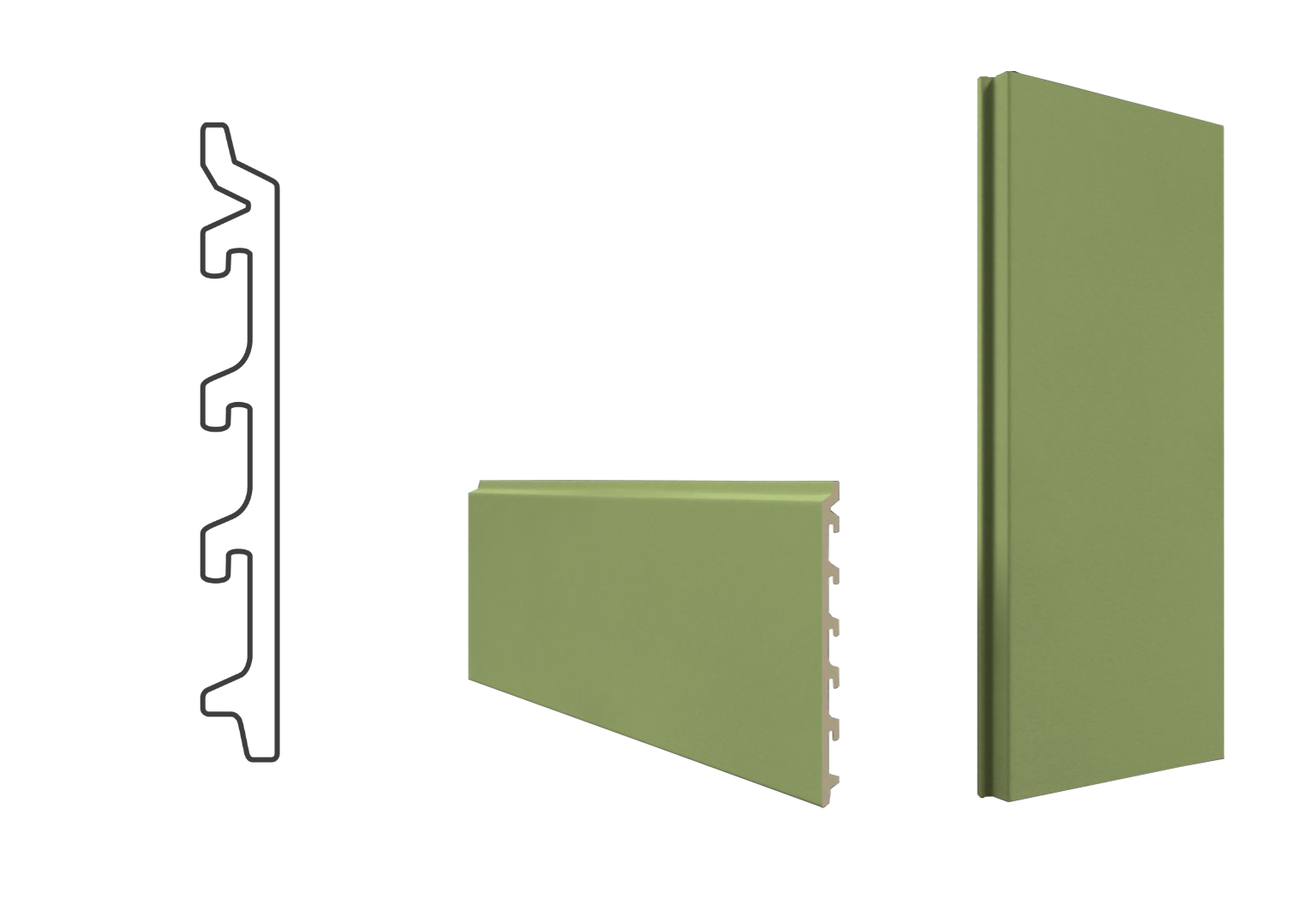
Photo: Leipfinger-Bader
Efficiently planned and quick to install
For the approximately 400 m² façade, the Tonality basic agraffe system (BAS) for 26 mm thick terracotta was used. The factory-cut panels were installed with only two fixing points. This enabled quick execution without a classic grid substructure. The Tonality system allows time-saving installation with only two vertically running aluminum fixing points – without a classic grid substructure. At the top, the panels snap into special brackets, while at the bottom they are mounted with movement allowance. This allows each panel to work without stress and safely absorbs thermal expansion. The continuous vertical joint ensures a uniform, linear joint pattern and is also part of the rear-ventilation system. A classic substructure with fixed grid dimensions is not required for this system. This makes economical building significantly easier. For standard buildings without special requirements, the 26 mm BAS system is therefore an efficient and cost-effective solution.
The Tonality façade combines design freedom, lasting cleanliness and high resistance. It thus enables municipalities to implement their building projects economically and sustainably, with a clear focus on both functionality and architectural quality.
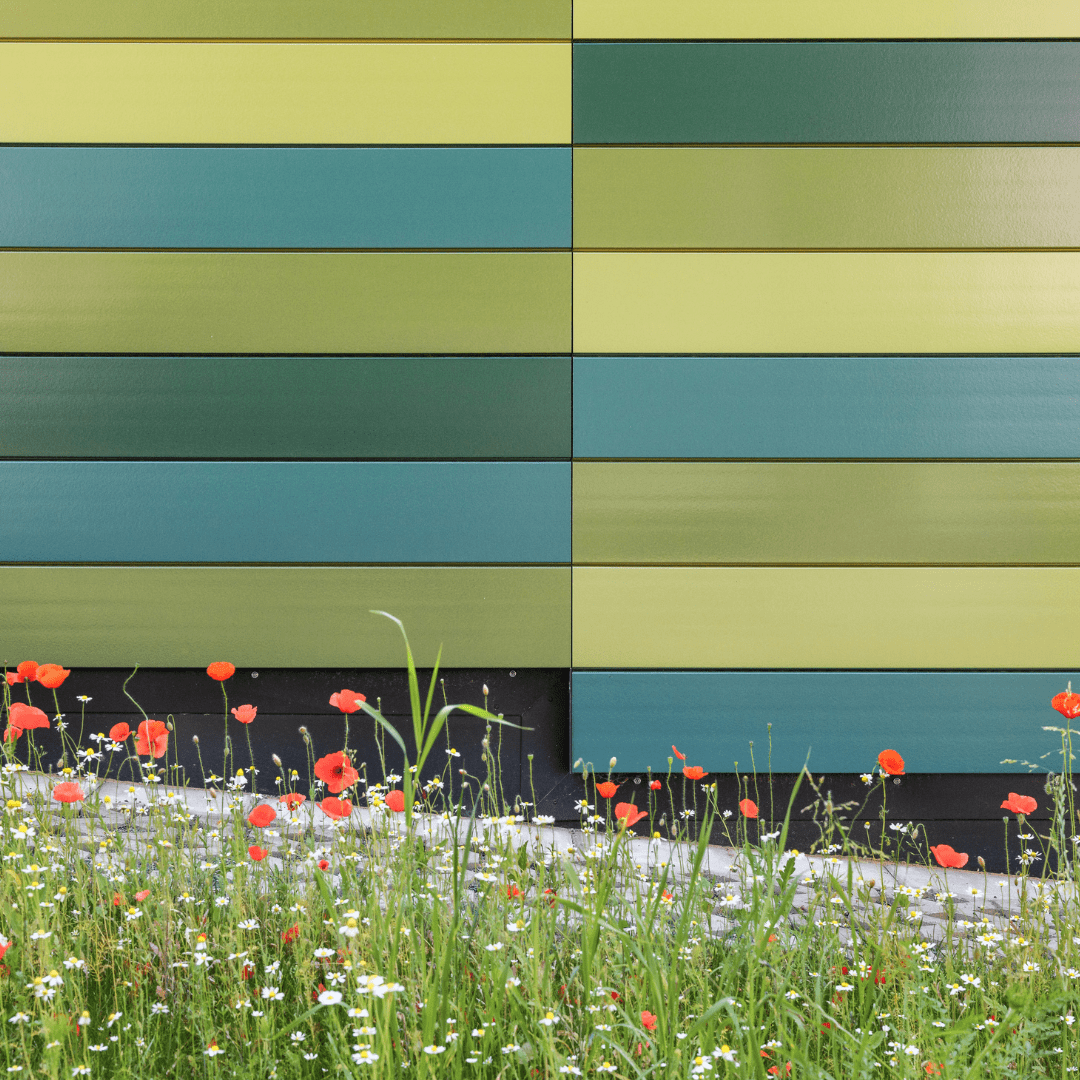
Photo: Klemens Renner
Project data
Project: Replacement new build of the sports hall for the “Albert Schweitzer” special education center, school with a focus on learning support, Georg-Palitzsch-Straße 42, Dresden-Prohlis
Client: City of Dresden (Landeshauptstadt Dresden), Dresden
Architecture: meyer-bassin und Partner freie architekten bda PartGmbB, Dresden
Façade contractor: Weimert Bedachungen Döbeln GmbH, Döbeln
Façade system: Leipfinger-Bader, Vatersdorf (Tonality)
Construction period (overall): Spring 2022 to early 2025
Construction period (façade): 2023 to 2024