

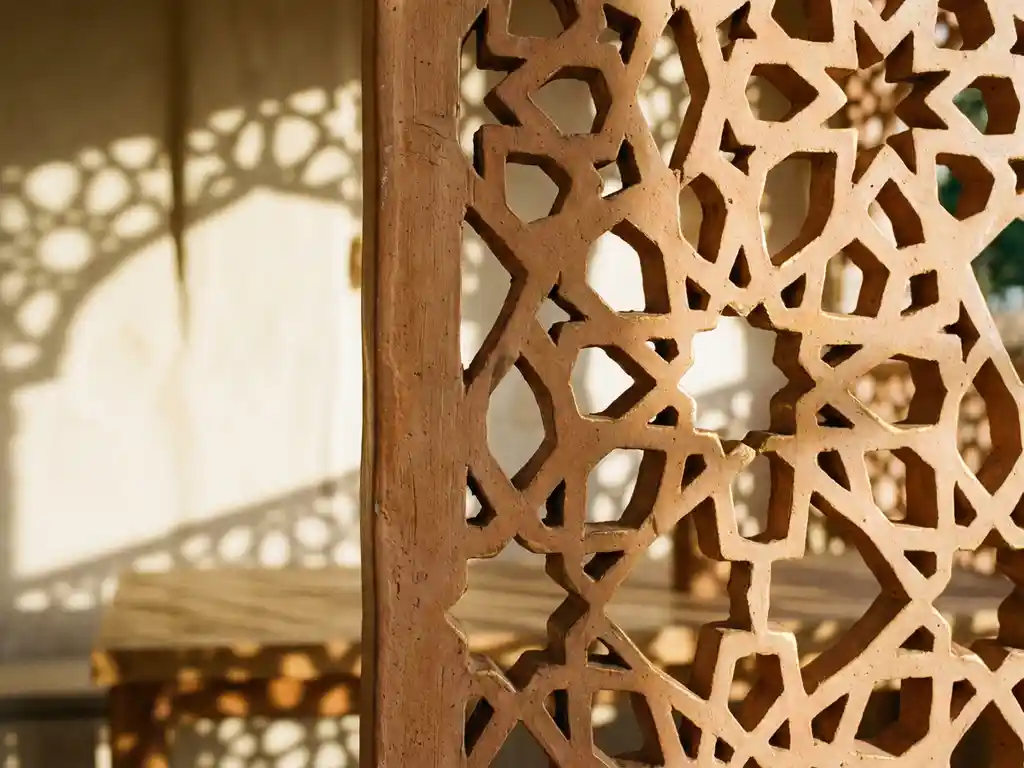
Perforated terracotta screens achieve an optimal balance of light, privacy, and ventilation through strategically designed openings that filter daylight while maintaining visual barriers and enabling natural airflow. The perforation patterns, ranging from small circular holes to geometric shapes, control the amount of light transmission and air movement. These ceramic screen systems provide architects with a versatile solution for creating comfortable, well-lit spaces that protect occupant privacy.
What are perforated terracotta screens and how do they work?
Perforated terracotta screens are ceramic facade panels featuring precise openings that simultaneously control light, provide privacy, and enable ventilation. The screens work through carefully engineered perforation patterns that allow selective passage of air and light while creating visual barriers.
These architectural elements function on three fundamental principles. Light filtration occurs as daylight passes through the perforations, creating controlled illumination that reduces glare and heat gain. Privacy protection occurs because the solid ceramic areas between openings obscure direct sight lines while still permitting filtered views. Natural ventilation develops through pressure differentials that draw air through the perforations, promoting airflow across building surfaces.
The ceramic material itself contributes to performance through its thermal mass properties. Terracotta absorbs heat during the day and releases it slowly, helping to moderate temperature fluctuations. The perforation geometry determines how these benefits combine, with circular holes providing different characteristics compared to linear slots or geometric patterns.
Modern perforated ceramic panels can be manufactured with perforation ratios ranging from 10% to 60% open area, depending on the specific balance required between light control, privacy levels, and ventilation needs.
How do perforation patterns affect light control and privacy levels?
Perforation size, shape, and arrangement directly influence both light transmission and visual privacy levels. Smaller perforations provide greater privacy while reducing light levels, whereas larger openings increase daylight penetration but decrease visual screening effectiveness.
Circular perforations offer uniform light distribution and consistent privacy screening from all angles. Square or rectangular openings create more directional light control, allowing designers to favour horizontal or vertical light filtering. Geometric patterns like hexagons or triangles provide distinctive aesthetic effects while maintaining functional performance.
Perforation density significantly impacts performance characteristics. High-density patterns with numerous small holes maximise privacy while still permitting substantial light transmission. Low-density arrangements with fewer, larger openings prioritise ventilation and views over privacy screening.
Building orientation affects how perforation patterns perform throughout the day. South-facing screens require different perforation strategies compared to east- or west-facing orientations due to varying sun angles and intensity levels. Seasonal changes also influence performance, with summer sun requiring more screening than winter daylight.
The depth of the ceramic panel influences privacy effectiveness. Thicker panels create deeper perforations that enhance privacy screening by limiting viewing angles while maintaining light transmission capabilities.
What ventilation benefits do perforated terracotta screens provide?
Perforated terracotta screens enable natural ventilation through pressure-driven airflow that reduces mechanical cooling requirements and improves indoor air quality. The ceramic perforations create controlled openings that facilitate air movement while filtering dust and debris.
Airflow dynamics through perforated ceramic surfaces follow established ventilation principles. Wind pressure on the exterior surface forces air through the perforations, creating beneficial air movement in adjacent interior spaces. The perforation size and pattern determine flow rates and turbulence characteristics.
Thermal performance benefits arise from the stack effect created by temperature differences. Warm air rises through the perforations, drawing cooler air through lower openings and establishing natural circulation patterns. This process reduces cooling loads and improves occupant comfort without mechanical intervention.
Screen positioning significantly affects ventilation effectiveness. Screens placed away from the building envelope create ventilated cavities that enhance cooling performance. This configuration allows air to circulate behind the screen, providing additional thermal benefits through convective cooling.
The ceramic material’s thermal mass contributes to ventilation performance by moderating air temperature as it passes through the perforations. This natural conditioning effect improves the quality of ventilation air entering interior spaces.
How do you choose the right perforation design for your building needs?
Selecting appropriate perforation patterns requires balancing functional requirements with aesthetic preferences based on climate conditions, building orientation, privacy needs, and performance criteria. The decision process involves evaluating multiple factors simultaneously.
Climate considerations determine baseline perforation requirements. Hot climates benefit from higher perforation ratios to maximise ventilation and reduce heat gain. Moderate climates allow more flexibility in balancing light, privacy, and airflow. Wind exposure affects perforation sizing, with high-wind locations requiring smaller openings to prevent excessive air movement.
Building orientation significantly influences perforation strategy. South-facing facades typically require smaller perforations or lower-density patterns to control solar heat gain. North-facing screens can accommodate larger openings to maximise daylight without overheating concerns.
Privacy requirements vary by building function and urban context. Residential applications often prioritise privacy screening, favouring smaller perforations with higher density. Commercial buildings may emphasise daylight and views, allowing larger openings with reduced privacy screening.
Aesthetic preferences integrate with functional requirements through pattern selection. Regular geometric patterns provide contemporary appearances, while irregular or organic arrangements create more natural effects. The perforation pattern becomes a key architectural feature that defines the building’s visual character.
Performance criteria establish measurable targets for light transmission, ventilation rates, and privacy levels that guide perforation design decisions and ensure the screen meets specific project requirements. Exploring different surfaces and formats can help architects understand the full range of perforation possibilities available for their projects.
How do TONALITY® ceramic screens optimise the balance of light, privacy, and ventilation?
TONALITY® perforated ceramic facade systems deliver optimal performance through precision-manufactured perforation patterns and advanced ceramic technology. The single-layer ceramic construction provides superior durability while maintaining lightweight properties ideal for various building applications.
TONALITY® perforated facade systems offer comprehensive solutions that address the complete spectrum of architectural screening requirements:
- Precision perforation manufacturing within one-millimetre tolerances ensures consistent performance across all panels
- Advanced ceramic firing at temperatures exceeding 1,200°C creates dense, non-porous surfaces that resist weathering and maintain their appearance
- Lightweight construction at approximately 40 kilograms per square metre reduces structural requirements and installation complexity
- An interlocking mounting system with aluminium profiles enables quick installation without complex fixing details
- A1 fire classification provides non-combustible performance suitable for all building types, including timber construction
- Integrated graffiti resistance and UV stability ensure long-term performance with minimal maintenance requirements
- Complete recyclability supports sustainable building practices through end-of-life material recovery
The TONALITY® system’s versatility enables architects to specify custom perforation patterns that meet specific project requirements while maintaining manufacturing efficiency and consistent quality. Architects can review successful implementations through our comprehensive project references to understand how perforated ceramic screens have been optimised for various building types and climatic conditions.
For expert guidance on specifying perforated ceramic screens that optimise light, privacy, and ventilation for your project, contact TONALITY® to discuss your specific requirements and explore the full range of available perforation options.
Related Articles
- How do architects create parametric and computational terracotta facade designs?
- What building types benefit from terracotta cladding?
- How do you choose the right insulation system for facade renovation?
- How to maintain terracotta facade systems?
- How do you match new terracotta to historic building facades?