

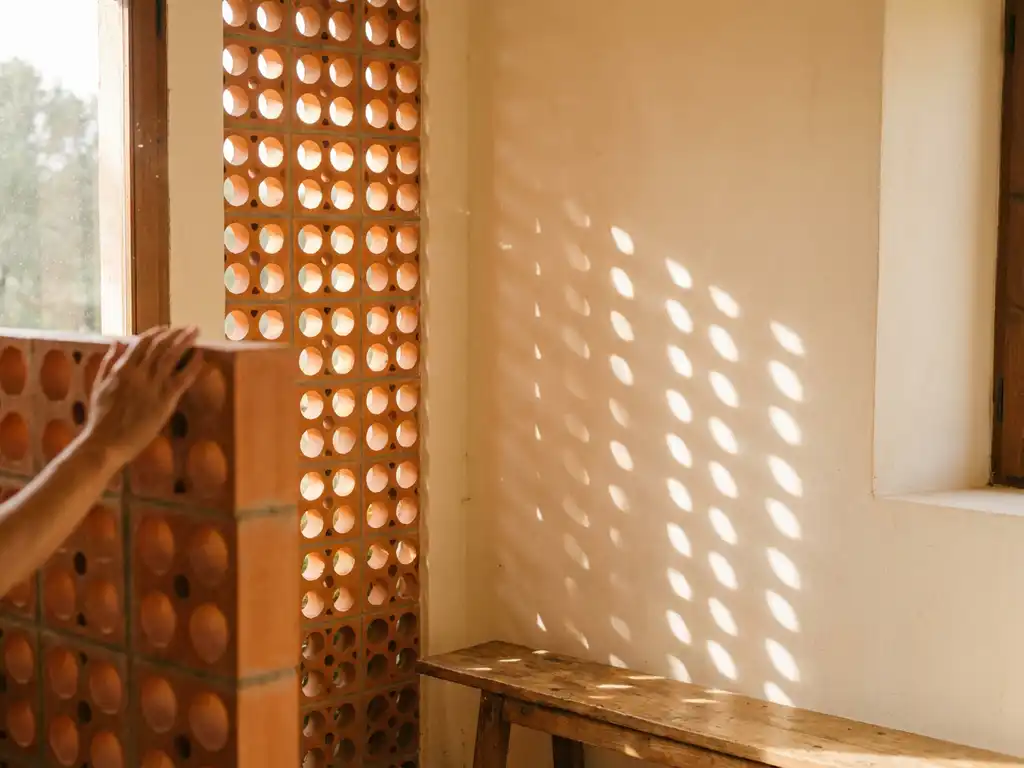
What Are Perforated Terracotta Screens and How Do They Work?
Perforated terracotta screens are ceramic façade panels with strategically placed holes that filter natural light while maintaining privacy. These architectural screening solutions use carefully designed perforation patterns to control visibility and light transmission, creating comfortable interior environments without completely blocking outdoor views.
The screens work through the principle of selective transparency. When perforations are sized and spaced appropriately, they allow light to pass through while preventing direct sightlines from the outside. The ceramic material provides durability and weather resistance, while the perforations create dynamic shadow patterns that change throughout the day as the sun moves across the sky.
Modern perforated ceramic panels can be manufactured with precision-engineered hole patterns, ranging from simple geometric designs to complex artistic arrangements. The ceramic firing process at high temperatures ensures the perforations maintain their shape and structural integrity over decades of use.
How Do Perforation Patterns Control Light and Privacy Levels?
Perforation patterns control light and privacy through hole size, spacing, and distribution across the ceramic surface. Smaller, more densely packed perforations provide greater privacy while still allowing diffused natural light, whereas larger openings increase visibility and direct light transmission.
The relationship between hole diameter and spacing determines the screen’s performance characteristics. A perforation density of 20–30% typically offers an optimal balance for most applications, providing sufficient privacy while maintaining adequate natural light levels. Circular perforations are most common, but square, hexagonal, and custom shapes can create different visual effects and performance profiles.
Staggered or offset patterns enhance privacy by eliminating straight sightlines, even with larger perforations. This arrangement allows terracotta privacy screens to maintain visual interest from the interior while effectively screening unwanted views from outside. The ceramic material’s thickness also influences performance, with thicker panels creating deeper shadow effects and enhanced privacy.
What Are the Main Benefits of Terracotta Screens Over Other Materials?
Terracotta screens offer superior durability, fire resistance, and low maintenance compared to metal, wood, or composite alternatives. The ceramic material naturally resists UV degradation, corrosion, and weathering while providing excellent thermal performance and acoustic properties.
Key advantages of ceramic perforated panels include:
- Non-combustible properties with A1 fire classification for enhanced building safety
- Permanent color stability without fading or requiring protective coatings
- Natural thermal mass that helps regulate interior temperatures
- 100% recyclable material supporting sustainable construction practices
- Integrated graffiti resistance, reducing maintenance requirements
Unlike metal screens that may corrode or wooden alternatives that require regular treatment, ceramic façade ventilation systems maintain their appearance and performance for decades. The material’s natural properties eliminate the need for chemical treatments or protective finishes, reducing long-term maintenance costs and environmental impact.
How Do You Choose the Right Perforation Design for Your Building?
Selecting the right perforation design requires analyzing your building’s orientation, intended use, local climate, and aesthetic goals. South-facing façades typically need smaller perforations for solar control, while north-facing screens can accommodate larger openings for maximum natural light.
Consider these key factors when specifying a terracotta screen design:
- Privacy requirements and viewing distances from surrounding buildings
- Desired light transmission levels for interior comfort
- Wind loads and structural considerations for the perforation pattern
- Acoustic performance needs if noise reduction is important
- Visual compatibility with the building’s architectural style
Working with experienced façade consultants helps optimize the balance between functional performance and aesthetic appeal. Computer modeling can predict light levels and privacy performance before manufacturing, ensuring the selected design meets project requirements. The perforation layout should also consider maintenance access and cleaning requirements for long-term performance.
What Installation Methods Work Best for Perforated Ceramic Screens?
The most effective installation methods for perforated ceramic screens use lightweight aluminum support systems with mechanical fixing points that accommodate thermal movement. Proper installation ensures structural integrity while allowing the ceramic panels to expand and contract with temperature changes.
Modern ceramic screen systems typically employ back-ventilated curtain wall principles, where the perforated panels are mounted on vertical aluminum profiles with integrated drainage and ventilation. This approach provides several installation advantages, including reduced structural loads, simplified weatherproofing, and easier panel replacement if needed.
The installation process should account for the precision manufacturing tolerances of ceramic panels, typically within one millimeter. Proper planning of joint widths and sealant details ensures weather resistance while maintaining the desired visual appearance. Professional installation teams experienced with ceramic façade systems can optimize the mounting sequence and ensure proper alignment throughout the building envelope.
How TONALITY® Ceramic Screens Deliver an Optimal Balance of Light and Privacy
TONALITY® perforated ceramic screens combine precision German engineering with high-quality Westerwald clay to create architectural screening solutions that excel in both performance and durability. Our ceramic panels are manufactured with perforation tolerances within one millimeter, ensuring consistent light transmission and privacy levels across your entire façade.
Key advantages of TONALITY® perforated screens include:
- Sinter-fired ceramic construction at 1,200°C for maximum durability and weather resistance
- Lightweight design at approximately 40 kg/m², reducing structural requirements
- Simple mounting system with back-profiled panels and aluminum retaining profiles
- A1 fire classification, providing non-combustible building safety
- Integrated graffiti protection and permanent UV resistance
- 100% recyclable materials supporting sustainable construction goals
Our experienced technical team can help you optimize perforation patterns for your specific project requirements, ensuring the perfect balance of natural light, privacy, and architectural expression. You can explore our surfaces and formats to see the various perforation options available. For technical specifications and samples, visit our downloads and samples section. Contact TONALITY® today to discuss how our ceramic screening solutions can enhance your building’s performance and aesthetic appeal.