

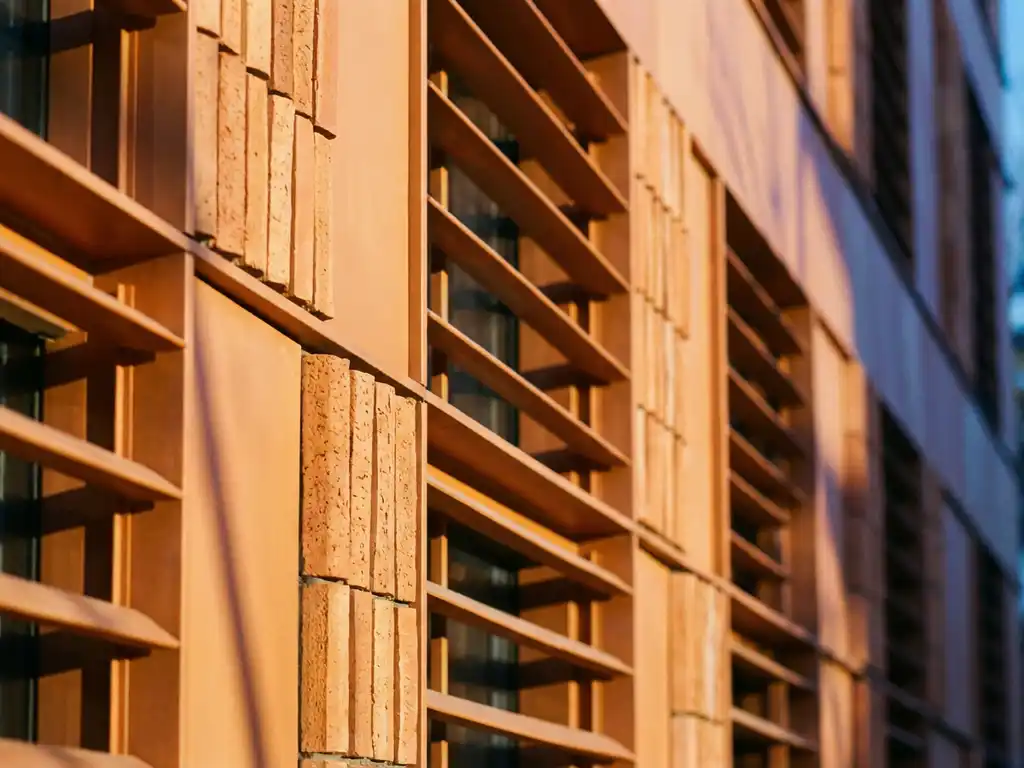
Terracotta baguettes and louvers provide sun shading by creating physical barriers that block direct sunlight while allowing natural light to filter through. These ceramic façade elements control solar heat gain through strategic positioning and thermal mass properties. Understanding their shading mechanisms, optimal positioning, and design considerations helps architects create effective building shading systems that enhance comfort and energy efficiency.
What are terracotta baguettes and louvers in architectural design?
Terracotta baguettes and louvers are elongated ceramic façade elements designed to provide solar protection and architectural interest. Baguettes are typically narrow, rectangular profiles mounted horizontally or vertically, while louvers are angled slats that direct sunlight away from building surfaces.
These architectural shading elements are manufactured through high-temperature firing processes that create dense, durable ceramic materials. The manufacturing involves shaping clay into precise profiles, then firing at temperatures exceeding 1,200 degrees Celsius to achieve optimal strength and weather resistance.
Unlike metal or concrete alternatives, terracotta offers natural thermal properties and design flexibility. The material can be produced in various colours, textures, and formats while maintaining consistent performance characteristics. Modern ceramic façade systems integrate these elements into comprehensive building envelope solutions that address both functional and aesthetic requirements.
How do terracotta elements control sunlight and heat gain?
Terracotta elements control sunlight through physical obstruction, shadow creation, and thermal mass effects. The ceramic material absorbs solar energy during peak hours, then releases it gradually, preventing rapid heat transfer into building interiors.
Solar protection mechanisms include direct shading, where elements block sun rays from reaching windows and walls. The angle and spacing of terracotta baguettes create shadow patterns that change throughout the day, providing consistent protection during critical hours when solar gain is highest.
Ceramic properties contribute significantly to thermal performance. The dense material structure provides thermal mass that moderates temperature fluctuations. Additionally, light-coloured terracotta surfaces reflect solar radiation, while darker finishes can be used strategically to absorb and redirect heat away from sensitive building areas.
The filtration effect allows controlled natural light penetration while blocking harsh direct sunlight. This creates comfortable interior conditions without completely eliminating daylight benefits.
What are the key benefits of using terracotta for sun shading systems?
Terracotta sun shading systems offer exceptional durability, weather resistance, and low maintenance requirements. The ceramic material naturally resists UV degradation, moisture damage, and thermal cycling that affects other façade materials over time.
Key advantages include:
- Longevity – ceramic materials maintain performance and appearance for decades without replacement
- Weather resistance – natural protection against rain, wind, temperature extremes, and UV exposure
- Thermal mass properties – moderate temperature swings and reduce energy consumption
- Design versatility – available in numerous colours, textures, and formats for creative architectural expression
- Fire resistance – non-combustible material classified as building material class A1
- Sustainability – 100% recyclable with minimal environmental impact
Maintenance requirements remain minimal throughout the building lifecycle. The ceramic surfaces resist staining, fading, and biological growth, reducing cleaning frequency and associated costs compared with alternative shading materials.
How should terracotta baguettes and louvers be positioned for optimal shading?
Optimal positioning depends on building orientation, local sun paths, and seasonal variation patterns. South-facing façades typically require horizontal elements angled to block high summer sun while allowing lower winter sun penetration.
Installation considerations include calculating solar angles for your specific latitude and building orientation. East- and west-facing façades benefit from vertical elements or steeply angled louvers to address low-angle morning and evening sun. North-facing walls generally require minimal shading in most climates.
Spacing calculations must account for element depth, projection distance, and desired shading coverage. Closer spacing provides more complete protection but reduces natural light transmission. The relationship between element width, spacing, and projection angle determines shadow patterns throughout the day.
Seasonal sun path analysis helps optimise year-round performance. Elements should block unwanted summer heat gain while allowing beneficial winter solar heating. This typically involves angles between 30 and 45 degrees for horizontal elements in temperate climates.
What design considerations affect terracotta sun shading performance?
Building orientation significantly impacts shading system effectiveness. South-facing façades experience consistent sun exposure patterns, while east- and west-facing orientations face challenges from low-angle solar radiation that require different element configurations.
Local climate conditions influence design decisions, including seasonal temperature ranges, prevailing wind directions, and rainfall patterns. Hot climates prioritise maximum solar protection, while cooler regions balance shading with natural light requirements.
Window placement affects shading system integration. Elements must protect glazed areas without creating excessive shadowing that reduces beneficial daylight. The relationship between window size, position, and shading elements determines interior comfort levels.
Colour and surface finish selection impact thermal performance. Light colours reflect solar radiation and reduce heat absorption, while darker finishes may be appropriate for specific design intentions. Surface textures can enhance visual interest while maintaining functional performance.
Architectural integration ensures shading elements complement the overall building design. The scale, proportion, and rhythm of terracotta elements should enhance rather than compete with other façade features.
How TONALITY® ceramic façades enhance sun shading effectiveness
TONALITY® ceramic façade systems provide superior sun shading solutions through advanced manufacturing processes and integrated design capabilities. The high-temperature sinter-firing process creates exceptionally dense surfaces that deliver consistent thermal performance and long-term durability.
Key advantages include:
- Precise manufacturing tolerances within one millimetre for optimal element alignment and consistent shading patterns
- Lightweight construction at only 40 kilograms per square metre, enabling flexible installation configurations
- Interlocking profile system that simplifies installation while ensuring weathertight performance
- Integrated graffiti protection and permanent colour stability for maintenance-free operation
- A1 fire classification providing non-combustible performance for enhanced building safety
- Complete recyclability supporting sustainable construction practices
The ceramic elements can be manufactured in formats ranging from 150 x 300 mm up to 400 x 1,600 mm, allowing architects to create customised shading solutions that meet specific project requirements. The system’s low dead weight makes it particularly suitable for timber construction and retrofit applications where structural loads must be minimised.
Ready to explore how TONALITY® ceramic façades can enhance your building’s sun shading performance? Contact our technical team to discuss your specific project requirements and discover the possibilities of advanced ceramic façade systems.
Related Articles
- Which LEED credits can architects achieve with terracotta facade specification?
- How does facade material choice affect net zero building goals?
- How do mechanical fixing systems compare to adhesive systems for terracotta?
- How do you prevent thermal bridging in ventilated terracotta facades?
- What terracotta colors work best for different building types?