

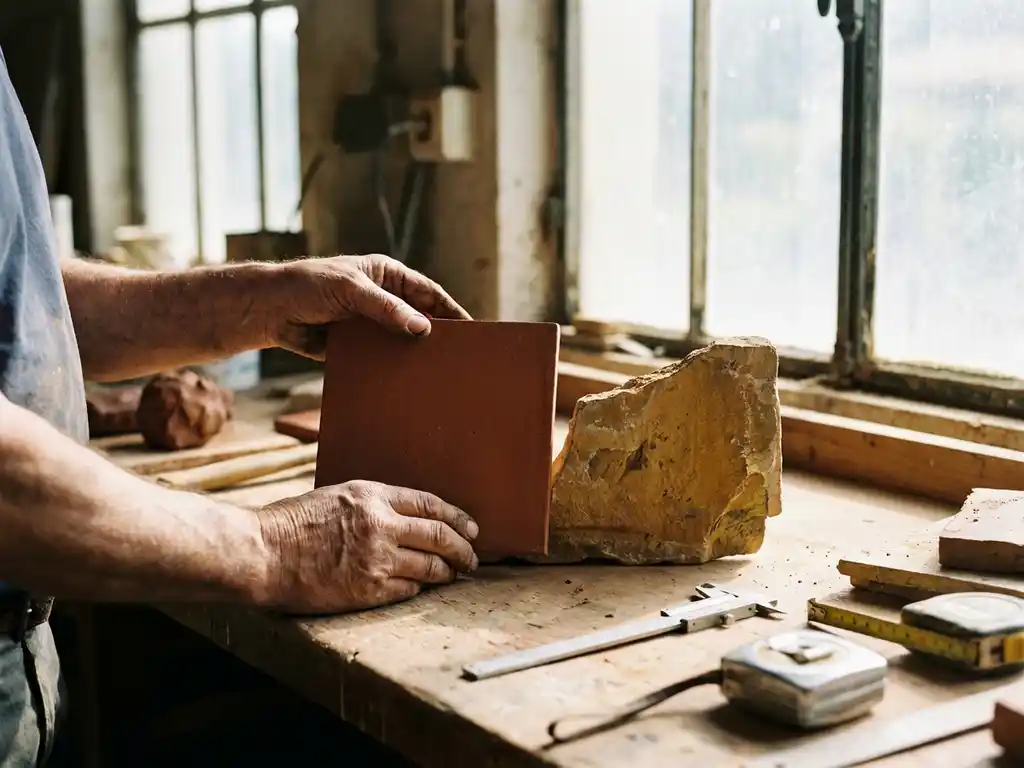
Matching new terracotta to historic building facades requires careful analysis of existing materials, including their colour variations, weathering patterns, and original manufacturing characteristics. Success depends on understanding how clay sources, firing temperatures, and decades of ageing have affected the original terracotta’s appearance. Professional restoration involves spectral analysis, custom glazing, and precise manufacturing techniques to achieve seamless integration with heritage facades.
What makes terracotta facade matching so challenging for historic buildings?
Historic terracotta presents unique matching challenges because each building’s facade has undergone decades of natural ageing, weathering, and colour evolution that cannot be replicated overnight. The original clay sources may no longer be available, and historical manufacturing processes often differed significantly from modern production methods.
Natural ageing creates complex colour variations across a single facade. Weathering patterns develop differently on north-facing versus south-facing walls, with UV exposure causing gradual colour shifts over time. Rain, pollution, and temperature cycles contribute to surface patina that becomes integral to the building’s character.
Original manufacturing variations add another layer of complexity. Historic terracotta was often hand-finished, creating subtle texture differences and colour inconsistencies that were considered normal craftsmanship. Firing temperatures in historical kilns were less precisely controlled, resulting in natural colour variations within single production runs.
Clay source differences significantly impact matching efforts. The specific mineral content and composition of historical clay deposits influenced both colour and texture. When these original sources are depleted or inaccessible, finding comparable materials requires extensive testing and formulation work.
How do you analyse existing terracotta to determine the right match?
Proper terracotta analysis begins with comprehensive visual inspection under different lighting conditions, followed by systematic colour sampling and texture documentation. This methodical approach ensures accurate assessment of both obvious characteristics and subtle variations that affect matching success.
Visual inspection techniques involve examining the facade at various times of day to understand how lighting affects colour perception. Document colour variations across different exposures, noting how weathering has created unique patinas on various sections. Photography with consistent lighting helps establish baseline references.
Colour sampling methods include taking small samples from inconspicuous areas, preferably from both weathered surfaces and protected sections. This reveals the original colour beneath weathering effects. Spectral analysis of these samples provides precise colour data that guides reproduction efforts.
Texture analysis requires close examination of surface finishes, including any hand-tooled details or impressed patterns. Measuring dimensional specifications ensures new elements will align properly with existing coursing and proportional relationships.
Understanding original manufacturing processes helps predict how new materials will age and weather. Research historical production methods, firing temperatures, and clay preparation techniques used during the building’s construction period.
What are the best methods for achieving accurate terracotta colour matching?
Accurate colour matching combines scientific analysis with skilled craftsmanship, using spectral analysis to establish precise colour targets and custom glazing processes to achieve authentic reproduction. Testing under various lighting conditions ensures consistent appearance throughout different times of day.
Spectral analysis techniques provide objective colour measurements that eliminate guesswork. Professional colorimetry equipment measures colour values across the visible spectrum, creating detailed profiles that guide formulation decisions. This data helps predict how colours will appear under different lighting conditions.
Custom glazing processes allow fine-tuning of surface colour and finish characteristics. Glaze formulation can compensate for differences in clay body colour, while surface treatments can replicate weathering effects or historical patina patterns.
Clay body formulation considerations involve adjusting mineral content and clay composition to influence the underlying colour. Iron oxide content, for example, significantly affects red and brown tones, while other minerals influence colour stability and firing behaviour.
Firing temperature adjustments impact final colour development. Higher temperatures typically produce more intense colours and denser surfaces, while lower temperatures may better match historical pieces fired in less controlled conditions.
Testing methods include creating sample panels that undergo accelerated weathering tests. These samples help predict how new terracotta will age and whether colour matching will remain consistent over time.
How do you handle texture and surface finish variations in historic terracotta?
Replicating historic surface textures requires understanding original production methods and balancing authentic reproduction with modern manufacturing capabilities. Success involves recreating hand-finished details while maintaining consistency across replacement elements.
Understanding original production methods provides insight into how historical textures were created. Hand-tooling, wire-cutting, and pressing techniques each produced distinctive surface characteristics. Research into period manufacturing processes guides reproduction efforts.
Recreating hand-finished details involves developing moulds and tooling techniques that capture the irregularities and craftsmanship qualities of the original work. Surface texture variations that appear random were often the result of specific production methods that can be systematically reproduced.
Matching weathering patterns requires understanding how different surface textures weather differently over time. Smooth surfaces develop different patinas than textured areas, and these variations must be considered in both texture design and surface treatment.
Addressing surface irregularities involves deciding which historical variations to replicate and which to standardise. Some irregularities add character, while others may have been unintended flaws that should not be perpetuated in restoration work.
Modern manufacturing capabilities allow precise reproduction of historical textures through advanced moulding and finishing techniques. Computer-controlled processes can replicate hand-finished appearances while maintaining quality consistency across large quantities.
What installation considerations are crucial when replacing terracotta on historic facades?
Historic terracotta replacement requires careful structural assessment and specialised installation techniques that respect original construction methods while meeting modern performance standards. Coordination with conservation specialists ensures both building integrity and historical authenticity are maintained.
Structural assessment requirements include evaluating the existing support system’s capacity to handle new terracotta elements. Historic buildings may have experienced settlement or structural changes that affect attachment point reliability. Professional structural analysis identifies necessary reinforcement or modification work.
Attachment method compatibility ensures new elements integrate properly with historic construction. Original fixing methods may need adaptation to accommodate modern materials while maintaining structural integrity. Thermal movement considerations become critical when integrating materials with different expansion characteristics.
Weatherproofing techniques must balance moisture protection with vapour permeability. Historic buildings often rely on natural moisture movement through wall systems, and modern sealants must not trap moisture that could damage historic materials.
Coordination with conservation specialists ensures work meets heritage preservation standards. Building conservation professionals provide guidance on appropriate materials, methods, and documentation requirements for historic properties.
Building integrity considerations include maintaining structural load paths and ensuring new work does not compromise the building’s long-term stability. Installation methods must distribute loads appropriately and accommodate the building’s natural movement patterns.
How TONALITY® helps with historic terracotta facade matching
TONALITY® provides comprehensive solutions for historic terracotta facade restoration through specialised manufacturing capabilities and expert consultation services. Our precision manufacturing processes and custom colour matching services ensure seamless integration with heritage architecture.
Our historic restoration capabilities include:
- Custom colour matching services using advanced spectral analysis and glaze formulation
- Precision manufacturing tolerances that accommodate historic dimensional variations
- Specialised firing techniques that replicate historical surface characteristics
- Consultation with conservation experts throughout the restoration process
- Comprehensive documentation services for heritage compliance requirements
TONALITY®’s single-layer ceramic production process allows precise control over colour consistency and surface finish characteristics. Our manufacturing flexibility accommodates the custom sizing and finishing requirements typical of historic restoration projects.
Contact our restoration specialists to discuss your historic terracotta facade matching requirements and discover how our expertise can preserve your building’s architectural heritage.
Related Articles
- What is embodied carbon and how does terracotta compare to aluminum cladding?
- How do perforated terracotta screens balance light, privacy, and ventilation?
- How do you choose the right insulation system for facade renovation?
- How does a terracotta facade work?
- Wie verändern modulare Fassadenlösungen die Bauindustrie?