

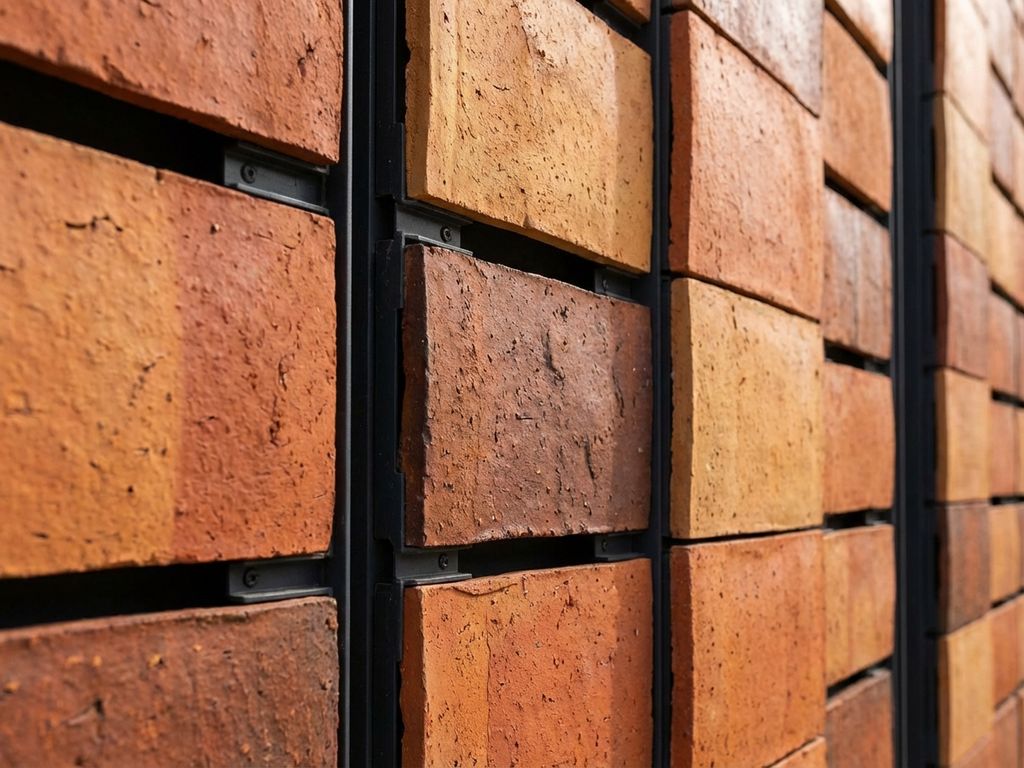
Terracotta facade systems use fired clay as their primary material, processed at high temperatures to create durable building elements. Modern systems incorporate carefully selected clay deposits, various additives, and advanced manufacturing techniques to produce facades that offer superior weather resistance, design flexibility, and long-term performance compared with traditional building materials.
What exactly is terracotta and how is it made for facades?
Terracotta is a fired clay material that transforms from raw earth into a durable facade component through controlled heating processes. Manufacturing begins with selecting high-quality clay deposits, which are then shaped into precise facade elements and fired at temperatures exceeding 1,200 degrees Celsius.
The production process involves several critical stages that determine the final product’s quality and performance. Clay selection focuses on deposits with optimal mineral compositions that provide strength and workability. The raw material undergoes careful preparation, including mixing and forming into the desired shapes and dimensions.
During the firing process, the clay undergoes a chemical transformation called vitrification. This high-temperature treatment creates a dense, non-porous surface that resists water penetration and weathering. The controlled heating and cooling cycles ensure consistent quality while preventing cracking or warping that could compromise the facade’s integrity.
Modern terracotta production includes precise temperature monitoring and atmospheric control during firing. This attention to detail results in facade elements with uniform colour, texture, and structural properties that meet contemporary building standards for durability and performance.
What types of clay are used in modern terracotta facade systems?
Modern terracotta facades utilise specific clay types chosen for their mineral content, plasticity, and firing characteristics. The most suitable clays contain balanced proportions of silica, alumina, and flux materials that create strong, weather-resistant facade elements when properly processed.
European clay deposits, particularly those found in regions like Westerwald in Germany, are prized for their exceptional quality and consistency. These deposits contain natural minerals that contribute to the clay’s workability during shaping and its durability after firing. The mineral composition directly affects the final product’s colour options, surface texture, and resistance to thermal cycling.
High-quality facade clays typically feature low iron content to prevent discolouration and contain sufficient alumina for structural strength. The presence of natural flux materials helps achieve proper vitrification during firing, creating the dense surface structure essential for long-term facade performance.
Clay quality assessment considers particle size distribution, chemical composition, and firing behaviour. Premium deposits undergo geological analysis to ensure consistency across extraction areas, providing manufacturers with reliable raw materials for producing facade elements that meet strict architectural specifications.
How do ceramic facade materials differ from traditional terracotta?
Modern ceramic facade materials represent an evolution from traditional terracotta, incorporating advanced manufacturing processes and quality control that deliver superior performance characteristics. Ceramic facades undergo more precise firing protocols and often include enhanced surface treatments that improve weather resistance and reduce maintenance requirements.
Traditional terracotta relied on relatively simple firing techniques and natural clay properties alone. Modern ceramic production employs sophisticated kiln technology with precise temperature and atmosphere control, resulting in more consistent product quality and enhanced durability. The sinter firing process used in contemporary ceramic facades creates denser, more uniform surfaces compared with conventional terracotta.
Manufacturing differences extend to quality control and dimensional accuracy. Modern ceramic facade systems achieve tolerances within one millimetre, enabling precise installation and a consistent appearance. Traditional terracotta often exhibited greater variation in size and surface quality due to less controlled production methods.
Performance improvements in modern ceramic facades include enhanced freeze-thaw resistance, reduced water absorption, and superior colour stability under UV exposure. These advances result from both improved clay processing and optimised firing cycles that create more durable material structures than traditional terracotta could achieve.
What additives and treatments are used in terracotta facade production?
Terracotta facade production incorporates various additives and surface treatments to enhance performance, appearance, and longevity. These treatments include glazes for colour and protection, sealers for water resistance, and specialised coatings that provide specific functional benefits such as self-cleaning properties or enhanced durability.
Glazing represents the most common surface treatment, providing both aesthetic appeal and functional protection. Glazes create a glass-like surface layer that resists staining, reduces maintenance requirements, and offers extensive colour and texture options. The glaze application occurs before final firing, bonding permanently with the clay body during the high-temperature process.
Surface sealers and protective treatments may be applied after firing to enhance specific performance characteristics. These treatments can improve weather resistance, provide anti-graffiti properties, or enhance the facade’s ability to shed dirt and pollutants. Some modern ceramic facades incorporate integrated surface protection that becomes part of the material structure during manufacturing.
Additives mixed into the clay body itself can modify firing behaviour, improve strength, or create specific visual effects. These materials must be carefully selected to ensure compatibility with the base clay and firing temperatures. The goal is to enhance performance while maintaining the natural characteristics that make terracotta an attractive facade material.
How TONALITY® ceramic facades provide superior material solutions
TONALITY® ceramic facades utilise premium Westerwald clay deposits and advanced sinter firing processes to deliver exceptional performance and design flexibility. This specialised manufacturing approach creates facade elements with unrivalled surface quality, dimensional precision, and long-term durability that surpass conventional terracotta systems.
The key advantages of TONALITY® ceramic facade materials include:
- Superior material properties: Sinter firing at temperatures exceeding 1,200°C creates dense, non-porous surfaces with excellent weather resistance
- Lightweight construction: Surface weight of only 40 kg per square metre enables use on timber construction and reduces substructure requirements
- Fire safety compliance: A1 classification as a non-combustible building material with no combustible components
- Installation efficiency: Profiled backing system with aluminium retaining profiles allows simple mounting procedures
- Sustainable design: 100% recyclable materials with complete component separation for reuse applications
- Maintenance-free performance: Integrated graffiti protection and permanent colour stability reduce lifecycle maintenance costs
The precision manufacturing capabilities enable facade elements from 150 x 300 mm up to 400 x 1,600 mm with millimetre accuracy, providing architects with extensive design possibilities while ensuring consistent installation quality.
For expert guidance on ceramic facade material selection and system design, contact TONALITY® to discuss your specific project requirements and discover how advanced ceramic technology can enhance your building’s performance and aesthetic appeal.