

What is thermal bridging in façade systems?
Thermal bridging in façade systems occurs when heat-conducting materials create continuous pathways through the building envelope, allowing thermal energy to bypass insulation layers. These thermal bridges significantly reduce the building’s overall thermal performance and can lead to condensation, mold growth, and increased energy consumption.
In ceramic façade systems, thermal bridging typically occurs at connection points where metal fixings, structural elements, or poorly designed mounting systems create direct thermal pathways between the interior and exterior environments. The consequences extend beyond energy efficiency, as thermal bridges can cause surface temperature variations that lead to structural stress and moisture-related problems in the building envelope.
How do rear-ventilated terracotta systems work?
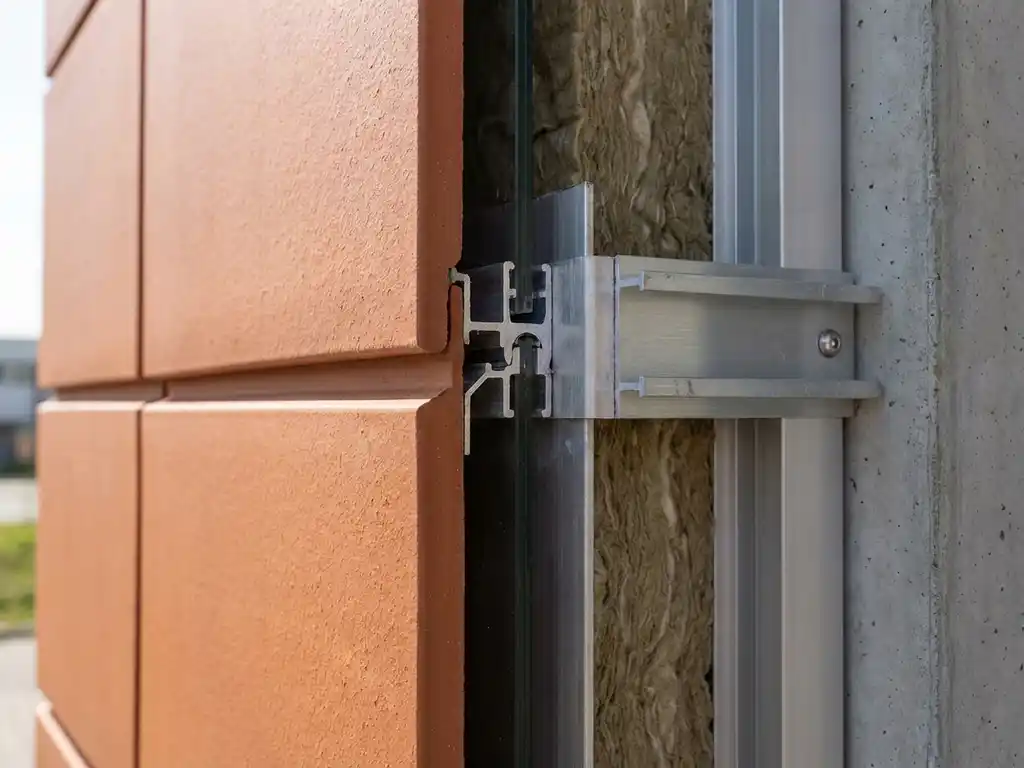
Rear-ventilated terracotta systems use a multi-layer approach that separates the weatherproof cladding from the insulation layer with a continuous air cavity. This ventilated cavity allows natural air circulation that removes moisture and heat, while the ceramic elements provide weather protection and aesthetic appeal.
The system consists of ceramic façade elements mounted on a substructure that maintains a gap between the cladding and the insulated wall. Air enters at the bottom of the façade and rises through the cavity via the stack effect, carrying away moisture and preventing heat buildup. This design principle ensures that the insulation layer remains dry and effective, while the ceramic cladding withstands weather exposure without compromising the building’s thermal performance.
What causes thermal bridges in terracotta façade installations?
Thermal bridges in terracotta façade installations are primarily caused by continuous metal connections that penetrate the insulation layer, creating direct heat-transfer pathways. Common culprits include improperly designed mounting brackets, through-wall fixings, and structural elements that bypass thermal breaks.
Specific problem areas include aluminum support rails that extend through insulation without thermal separation, steel fixings that connect directly from the interior structure to the exterior cladding, and inadequate detailing at building corners and openings. Poor installation practices, such as compressed insulation around fixing points or gaps in the thermal barrier, can also create unintended thermal bridging in ventilated façade systems.
How do engineers design thermal break solutions for ceramic façades?
Engineers design thermal break solutions for ceramic façades by incorporating non-conductive materials and strategic disconnections in the mounting system to interrupt heat-transfer pathways. These solutions typically involve thermal-break elements made from materials with low thermal conductivity, such as reinforced plastics or specialized foams.
The design process begins with thermal modeling to identify potential bridging locations, followed by the specification of thermally broken brackets and fixings. Engineers often employ point fixings rather than continuous rails, use insulated spacers between metal components, and design connection details that maintain structural integrity while minimizing thermal conductivity. Advanced solutions may include aerogel-filled thermal breaks or vacuum-insulated connection elements for extreme performance requirements.
What installation techniques prevent thermal bridging in terracotta systems?
Installation techniques that prevent thermal bridging in terracotta systems focus on maintaining continuous insulation and using thermally separated fixing methods. Key approaches include installing thermal-break pads at all metal-to-structure connection points and ensuring insulation continuity around all penetrations.
Professional installers employ several critical techniques:
- Using point fixings with integrated thermal breaks rather than continuous metal rails
- Installing insulation sleeves around all through-wall connections
- Maintaining proper insulation thickness without compression at fixing points
- Sealing all penetrations with appropriate thermal-barrier materials
- Following manufacturer specifications for thermal-break component placement
Proper sequencing of installation steps ensures that thermal barriers are not compromised during the mounting process, with particular attention paid to maintaining the integrity of vapor barriers and insulation layers.
How do you verify thermal bridge prevention in completed façades?
Verifying thermal bridge prevention in completed façades requires thermal imaging surveys using infrared cameras to detect temperature variations across the façade surface. These thermographic inspections reveal thermal irregularities that indicate bridging and are typically conducted during periods of significant temperature difference between interior and exterior environments.
Comprehensive verification involves both qualitative thermal imaging and quantitative heat-flow measurements. Professional assessments include blower door tests to identify air-leakage paths, surface temperature mapping to locate thermal anomalies, and sometimes invasive testing to verify insulation continuity. Quality-assurance protocols should be established during construction, with interim inspections at key installation stages to prevent thermal bridging issues before façade completion.
How TONALITY® Ceramic Facades Minimize Thermal Bridging
TONALITY® ceramic façade systems are engineered specifically to minimize thermal bridging through innovative mounting solutions and lightweight design. The system’s unique back-profiled ceramic elements interlock with vertical aluminum retaining profiles that incorporate thermal-break technology, significantly reducing heat-transfer pathways while maintaining structural integrity.
Key thermal performance advantages include:
- Low surface weight of approximately 40 kg/m² reduces substructure requirements and thermal bridging potential
- Integrated mounting system with optimized thermal separation at connection points
- Precise dimensional tolerances enabling consistent thermal-barrier installation
- Compatible with advanced thermal-break solutions for high-performance applications
For detailed technical specifications and thermal performance data for your next ceramic façade project, contact our façade engineering team to discuss thermal bridge prevention strategies tailored to your specific building requirements. You can also explore our completed projects to see how thermal bridge prevention has been successfully implemented across various building types.