

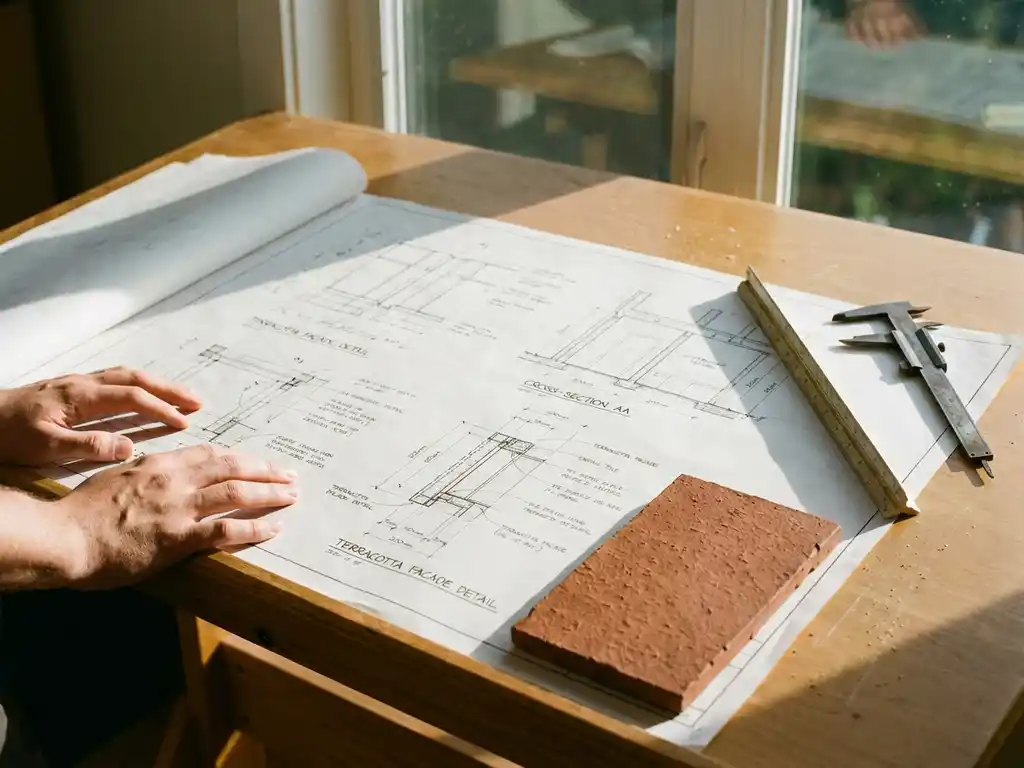
What Makes Terracotta Facade Specifications Critical for Project Success
A comprehensive terracotta facade specification serves as the blueprint that ensures your ceramic cladding system performs exactly as intended throughout its life cycle. Without precise specifications, projects face costly delays, performance failures, and disputes between contractors and suppliers during installation.
Well-written ceramic facade specifications eliminate ambiguity by defining exact material properties, installation methods, and quality standards. This documentation protects both the architect’s design intent and the building owner’s investment while providing contractors with clear guidelines for proper execution. The specification becomes your primary tool for ensuring the ceramic facade system meets structural, aesthetic, and environmental performance requirements over decades of service.
Essential Technical Information to Gather Before Writing
Begin developing your facade specification guide by collecting comprehensive project data that will inform every technical decision. Document the building’s structural system, including wall construction details, load-bearing capacity, and thermal movement characteristics that will affect ceramic element attachment points.
Gather environmental data specific to the project location, including wind loads, seismic requirements, freeze-thaw cycles, and exposure conditions. Research local building codes and fire safety classifications that apply to ceramic cladding systems. Collect architectural drawings showing facade layouts, window openings, building transitions, and any special geometric requirements that will influence ceramic element sizing and installation methods.
Critical Measurements and Tolerances
Establish dimensional requirements for the ceramic facade system, including overall facade areas, individual panel sizes, and joint widths. Document substrate tolerances and identify any existing building irregularities that the ceramic system must accommodate. This information directly impacts material order quantities and installation complexity.
Define Performance Requirements and Material Standards
Specify exact performance criteria that the ceramic facade system must achieve, starting with structural requirements such as wind-load resistance, thermal movement accommodation, and seismic performance. Define these requirements using measurable standards rather than general descriptions.
Establish material classification requirements, particularly fire-resistance ratings and building-code compliance standards. For ceramic facades, specify noncombustible classification requirements and any regional fire safety standards that apply. Document thermal performance requirements, including thermal-bridging limitations and insulation coordination with the ceramic cladding system.
Surface and Aesthetic Standards
Define acceptable color-variation ranges, surface texture requirements, and dimensional tolerances for ceramic elements. Specify quality standards for surface-finish consistency and establish criteria for acceptable manufacturing variations. When selecting terracotta facade surfaces and formats, include requirements for colorfastness, UV resistance, and long-term appearance retention to ensure the facade maintains its intended aesthetic throughout its service life.
Specify Installation Systems and Mounting Details
Detail the complete installation methodology for your ceramic cladding specification, beginning with substrate preparation requirements and structural attachment methods. Specify the exact mounting system components, including aluminum profiles, fasteners, and any specialized hardware required for proper ceramic element installation.
Document installation sequences and coordination requirements with other building systems. Include specific requirements for flashing integration, weatherproofing details, and thermal barrier installation. Specify quality-control checkpoints throughout the installation process to ensure proper system performance.
Connection and Joint Details
Provide detailed specifications for ceramic element connections, including interlocking profile requirements and vertical support system details. Define joint treatment methods, sealant specifications where required, and thermal movement accommodation details. Include specifications for corner treatments, window-opening details, and building transition areas that require special attention during installation.
Address Quality Control and Testing Requirements
Establish comprehensive quality-control protocols that verify both material quality and installation performance throughout the project. Specify factory quality-control requirements for ceramic element manufacturing, including dimensional-accuracy verification and surface-quality inspection procedures.
Define field-testing requirements and inspection schedules that ensure proper installation quality. Include requirements for structural attachment verification, weatherproofing testing, and system performance validation. Specify documentation requirements that provide permanent records of quality-control activities and test results for future reference.
Acceptance Criteria and Remediation Procedures
Define clear acceptance criteria for both material delivery and completed installation work. Establish procedures for addressing nonconforming work and specify remediation methods that maintain system integrity. Include requirements for final system commissioning and performance verification before project acceptance.
Include Maintenance and Life-Cycle Considerations
Specify maintenance requirements and procedures that preserve the ceramic facade system performance throughout its intended service life. Document routine inspection schedules and define maintenance activities required to maintain warranty coverage and optimal system performance.
Include specifications for replacement procedures and component-availability requirements that ensure long-term system serviceability. Define cleaning methods and maintenance-access requirements that facilitate proper facade care without compromising system integrity. Establish documentation requirements for maintenance activities that support life-cycle performance tracking and warranty compliance.
How TONALITY® Ceramic Facades Simplify Specification Writing
TONALITY® provides comprehensive technical documentation and specification support that streamlines the ceramic facade specification process for architects and specifiers. Our detailed technical data sheets include all necessary performance criteria, installation specifications, and quality standards required for complete project documentation.
Key specification advantages include:
- Complete technical specifications with measurable performance criteria
- Detailed installation guidelines with mounting system specifications
- Quality-control protocols and testing requirements documentation
- Maintenance specifications and life-cycle performance data
- Building-code compliance documentation for fire safety and structural requirements
Our comprehensive downloads and samples provide essential technical documentation to support your specification process. Contact our technical specification team to receive comprehensive documentation and specification support for your next ceramic facade project, ensuring accurate specifications that deliver long-term performance and value.