

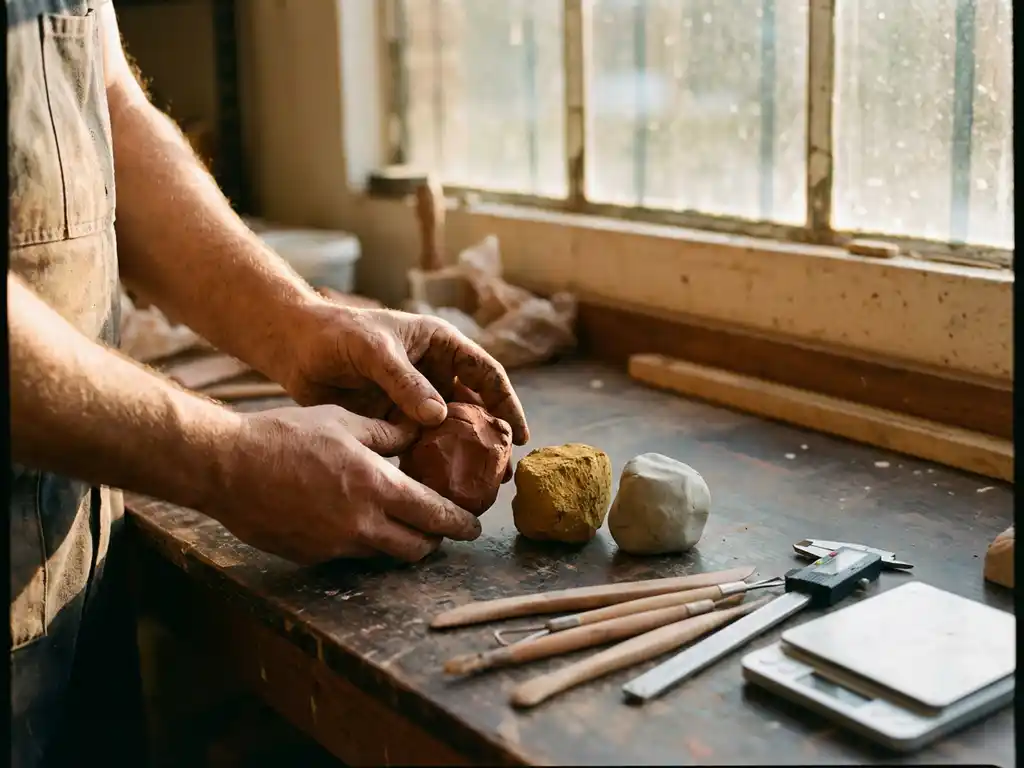
Clay selection forms the foundation of successful ceramic manufacturing, determining everything from firing temperatures to the final product’s durability. The type of clay used directly affects the quality, strength, and performance characteristics of ceramic products, making it one of the most critical decisions in the manufacturing process.
Understanding clay properties and their effects on ceramic production helps manufacturers optimize their processes and achieve consistent, high-quality results. From mineral composition to firing behavior, each clay type brings unique advantages and challenges to ceramic manufacturing.
What are the main types of clay used in ceramic manufacturing?
The three primary clay types used in ceramic manufacturing are earthenware, stoneware, and porcelain, each offering distinct properties and firing characteristics. Earthenware clays fire at lower temperatures and produce porous ceramics; stoneware clays create dense, durable products at medium temperatures; and porcelain clays yield the finest, strongest ceramics at high temperatures.
Earthenware clays contain higher levels of iron oxide and other impurities, making them suitable for decorative tiles and pottery that don’t require extreme durability. These clays typically fire between 950 and 1,100°C and remain somewhat porous after firing.
Stoneware clays offer excellent plasticity and strength, making them ideal for architectural ceramics and functional items. They fire at temperatures between 1,200 and 1,300°C, creating dense, non-porous products with superior weather resistance.
Porcelain clays represent the purest form, containing high levels of kaolin and minimal impurities. These clays require the highest firing temperatures but produce ceramics with exceptional strength, low porosity, and a refined appearance.
How do clay properties affect ceramic tile quality?
Clay properties directly determine ceramic tile quality through their impact on shrinkage rates, porosity, strength, and thermal stability during firing. The mineral composition, particle-size distribution, and plasticity of clay influence how tiles behave during manufacturing and their final performance characteristics.
Plasticity affects how well clay can be shaped and formed without cracking. High-plasticity clays allow for precise shaping and detailed textures, while low-plasticity clays may require additives to improve workability. The right balance ensures tiles maintain their shape during drying and firing.
Shrinkage behavior varies significantly between clay types, affecting dimensional accuracy and the potential for warping. Consistent shrinkage rates are essential for producing tiles that meet precise specifications and fit together properly during installation.
Thermal expansion characteristics influence how tiles respond to temperature changes after installation. Clays with stable thermal properties produce tiles that resist cracking and maintain structural integrity across varying weather conditions.
What’s the difference between high-fire and low-fire clays?
High-fire clays require temperatures above 1,200°C to mature fully and create dense, vitrified ceramics, while low-fire clays mature at temperatures below 1,100°C and typically remain more porous. The firing temperature directly correlates with the clay’s mineral composition and determines the final product’s density, strength, and durability.
High-fire clays contain minerals that require intense heat to fuse properly, resulting in ceramics with superior mechanical properties. These clays undergo complete vitrification, creating products with minimal porosity and excellent resistance to weathering, making them ideal for exterior applications and high-performance façades.
Low-fire clays mature quickly at moderate temperatures, making them energy-efficient for certain applications. However, they typically produce more porous ceramics that may require glazing or sealing for moisture resistance. These clays work well for interior applications where extreme durability isn’t the primary concern.
The choice between high-fire and low-fire clays depends on the intended application, performance requirements, and manufacturing considerations. High-fire clays generally produce superior products for architectural applications but require more energy and specialized equipment.
Which clay deposits produce the highest quality ceramics?
The highest-quality ceramics come from clay deposits with consistent mineral composition, low impurity levels, and optimal particle-size distribution. Premium deposits typically feature high alumina content, minimal iron oxide, and uniform geological formation, which ensures predictable firing behavior and superior final properties.
European clay deposits, particularly those in Germany’s Westerwald region, are renowned for producing exceptional ceramic materials. These deposits benefit from millions of years of geological processes that created pure, well-sorted clay with an ideal mineral composition for high-temperature ceramic manufacturing.
Quality indicators include low levels of harmful impurities, such as sulfur compounds; consistent chemical composition across the deposit; and appropriate plasticity for manufacturing processes. The best deposits also offer sufficient quantity to ensure long-term supply consistency.
Geographic factors such as climate, geological stability, and accessibility also influence deposit quality. Regions with stable geological conditions tend to produce more uniform clay with fewer variations that could affect manufacturing consistency.
How do manufacturers test clay suitability for ceramic production?
Manufacturers test clay suitability through comprehensive analysis, including chemical composition testing, physical property evaluation, and firing trials to determine performance characteristics. These tests assess plasticity, shrinkage behavior, firing temperature requirements, and final product properties to ensure the clay meets specific manufacturing and performance standards.
Chemical analysis reveals the mineral composition, including silica, alumina, and flux content, which determines firing behavior and final properties. X-ray diffraction and spectroscopic analysis identify specific clay minerals and potentially problematic compounds.
Physical testing evaluates properties such as particle-size distribution, plasticity index, and thermal behavior. Differential thermal analysis shows how clay responds to heating, identifying critical temperature points and potential issues during firing.
Firing trials involve creating test samples under controlled conditions to assess shrinkage rates, color development, strength, and porosity. These trials simulate actual production conditions and reveal how the clay will perform in real manufacturing scenarios.
How TONALITY® Delivers Superior Ceramic Manufacturing
TONALITY® leverages premium Westerwald clay deposits to produce exceptional ceramic façade elements through advanced manufacturing techniques. Our location in Germany’s renowned ceramic region provides access to some of Europe’s highest-quality clay, combined with specialized sinter-firing processes exceeding 1,200°C for optimal results.
- Utilizes premium Westerwald clay with superior mineral composition and consistency
- Employs specialized sinter firing at temperatures over 1,200°C for maximum density and durability
- Produces ceramic elements with millimeter-precise accuracy in formats up to 400 x 1,600 mm
- Offers more than 50 color options with permanent UV resistance and integrated graffiti protection
- Achieves building material class A1 certification for non-combustible, fire-resistant properties
Our comprehensive approach to clay selection and processing ensures every ceramic element meets the highest standards for architectural applications. Contact our team to discuss how TONALITY® ceramic façades can enhance your next project with superior materials and proven manufacturing excellence.