

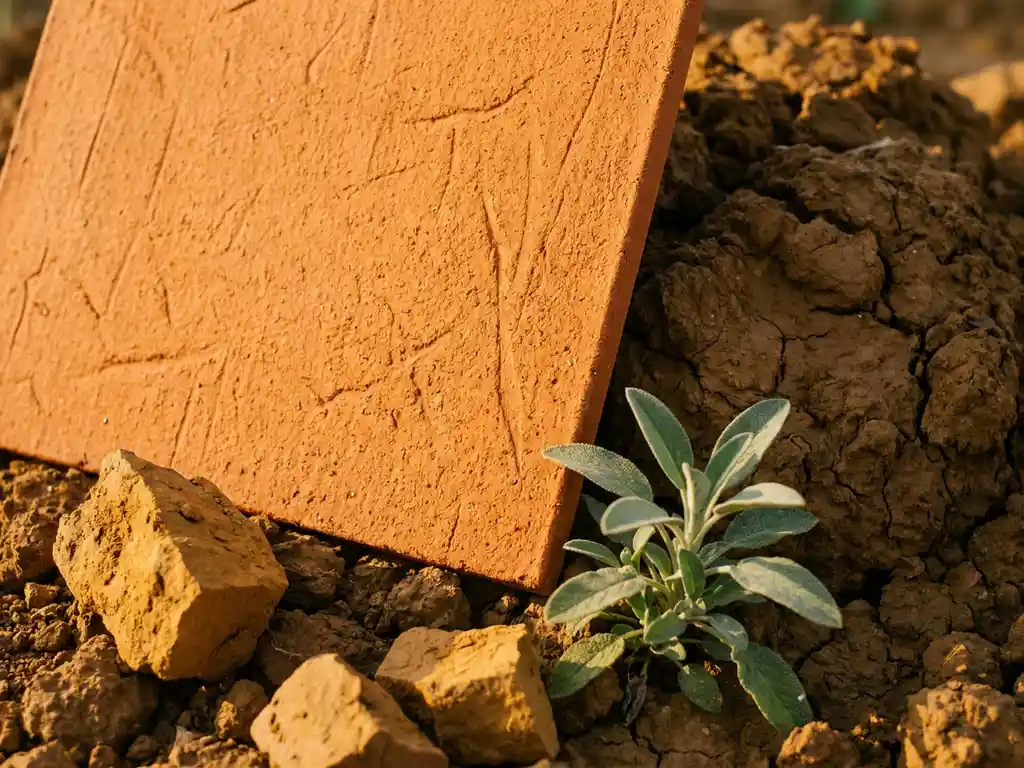
Yes, terracotta facades are a genuinely sustainable building material. Made from natural clay fired at high temperatures, terracotta is non-toxic, free from synthetic additives, and fully recyclable at end of life. Its long service life, low maintenance requirements, and excellent durability make it one of the most compelling choices for sustainable construction in 2026 and beyond. The sections below explore the specific sustainability credentials that matter most to specifiers and contractors.
What makes a building material truly sustainable?
A truly sustainable building material performs well across three dimensions: environmental impact during production, longevity and low maintenance in use, and the ability to be recovered or recycled at end of life. No single factor defines sustainability on its own. A material must hold up across the full lifecycle to earn that label.
In practice, this means looking beyond the manufacturing stage. A material produced with relatively modest energy input but requiring frequent replacement or chemical maintenance may have a higher total environmental burden than one with a more energy-intensive production process but a service life measured in decades. The concept of total cost of ownership applies equally to environmental accounting.
For facade materials specifically, key sustainability indicators include:
- Natural raw material content with no synthetic binders or coatings
- Durability that reduces the need for replacement over the building’s lifespan
- Low maintenance requirements that minimize the use of cleaning chemicals or surface treatments
- End-of-life recyclability so the material does not become landfill waste
- Fire resistance that contributes to overall building safety without additional chemical treatment
Terracotta facades address all of these criteria in a meaningful way, which is why they continue to attract serious attention from architects, specifiers, and contractors working on both new construction and renovation projects. If you want to see how these properties translate into real-world applications, completed terracotta facade projects offer a useful point of reference.
How is terracotta produced and what is its environmental footprint?
Terracotta is produced by shaping natural clay and firing it at temperatures exceeding 1,200 degrees Celsius. The raw material is entirely natural, sourced directly from clay deposits in the earth. No synthetic binders, coatings, or chemical additives are required to achieve the material’s structural integrity or surface quality. The environmental footprint is primarily associated with the energy used in the firing process.
The high firing temperature is not a drawback but a feature. This sinter firing process creates an exceptionally dense, smooth surface that requires no additional sealing or surface treatment. The result is a facade material that is inherently weather-resistant, UV-stable, and permanently colored without any applied finishes that could degrade, peel, or require periodic reapplication.
From a lifecycle perspective, the energy invested in production is offset by the material’s extraordinary longevity. Unlike facade systems that rely on painted or coated surfaces, terracotta’s color and performance are intrinsic to the material itself. There is no maintenance cycle that adds to the environmental burden over time.
Manufacturers located near high-quality clay deposits, such as those in the Westerwald region of Germany, benefit from shorter raw material transport distances, which further reduce the overall carbon footprint of the finished product. Exploring the available surfaces and formats gives a clear picture of the range achievable within this single-material, low-additive production process.
Is terracotta 100% recyclable at end of life?
Yes, terracotta is 100% recyclable at end of life. Because it contains no synthetic binders, adhesives, or composite layers, ceramic facade elements can be fully separated by material type during deconstruction and reused or recycled without complex processing. This makes terracotta one of the cleanest facade materials from a circular economy perspective.
Modern ceramic facade systems are designed with deconstruction in mind. The mechanical fixing systems used in ventilated facade construction allow individual tiles to be removed and replaced without damaging surrounding elements, and the entire system can be disassembled and sorted by component type with minimal effort.
This is a significant advantage over composite cladding materials or facade panels that bond dissimilar materials together, making separation and recycling difficult or economically unviable. With terracotta, the ceramic elements, aluminum substructure, and fixing hardware are all fully separable and recoverable.
How long do terracotta facades last compared to other cladding materials?
Terracotta facades have an exceptionally long service life, routinely outperforming most alternative cladding materials. The dense, vitrified surface created by high-temperature sinter firing is inherently resistant to weathering, frost, UV radiation, and biological growth. Unlike timber, fiber cement, or painted metal cladding, terracotta does not degrade, fade, or require periodic surface treatment to maintain its appearance and performance.
To put this in perspective, consider the maintenance cycles of common alternatives:
- Timber cladding typically requires repainting or re-staining every five to ten years and is vulnerable to moisture, rot, and insect damage without ongoing treatment
- Fiber cement panels can fade and may require repainting within fifteen to twenty years
- Painted metal cladding is subject to corrosion and coating degradation, particularly in coastal or industrial environments
- Terracotta maintains its color, surface quality, and structural integrity for the full lifespan of the building with no repainting, resealing, or surface treatment required
Integrated graffiti protection is another practical advantage. Terracotta’s dense, non-porous surface resists paint adhesion, making it much easier to clean than porous or coated alternatives. This reduces both maintenance effort and the use of aggressive cleaning chemicals over the building’s life.
When evaluating facade materials based on total lifecycle value rather than upfront considerations alone, terracotta’s longevity makes a compelling case. The absence of recurring maintenance cycles translates directly into long-term value and a reduced environmental burden over time. Requesting material samples is a practical way to assess surface quality and durability firsthand before specifying.
Are terracotta facades a good choice for sustainable timber construction?
Terracotta facades are an excellent choice for sustainable timber construction. Their low surface weight, typically around 40 kilograms per square meter for single-layer ceramic systems, significantly reduces the structural load on timber frames compared to heavier cladding alternatives. This means lighter substructure requirements, less material overall, and a faster, simpler installation process.
The compatibility goes beyond weight. Timber construction and terracotta facades share a strong sustainability profile that reinforces each other well. Timber is a renewable, carbon-storing structural material, and pairing it with a non-combustible facade cladding addresses one of the key fire safety concerns associated with timber buildings.
Terracotta ceramic elements are classified as building material class A1, meaning they are fully non-combustible and contain no combustible components. This classification is particularly valuable in multi-storey timber construction, where fire safety regulations are stringent and the choice of facade material has direct implications for building certification and insurance.
The practical installation benefits also align well with the way timber construction projects are typically managed. The low dead weight of terracotta facade tiles allows for lighter aluminum substructures, which saves both material and installation time. The mount-and-done fixing approach means facade installation can proceed quickly without specialist labor or complex wet trades, keeping projects on schedule.
For contractors and project managers working on sustainable new builds or renovation projects involving timber frames, the combination of fire safety certification, low weight, long service life, and full recyclability makes terracotta a material that genuinely supports the sustainability goals of the overall project rather than simply adding a decorative layer.
How TONALITY® supports sustainable facade specification
TONALITY® ceramic facade systems are engineered to meet the full range of sustainability requirements outlined in this article — combining natural raw materials, long-term durability, and end-of-life recyclability in a single, well-documented product range. For specifiers and contractors who need to demonstrate environmental performance across the building lifecycle, TONALITY® provides the technical foundation to do so with confidence.
Specifically, TONALITY® offers:
- 100% natural clay construction with no synthetic binders, coatings, or composite layers — fully recyclable at end of life
- Sinter-fired surfaces that require no sealing, repainting, or chemical maintenance over the building’s lifespan
- Building material class A1 certification for non-combustibility, supporting compliance in multi-storey and timber construction projects
- Low surface weight of approximately 40 kg/m², reducing structural load and substructure requirements
- A full range of surfaces, formats, and colors to meet both functional and architectural requirements without compromising sustainability credentials
Whether you are specifying a new build, a renovation, or a timber-frame project with demanding fire safety requirements, TONALITY® provides a facade solution that holds up across every sustainability criterion. Get in touch with the TONALITY® team to discuss your project requirements and find the right system for your application.