

Recyclability is important in modern facade design because it directly reduces the environmental impact of buildings over their full lifecycle, not just during construction. As the built environment faces growing pressure to align with circular economy principles, facades made from recyclable materials allow buildings to contribute resources back into the supply chain rather than generating waste at end of life. The sections below explore what recyclability really means for facades, how it fits into sustainability frameworks, and which materials deliver on that promise.
What makes a facade material truly recyclable?
A facade material is truly recyclable when it can be recovered at end of life, separated from other building components without contamination, and reprocessed into equivalent or higher-value material without significant quality loss. True recyclability requires the material to retain its chemical and structural integrity through the building’s full service life, making clean separation and reprocessing genuinely viable.
Many materials claim recyclability, but the practical reality depends on several factors. Composite cladding panels, for example, often bond dissimilar materials together in ways that make separation technically difficult or economically unviable. A material that is theoretically recyclable but requires energy-intensive processing or generates toxic byproducts offers limited environmental benefit.
The clearest markers of genuine recyclability in a facade material include:
- Single-material composition: Materials made from one substance or clearly separable layers are far easier to sort and reprocess.
- Chemical stability: The material must not degrade, off-gas, or absorb contaminants during its service life in a way that compromises recyclability.
- Deconstruction compatibility: The fixing and installation system should allow components to be removed cleanly and sorted by type.
- Closed-loop potential: Ideally, the material can be recycled back into the same product category rather than downcycled into lower-value applications.
In facade design, materials that meet these criteria tend to be those with long-established industrial recycling pathways, such as ceramics, glass, and certain metals, rather than newer composite systems whose recyclability remains largely theoretical.
How does recyclability fit into the circular economy for buildings?
Recyclability fits into the circular economy for buildings by enabling materials to move through multiple use cycles rather than ending in landfill. In a circular model, a building’s facade is not a permanent fixture but a resource in temporary use, designed from the outset to re-enter the material supply chain when the building is eventually refurbished or demolished.
The construction sector generates a substantial share of global material waste, and facades represent a significant proportion of that total given their surface area and the frequency with which they are replaced or upgraded. Circular economy thinking reframes this challenge: instead of asking how to dispose of facade materials responsibly, it asks how to recover them efficiently.
This shift has practical implications for how architects and specifiers approach facade material selection. Designing for deconstruction, rather than just for demolition, means choosing systems where individual components can be unfastened, sorted, and transported for reprocessing. Ventilated facade systems with mechanical fixing profiles, for example, support this approach far better than adhesive-bonded cladding.
For building owners and developers, the circular economy argument also connects to long-term asset value. A building whose facade materials can be recovered and resold at end of life represents a different kind of investment than one whose cladding will simply be disposed of. This is particularly relevant in commercial architecture, where lifecycle thinking increasingly shapes procurement decisions.
What are the environmental benefits of recyclable facade materials?
The environmental benefits of recyclable facade materials include reduced demand for virgin raw materials, lower embodied carbon over the building’s lifecycle, and significantly less construction and demolition waste reaching landfill. When a facade material can be fully recovered and reprocessed, the environmental cost of its production is effectively shared across multiple use cycles.
Embodied carbon, the carbon dioxide emitted during material extraction, manufacturing, and transport, is increasingly scrutinized alongside operational energy use. Recyclable materials that can be recovered and reprocessed at end of life reduce the net embodied carbon impact because the energy and emissions invested in their original manufacture are not wasted.
Beyond carbon, recyclable facade materials contribute to broader resource conservation goals:
- Reduced extraction pressure: Less demand for new raw materials means less quarrying, mining, and the habitat disruption that accompanies it.
- Lower waste volumes: Recovered facade materials that re-enter production cycles do not add to construction and demolition waste streams.
- Energy efficiency in reprocessing: Many materials, including ceramics, require less energy to reprocess than to produce from raw inputs for the first time.
- Longer material lifespans: Durable, recyclable materials that resist UV degradation and weathering stay in service longer before needing replacement, compounding their environmental advantage.
Permanent color and UV resistance are particularly relevant here. A facade material that fades, stains, or deteriorates prematurely may need replacing well before the building itself reaches end of life, generating waste and additional embodied carbon in the process. Materials that maintain their appearance without surface treatments or coatings avoid this problem entirely.
How do building regulations and green certifications reward recyclable facades?
Building regulations and green certification schemes reward recyclable facades by awarding credits for material transparency, end-of-life planning, and circular economy compliance, which can contribute meaningfully to a project’s overall sustainability rating. In 2026, this recognition has become a significant factor in commercial architecture and public sector procurement.
Major certification frameworks including LEED, BREEAM, and DGNB each address material recyclability through different credit categories. BREEAM, widely used across European markets, awards credits for responsible sourcing and for demonstrating that materials can be recovered and reused at end of life. DGNB, the German certification system particularly relevant in TONALITY®’s home market, places strong emphasis on lifecycle assessment and circular economy criteria.
Beyond voluntary certifications, regulatory frameworks in several European countries are moving toward mandatory whole-life carbon reporting, which requires embodied carbon to be calculated across the full building lifecycle, including end of life. Facades specified with genuinely recyclable materials perform better under these assessments, which increasingly influence planning approvals and public procurement requirements.
For architects working on projects targeting green certification, material declarations such as Environmental Product Declarations (EPDs) are essential. These documents provide verified lifecycle data that certification assessors rely on, and they allow direct comparison between facade materials on environmental grounds rather than on marketing claims alone.
Which facade materials are easiest to recycle at end of life?
The facade materials easiest to recycle at end of life are those with single-material compositions, established industrial recycling pathways, and installation systems that allow clean component separation. Ceramics, aluminum, and glass consistently rank among the most recyclable facade materials because they meet all three criteria.
Ceramic and terracotta facade elements
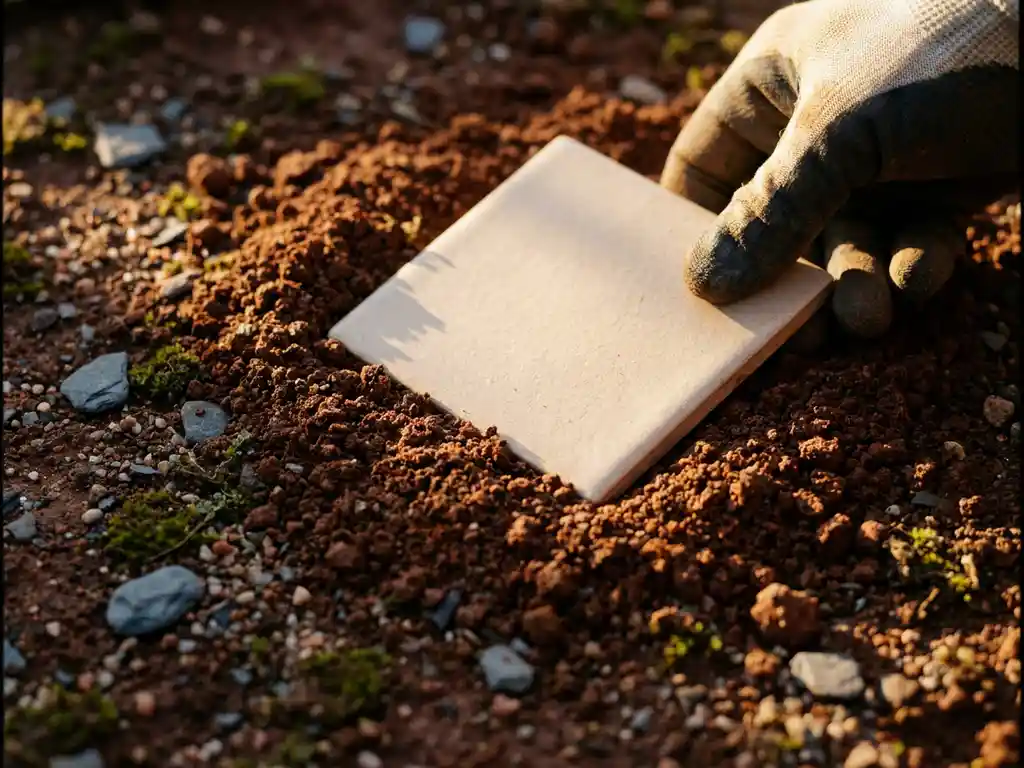
Ceramic facade tiles and terracotta panels are manufactured from natural clay fired at high temperatures, giving them a stable, inert composition that does not degrade over time. This chemical stability means the material recovered at end of life is essentially equivalent to the original, making reprocessing straightforward. Ceramic elements fixed mechanically to aluminum substructures can be dismantled and sorted by material type with minimal effort, supporting full component-level recovery.
Aluminum substructures and cladding
Aluminum is one of the most recycled materials in the construction industry, with well-established collection and reprocessing infrastructure across most markets. Facade substructure profiles and aluminum cladding panels can be recovered and recycled repeatedly without significant quality loss. The energy required to recycle aluminum is a fraction of what is needed to produce it from primary ore, making its recovery economically and environmentally attractive.
By contrast, composite cladding systems that bond aluminum with plastic or foam insulation layers are significantly harder to recycle, as the bonded layers cannot easily be separated for individual material streams. This is a key distinction when evaluating facade materials against circular economy criteria, and it is one reason why ventilated ceramic facade systems with separate aluminum substructures are increasingly favored in sustainable building projects.
Should recyclability influence facade material selection from the start?
Yes, recyclability should influence facade material selection from the earliest design stages, because decisions made at specification determine whether a building’s facade can realistically contribute to the circular economy decades later. Retrofitting recyclability into a facade system after the fact is rarely possible; it must be designed in from the beginning.
Architects and specifiers who factor in end-of-life performance alongside initial aesthetics and durability make decisions that hold up better under lifecycle assessment. This approach aligns with the growing expectation from clients, certifiers, and regulators that buildings are designed with their full lifecycle in mind, not just their opening day.
Practical considerations that should inform selection include:
- Deconstruction planning: Can the facade be dismantled without destroying components? Are fixings accessible and removable?
- Material purity: Is the cladding made from a single material or a composite that will be difficult to separate?
- Recycling infrastructure: Does an established recycling pathway exist for this material in the markets where the building is located?
- Durability over the full service life: Will the material still be in recoverable condition when the building eventually reaches end of life?
- Documentation: Are EPDs and material declarations available to support lifecycle assessments and certification submissions?
Selecting facade materials based on facade textures, facade patterns, and aesthetic qualities alone, without considering end-of-life performance, increasingly represents a missed opportunity. The most effective facade specifications integrate architectural design ambitions with long-term sustainability performance from the outset.
How TONALITY® supports recyclable facade design
TONALITY® ceramic facade systems are engineered to meet the demands of circular economy thinking in commercial architecture and building exterior design. Every element of the system is designed to support genuine recyclability, not just in principle but in practice.
- 100% recyclable ceramic elements made from natural clay fired at over 1,200 degrees Celsius, resulting in a chemically stable, inert material that retains its quality through the full building lifecycle
- Component-sorted deconstruction: Facade elements interlock with vertical aluminum retaining profiles and can be dismantled and sorted by material type with minimum effort, enabling clean material recovery
- Building material class A1: TONALITY® ceramics are non-combustible and contain no combustible components, making them compatible with the most demanding fire protection requirements, including timber construction
- Permanent UV and color resistance: No surface coatings or treatments are required, meaning the material recovered at end of life is the same pure ceramic as when it was installed
- Integrated graffiti protection: The dense, smooth sintered surface resists staining without additional chemical treatments that could compromise recyclability
- Wide format and surface range: Available in formats from 150 x 300 mm up to 400 x 1,600 mm with a full range of terracotta colors and facade textures, supporting both architectural design ambitions and sustainability goals simultaneously
TONALITY® also provides full material documentation to support EPD submissions and green certification applications, giving project teams the lifecycle data they need for BREEAM, DGNB, and LEED assessments.
[cta_contact_form]
Whether you are specifying a facade for a new commercial architecture project or exploring sustainable retrofit options, the TONALITY® team can help you identify the right ceramic facade solution for your requirements. Get in touch with the team to discuss your project, or request samples and technical documentation to begin your specification process.
Related Articles
- Should architects specify terracotta facades for net-zero building projects?
- How do sustainable building materials impact construction timelines
- Are terracotta facades a sustainable building material?
- Are terracotta facades suitable for high-rise buildings?
- How do terracotta facades contribute to urban heat island reduction?