

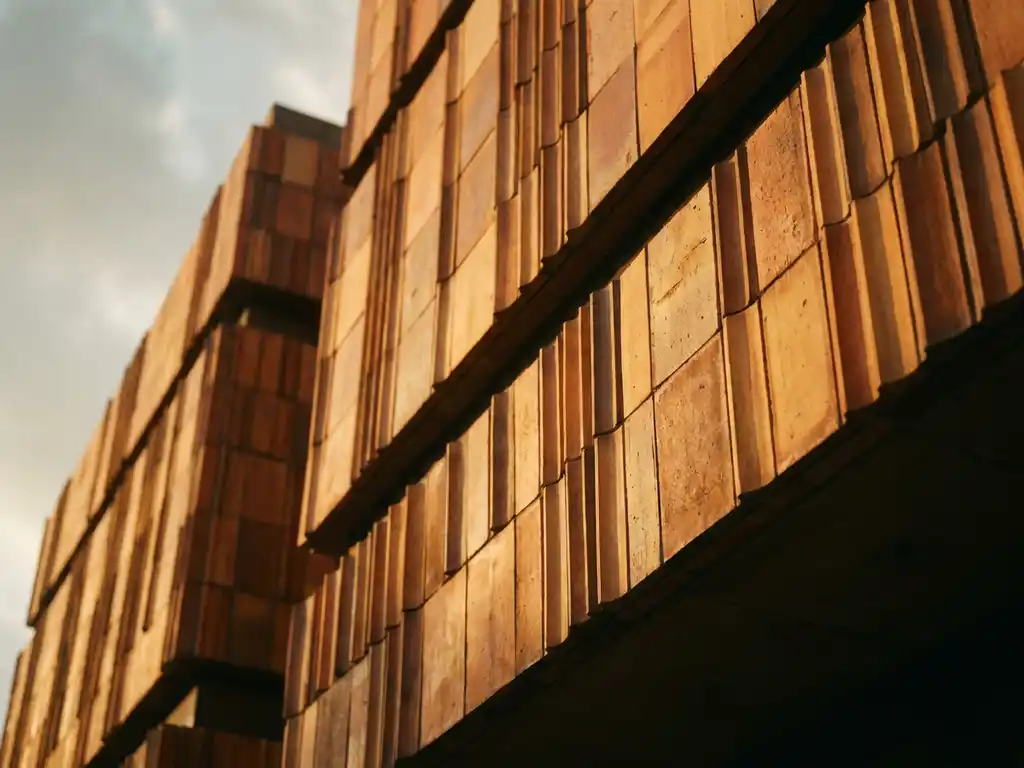
Terracotta has shaped architectural history for thousands of years, and today it continues to define some of the world’s most celebrated cultural buildings. From ancient temples to contemporary museum extensions, terracotta facades bring warmth, texture, and permanence to civic architecture in a way few other materials can match. Whether used as traditional solid cladding or modern ventilated ceramic panels, terracotta cladding on buildings communicates cultural seriousness and material honesty. Here are ten outstanding examples that show exactly why this material remains a favourite among architects designing for culture.
Why terracotta became a go-to for cultural architecture
Museums and cultural institutions carry a particular responsibility: they must feel both welcoming and enduring, both rooted in place and open to the public. Ceramic facade architecture answers that brief remarkably well. The earthy tones of terracotta connect buildings to their regional geology and craft traditions, while the material’s inherent durability signals that what is housed inside is worth protecting for generations.
Beyond aesthetics, terracotta cladding offers practical advantages that suit large public buildings. It is non-combustible, resistant to UV degradation, and requires minimal maintenance over its lifespan. These qualities make it especially attractive for institutions that must manage long-term operating budgets carefully. The total cost of ownership over decades is typically far lower than with materials that require frequent repainting, sealing, or replacement, which is why architects and building committees increasingly specify ceramic facade surfaces for flagship cultural projects.
1: Musée du quai Branly – Paris, France
Jean Nouvel’s 2006 museum dedicated to indigenous arts and cultures from Africa, Asia, Oceania, and the Americas uses earthy, oxide-rich tones across its exterior that echo the collections within. The building’s colour palette draws directly from the raw pigments of the cultures it represents, making the facade a curatorial decision as much as an architectural one.
The museum sits beside the Seine beneath the Eiffel Tower, and its terracotta-toned surfaces help it hold its own against one of the world’s most iconic backdrops. Nouvel layered natural materials and living greenery across the building’s skin, with warm ceramic tones anchoring the composition. The result is a facade that feels simultaneously ancient and contemporary.
Best suited as an example of how colour selection in terracotta cladding can serve a narrative function, the Musée du quai Branly demonstrates that the material choice and the institution’s identity can become inseparable.
2: The British Museum Great Court – London, UK
Foster + Partners’ celebrated 2000 renovation of the British Museum’s Great Court used stone and ceramic-toned materials to knit together the historic Victorian building with a dramatically modern glass roof. The warm buff tones of the restored facades inside the court create a coherent visual field that honours the original architecture while accommodating millions of visitors annually.
The project is a masterclass in material continuity. By respecting the existing terracotta and stone tones of Robert Smirke’s original 1852 building, the renovation achieved a dialogue between centuries rather than a clash. The ceramic-influenced palette throughout the court gives the space its characteristic golden warmth under natural light.
For architects working on heritage contexts, the Great Court illustrates how terracotta tones can bridge historical and contemporary interventions without either element feeling compromised.
3: Städel Museum extension – Frankfurt, Germany
The Städel Museum’s underground extension, completed in 2012 by schneider+schumacher, is one of the most inventive uses of ceramic-influenced design in recent European museum architecture. The extension sits beneath the museum’s garden, with 195 circular skylights punctuating the lawn above. Internally, the curved white surfaces and the warm tones of the connection to the historic building create a seamless journey through time.
The project’s material intelligence lies in how it treats the existing terracotta and brick facades of the 19th-century building as the anchor point for all new interventions. Rather than competing, the extension defers to the original material warmth while introducing its own spatial drama.
The Städel extension is a compelling reference for cultural institutions seeking to expand without disrupting the material language that gives their building its identity.
4: National Museum of African American History – Washington, D.C.
Adjaye Associates’ 2016 building on the National Mall is one of the most discussed museum facades of the 21st century. The corona-like bronze-coloured aluminium lattice that wraps the building draws on traditional African ironwork patterns, but the warm, oxidised tones closely echo terracotta in their visual warmth and their sense of cultural rootedness.
The facade’s deep, layered screens filter light into the galleries while creating a dramatic exterior presence that reads differently at different times of day. At sunset, the building glows with an intensity that connects it visually to the red earth tones of terracotta-clad buildings across the African diaspora’s architectural heritage.
This building demonstrates how the expressive qualities associated with terracotta, warmth, texture, and cultural resonance, can be achieved through material innovation while remaining true to the underlying design intention.
5: Museu Nacional d’Art de Catalunya – Barcelona, Spain
The MNAC’s home, the Palau Nacional on Montjuïc hill, was built for the 1929 International Exposition and features extensive terracotta detailing across its Baroque Revival exterior. The warm reddish-brown ceramic elements are integral to the building’s identity and to its commanding presence above the city.
Restoration work over the decades has preserved the original terracotta ornament, demonstrating the material’s exceptional longevity when properly fired and maintained. The building’s facades have withstood nearly a century of Mediterranean sun, rain, and temperature variation without losing their richness of colour or surface detail.
The MNAC is perhaps the clearest evidence on this list that terracotta facades genuinely stand the test of time. The material ages with dignity rather than deteriorating, which is precisely why it continues to attract architects designing buildings meant to last.
6: Tate Modern Blavatnik Building – London, UK
Herzog & de Meuron’s 2016 Blavatnik Building extension to the Tate Modern used a distinctive perforated brick facade that creates a rich, textured surface across its pyramidal form. The warm, handmade quality of the brickwork connects the new tower to the existing Bankside Power Station while introducing a new visual rhythm.
The surface texture of the Blavatnik Building’s facade is deliberately uneven, with bricks twisted and angled to catch light at varying intensities throughout the day. This approach reflects a broader trend in cultural buildings terracotta and ceramic cladding: using surface variation to create facades that feel alive rather than static.
For architects exploring the relationship between ceramic materiality and contemporary form, the Blavatnik Building is a productive reference point for how traditional brick and terracotta sensibilities can be reinterpreted through precise, controlled fabrication.
7: Humboldt Forum – Berlin, Germany
The reconstructed Berlin Palace, completed in 2021 and now housing the Humboldt Forum, presents one of the most ambitious terracotta and stone reconstruction projects in recent European history. The Baroque facades, rebuilt to match the original 1713 palace, incorporate extensive ceramic and stone detailing that required exceptional craftsmanship and material precision.
The project raises important questions about authenticity, reconstruction, and the role of material in cultural identity. Whatever one’s view on the reconstruction debate, the building’s exterior demonstrates the enduring communicative power of warm, textured ceramic surfaces in civic architecture. The facades read as serious, permanent, and culturally significant precisely because of their material language.
The Humboldt Forum also highlights how modern ceramic fabrication techniques, including high-precision firing and surface control, make it possible to reproduce historical detail at scale without compromising quality.
8: LACMA’s new building – Los Angeles, USA
Peter Zumthor’s long-anticipated new building for the Los Angeles County Museum of Art, currently in development, has generated significant discussion for its proposed use of warm, earth-toned materials across its elevated, island-like form. Zumthor’s design philosophy consistently prioritises material authenticity and tactile richness, and the LACMA project continues that commitment.
The building’s proposed palette draws on the warm ochres and terracotta tones of Southern California’s landscape and built heritage. Zumthor has spoken about wanting the building to feel as though it belongs to Los Angeles in a deep, material sense, and ceramic-influenced tones are central to achieving that.
As one of the most anticipated museum projects of the decade, LACMA’s new building will be an important test case for how ceramic facade architecture performs in a high-UV, seismically active environment, two conditions that modern sintered ceramic panels handle exceptionally well.
9: Musée des Confluences – Lyon, France
Coop Himmelb(l)au’s 2014 science and anthropology museum at the confluence of the Rhône and Saône rivers takes a dramatically different approach to cultural facade design. The building’s stainless steel and glass crystal forms are juxtaposed with a warm, earthen base that grounds the composition and connects it to the riverbanks.
The contrast between the gleaming upper structure and the warm, textured base reflects a broader design strategy: the earth-toned lower volumes represent the geological and material world, while the crystalline upper sections evoke discovery and light. This compositional logic gives the museum a visual narrative that begins at the facade.
The Musée des Confluences is a useful reference for projects where terracotta-toned ceramic cladding is used as a grounding element within a more complex material composition, rather than as the dominant surface across the entire building.
10: Aga Khan Museum – Toronto, Canada
Fumihiko Maki’s 2014 Aga Khan Museum in Toronto uses white Portuguese granite as its primary cladding material, but the building’s relationship to light, surface texture, and geometric precision places it firmly within the tradition of ceramic and mineral facade architecture. The warm, luminous surfaces shift in tone throughout the day, creating an effect similar to the best terracotta-clad buildings in their responsiveness to natural light.
The museum’s geometric precision and the careful control of surface finish reflect the Islamic architectural traditions that the institution celebrates. Every surface decision was made with the intention of creating a building that would feel as refined in fifty years as it does today, a commitment that terracotta and ceramic facades share inherently.
The Aga Khan Museum demonstrates that the qualities most valued in terracotta, permanence, surface richness, and cultural seriousness, can be achieved through a range of mineral materials when the design intention is clear and the fabrication is precise. You can explore completed ceramic facade projects to see how these qualities translate across different building types.
Terracotta facades that stand the test of time
What connects all ten of these buildings is a shared commitment to material permanence. Whether the terracotta is historical or contemporary, ornamental or structural, these facades communicate that the institutions they house are built to last. That is not a coincidence. Architects and clients who choose terracotta and ceramic cladding are making a deliberate statement about longevity, cultural seriousness, and the relationship between a building and its place.
The practical case for terracotta in cultural architecture is equally strong. Museums and public buildings face intense use, variable weather, and the constant scrutiny of millions of visitors. Terracotta’s resistance to UV degradation, its colour stability over decades, and its minimal maintenance requirements make it one of the most cost-effective facade choices when evaluated over a building’s full lifespan. The upfront commitment to quality pays dividends across generations, which is precisely why so many of the world’s most respected cultural institutions have chosen it. For architects and specifiers interested in available formats and surfaces, the range of options available in modern ceramic facade systems is broader than ever.
How TONALITY® brings ceramic facade excellence to your project
The buildings on this list share qualities that TONALITY® ceramic facade systems are designed to deliver: precision, permanence, and a material richness that improves rather than diminishes over time. TONALITY® manufactures ceramic facade elements from the highest quality clay deposits in the Westerwald region of Germany, firing them at temperatures exceeding 1,200 degrees Celsius to produce surfaces that are exceptionally dense, smooth, and colour-stable.
For architects and developers working on cultural, civic, or high-specification commercial projects, TONALITY® offers:
- A wide range of formats from 150 x 300 mm to 400 x 1,600 mm, with precision tolerances of one millimetre, enabling complex facade compositions with consistent results
- Permanent UV and colour resistance that ensures the facade looks as intended decades after installation, with no repainting or resealing required
- Building material class A1 classification, meaning the ceramic elements are non-combustible, a critical requirement for public and cultural buildings
- Integrated graffiti protection and a dense, sintered surface that resists environmental soiling and simplifies cleaning
- Low surface weight of approximately 40 kilograms per square metre, reducing structural load requirements and making the system suitable for timber construction and retrofit projects
- Full recyclability and deconstruction by component type, supporting circular building practices and long-term sustainability commitments
[cta_contact_form]
The TONALITY® facade system is designed for simple, efficient installation: ceramic elements profile onto vertical aluminium retaining profiles with a straightforward mount-and-done process. Whether you are designing a new cultural building or planning a facade renovation, the system adapts to a wide range of substructure configurations. Request samples and technical downloads to explore the material firsthand, or speak with the TONALITY® team to discuss your specific project requirements.
Related Articles
- How are deeply profiled ceramic facade elements manufactured?
- Should developers use material passports for terracotta facade systems?
- What sustainable building trends should architects know in 2026?
- How do you choose sustainable building materials?
- 10 Laboratory Tests Every Terracotta Facade System Should Pass