

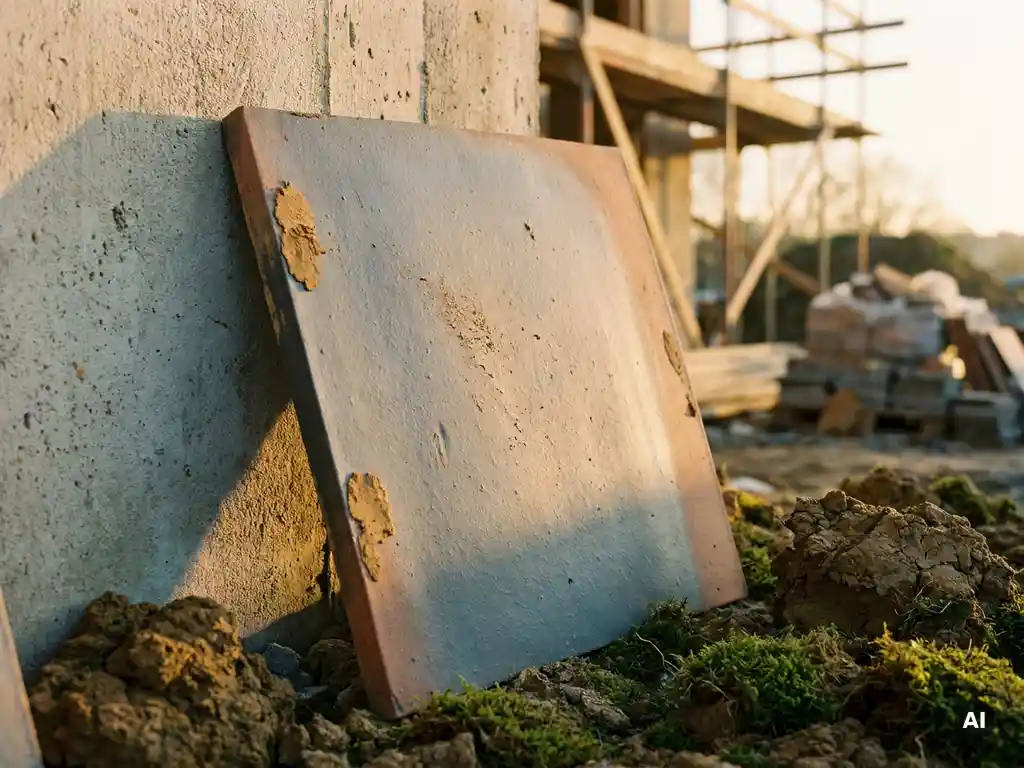
Ceramic facades perform well in life cycle assessments, typically demonstrating low global warming potential, exceptional durability, and strong end-of-life recyclability compared to many alternative cladding materials. These qualities make ceramic facade LCA results particularly relevant for architects and developers pursuing sustainable building certification. The sections below address the most common questions about ceramic facade environmental impact across the full building lifecycle.
What factors are measured in a facade life cycle assessment?
A facade life cycle assessment measures the environmental impact of a cladding material from raw material extraction through manufacturing, transportation, installation, service life, and final disposal or reuse. The key indicators include global warming potential, primary energy demand, resource consumption, water use, and end-of-life recyclability. Together, these factors produce a complete picture of a material’s true environmental footprint.
LCA methodology follows standardized frameworks such as EN 15804 and ISO 14040, which ensure that results are comparable across materials and building types. For facade materials specifically, the assessment is typically broken into four life cycle stages:
- Product stage (A1-A3): Raw material extraction, transport to factory, and manufacturing
- Construction stage (A4-A5): Delivery to site and installation
- Use stage (B1-B7): In-service performance, maintenance, and repair requirements
- End-of-life stage (C1-C4): Deconstruction, transport, processing, and disposal or recovery
For facade materials, the use stage is particularly significant. A material that requires frequent cleaning, recoating, or replacement will accumulate environmental costs over time that a more durable alternative avoids entirely. This is why ceramic facade sustainability assessments tend to look favorable when the full service life is taken into account rather than just the manufacturing phase.
How do ceramic facades score on global warming potential?
Ceramic facades score competitively on global warming potential (GWP) when assessed across their full service life. The manufacturing process is energy-intensive due to high firing temperatures, but this upfront carbon investment is offset by a very long service life, minimal maintenance requirements, and the absence of replacement cycles that other materials often require.
The sintering process used to produce high-quality ceramic facade tiles requires temperatures exceeding 1,200 degrees Celsius, which does contribute to embodied carbon at the production stage. However, several factors reduce the overall GWP across the building’s lifetime:
- No surface treatments, coatings, or sealants are needed during the service life
- Permanent UV and color resistance eliminates the need for repainting or refinishing
- The material does not degrade, corrode, or require structural replacement under normal conditions
- Low dead weight reduces the carbon associated with substructure materials
When GWP is calculated on a per-year-of-service basis rather than at the point of manufacture, ceramic facades compare favorably to materials with lower initial embodied carbon but shorter lifespans or higher maintenance demands.
How does the durability of ceramic facades affect LCA results?
Durability is one of the most significant drivers of favorable LCA results for ceramic facades. A longer service life spreads the environmental cost of manufacturing over more years, reducing the annualized environmental impact. Materials that require replacement or significant intervention within 20 to 30 years effectively double or triple their life cycle environmental burden.
Ceramic facade elements produced through high-temperature sintering develop an exceptionally dense, smooth surface that resists weathering, biological growth, and atmospheric pollutants. This surface integrity means the facade retains its performance and appearance without intervention for decades. From an LCA perspective, this translates directly into:
- Fewer replacement cycles over a building’s design life
- Reduced transport and installation emissions from maintenance work
- Lower cumulative resource consumption compared to shorter-lived alternatives
- No additional chemical treatments that would carry their own environmental footprint
Integrated graffiti protection is another durability feature with LCA relevance. Facades that require chemical cleaning or anti-graffiti recoating generate ongoing environmental costs that a material with inherent surface resistance avoids entirely. For real-world building projects, this durability advantage accumulates meaningfully over a typical 50-year building life cycle.
Are ceramic facades recyclable at end of life?
Yes, ceramic facades are fully recyclable at end of life. Ceramic materials are 100% recyclable and can be processed back into raw material streams for use in new ceramic products, road base, or other construction applications. The key advantage for ceramic facade LCA is that the material retains its elemental composition throughout its service life and does not degrade into substances that complicate recycling.
The recyclability of a facade system depends not only on the material itself but also on how easily it can be separated and sorted at deconstruction. Ceramic facade systems that use mechanical fixing methods rather than adhesives allow components to be disassembled cleanly and sorted by material type. This supports circular economy principles and contributes positively to the end-of-life module in a life cycle assessment.
For green building certification schemes that evaluate material circularity, ceramic facades offer a strong end-of-life profile: non-toxic, chemically stable, mechanically separable, and fully recyclable without significant processing losses.
How do ceramic facades compare to other facade materials in LCA?
Ceramic facades compare favorably to many common facade materials when assessed across the full life cycle rather than only at the production stage. Materials such as fiber cement, composite panels, and coated metal cladding may carry lower initial embodied carbon, but their maintenance requirements, coating renewal cycles, and shorter effective service lives often result in higher cumulative environmental impact over a building’s lifetime.
Ceramic versus fiber cement and composite panels
Fiber cement and composite panels typically require surface recoating every 10 to 20 years to maintain appearance and weather resistance. Each recoating cycle adds embodied carbon from the coating materials, labor, and associated transport. Ceramic facades require no recoating, which removes this recurring environmental cost entirely from the life cycle model.
Ceramic versus natural stone and brick
Natural stone and traditional brick share some of ceramic’s durability and recyclability advantages, but their weight is significantly higher. Heavier cladding materials require more substantial substructures, increasing the total material and carbon investment in the building envelope. Ceramic facade elements, with a surface weight of around 40 kilograms per square meter, allow for lighter substructures, which reduces the overall system-level environmental impact. This low weight also makes ceramic particularly well suited to timber frame construction, where substructure loads are a critical design constraint.
What role does ceramic facade LCA play in green building certification?
Ceramic facade LCA data plays a direct role in green building certification schemes such as LEED, BREEAM, and DGNB. These frameworks award credits for materials with documented environmental product declarations (EPDs), low global warming potential, high recyclability, and contributions to indoor environmental quality. A well-documented ceramic facade LCA supports credit achievement across several of these categories simultaneously.
Environmental Product Declarations, which are standardized LCA summaries verified by third parties, are the primary documentation tool used in certification submissions. Facade manufacturers who provide EPDs make it significantly easier for project teams to calculate the building’s overall material impact and demonstrate compliance with certification thresholds.
Beyond individual material credits, ceramic facades contribute to certification goals related to building durability and reduced life cycle cost. Certification schemes increasingly recognize that a building designed to last 60 or more years with minimal material replacement has a lower long-term environmental footprint than one requiring frequent refurbishment. The technical documentation available for certified facade systems helps project teams build the evidence base needed for these submissions.
How TONALITY® supports your ceramic facade LCA
TONALITY® ceramic facades are designed to perform well across every stage of a life cycle assessment, from the properties of the raw clay through to end-of-life recyclability. For architects, specifiers, and sustainability consultants working on certified green building projects, TONALITY® provides the technical foundation and documentation support needed to make the LCA case clearly and confidently.
Here is what TONALITY® brings to your project’s sustainability assessment:
- Non-combustible material classification: Building material class A1 with no combustible components, supporting fire safety and certification requirements
- 100% recyclability: Ceramic elements can be fully recovered and reprocessed at end of life, contributing to circular economy credits
- Low surface weight: Approximately 40 kilograms per square meter reduces substructure material demand and associated carbon
- Maintenance-free performance: Permanent UV and color resistance, integrated graffiti protection, and no coating requirements eliminate recurring life cycle environmental costs
- Precision manufacturing: Elements produced to within one millimeter across formats from 150 x 300 mm up to 400 x 1,600 mm, minimizing material waste on site
- Timber construction compatibility: Low weight and A1 fire classification make TONALITY® facades an ideal choice for sustainable timber frame buildings
[cta_contact_form]
If you are preparing an LCA submission or specifying facade materials for a green building certification project, the TONALITY® team is ready to support you with technical data, product samples, and project-specific guidance. Get in touch with the team to discuss your project requirements and find the right ceramic facade solution for your sustainability goals.
Related Articles
- How does a terracotta facade reduce a building's lifetime energy use?
- What seismic engineering considerations apply to terracotta facade design?
- Terracotta vs Large-Format Porcelain: A Technical Specification Comparison
- Can terracotta facades be recycled at end of life?
- Where should movement joints be placed in terracotta cladding?